Silent Users, Talkative AI: What Filled the Void
Half of social media users no longer post — and AI is quietly stepping into that silence.

Opening
Reader, do you remember the last time you posted something on social media?
There’s a striking number in Ofcom’s (the UK’s communications regulator) 2025 report on adult media use. Among UK adult social media users, the share who actually post, share, or comment dropped to 49%. Just a year earlier, it was 61%. Twelve percentage points evaporated in a single year.
So did people leave social media? No. 89% of UK adult internet users still use at least one social media platform. People haven’t left. They’ve gone quiet. Today let’s talk about where this silence came from — and who’s filling the empty space it left behind.
🔇 Users Move to the Audience Seats
Ofcom’s survey covered 7,500 people across the UK. It’s not just posting that’s declining — the share of users exploring new websites also fell, from 70% to 56%. Active behavior online, broadly, is contracting.
Two structural forces are driving this.
First, platforms became a “stage.” As short-form video — think TikTok and Instagram Reels — took over, the user’s role changed. On the old Facebook, writing “had lunch today, here’s what I ate” felt natural. In a feed dominated by Reels, posting a single line of text feels like talking to yourself on stage. Joseph Oxlade, Ofcom’s senior research manager, explains that on video-first platforms, people simply don’t post or comment the way they did in the Facebook era.
Second, there’s a growing anxiety that yesterday’s post could become tomorrow’s bomb. The share of adults worried that old posts might come back to haunt them rose from 43% in 2024 to 49% in 2025. It’s the fear that a post from years ago could resurface and damage your career or personal relationships. The 2025 Oscar Best Actress campaign of actress Karla Sofía Gascón — derailed by old tweets — showed this fear isn’t paranoia.
As a result, people are shifting away from the permanent “grid post” toward ephemeral formats like Instagram Stories, which vanish after 24 hours. They’re choosing to leave a trace — without really leaving one.
👻 The Age of the “Lurker”
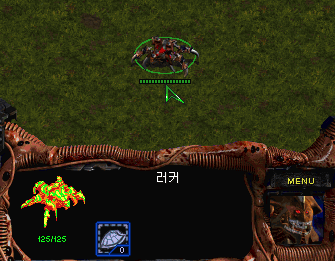
This isn’t just a UK story. A 2025 study by Professor Anees Baqir’s team at Northeastern University, published in Nature Scientific Reports, found that on X (formerly Twitter), “lurkers”1 — users who only view content without ever reacting — make up roughly 90% of users. Active behaviors like likes and retweets are a tiny fraction compared to views.
Korea shows a similar pattern. In a 2025 Gallup Korea survey, even among people in their 20s to 40s, about 75% said they read others’ opinions in online spaces, while no more than 20% said they write their own views directly. Opensurvey’s 2025 Social Media Trend Report also found that both the frequency of Instagram visits and viewing dropped year over year.
The Nielsen Norman Group has a name for this: the “90-9-1 rule.”2 In online communities, 90% only watch, 9% occasionally participate, and just 1% create content. This rule was first proposed in 2006 — and two decades later, the ratio has only become more extreme.
Through the lens of sociologist Erving Goffman’s theory of “impression management,”3 social media is essentially a stage. Every post is a performance, edited for an invisible audience. But the cost of that performance — time, energy, and future risk — has grown too high. The rational choice is to step down into the audience.

🤖 What Filled the Silence
Here’s where it gets interesting. According to the same Ofcom report, 54% of UK adults now use AI tools like ChatGPT — nearly double the 31% recorded in 2024. Of those, about 12% use AI as a conversation partner, and among 25-34 year-olds, that figure climbs to 19%.
Some of the panel members Ofcom has interviewed for 20 years now treat AI almost like a person. They turn to AI to ease loneliness while working from home, to get relationship advice, even to co-write wedding toasts — often without fully realizing it.
Pew Research Center’s 2025 survey points in the same direction. About 64% of US teens use AI chatbots, and 30% of those use them daily. MIT Technology Review named AI Companions one of its 10 Breakthrough Technologies for 2026, citing a Common Sense Media survey showing 72% of US teens have used AI for companionship at some point.
Korea’s annual ChatGPT usage rate also jumped sharply — from 7% in 2023 to 34% in 2025 (Gallup Korea, 2025).
Do you see the shape of it? People are falling silent on social media while, at the same time, starting to talk to AI. This might not be a coincidence.
Oz’s Lens
I want to call this phenomenon the “broadcasting of social media.” Early social media promised a “town square where everyone can speak.” Fifteen years later, that square has become a giant broadcast station — a small number of creators producing content, and everyone else watching. What, exactly, distinguishes this from the TV era?
From a go-to-market strategy perspective, this is a serious problem for platform companies too. The social media business model runs on user-generated content (UGC) as fuel. If users stop writing, there’s no content to fill the feed; if there’s no content, there’s nowhere to place ads. It’s no coincidence that platforms are trying to plug this gap with algorithmic recommendations and AI-generated content.
Dig deeper and you find that the share of UK adults who feel the benefits of being online outweigh the risks fell from 72% in 2024 to 59% in 2025. The share of users who believe social media is good for their mental health also dropped, from 42% to 36%. People are starting to question the basic premise that “digital space is good for me.”
And AI is filling that gap of doubt. A 2025 paper in Nature Humanities and Social Sciences Communications describes AI chatbots as “emotional fast food” — instant, convenient, but ultimately hollow substitutes. The erosion of social capital that Robert Putnam warned about in Bowling Alone is now accelerating, two decades later, in the form of AI companionship.
What worries me isn’t the technology itself — I use AI every day too. What worries me is the order of substitution. There are two paths: one where people first build up tolerance for the friction of human relationships and then use AI as a supplement, and another where people get used to frictionless AI conversation from the start and end up avoiding the complexity of human relationships altogether. Once that second path sets in, it’s hard to reverse.
Closing
Here’s how I’d summarize where things stand right now:
- Social media users haven’t left — they’ve become an audience. The shift to video and anxiety over digital permanence are suppressing active participation.
- This silence is a global phenomenon. The UK, the US, and Korea are all moving in the same direction. The very act of publicly expressing one’s own thoughts online is declining.
- AI is filling that void — but it’s worth asking whether that counts as “connection.” AI conversation has no friction. But the value of human relationships comes precisely from that friction.
Next time you scroll your Instagram feed, try counting: how many posts were actually written by people you know? And is that number the same as it was a year ago?
References & Further Reading
- Ofcom, “Adults’ Media Use and Attitudes Report 2025”, 2025. — The core data source for today’s issue. It’s a 20-year longitudinal study, which makes it especially useful for tracking trends.
- Baqir, A. et al., “Unveiling the drivers of active participation in social media discourse”, Nature Scientific Reports, 2025. — A study that quantifies “lurker” behavior patterns by analyzing 17 million tweets.
- Pew Research Center, “Teens, Social Media and AI Chatbots 2025”, 2025. — The first systematic report on US teens’ AI chatbot usage.
- “Companionship in code: AI’s role in the future of human connection”, Humanities and Social Sciences Communications, Vol.12, 2025. — A paper analyzing AI companions as “emotional fast food.” It goes beyond tech criticism to raise philosophical questions.
- Gallup Korea, “Usage Rates of 18 Media, Content, and Social Network Services”, 2025. — Long-term tracking data on changes in Korean social media usage. The data on active opinion-sharing rates is especially important.
- MIT Technology Review, “AI Companions: 10 Breakthrough Technologies 2026”, 2026. — Useful context for understanding why AI companions were named a defining technology of 2026.

The author, Kwangseob Ahn, is a professor of business administration at Sejong University and lead consultant at OBF (Oswarld Boutique Consulting Firm). He teaches statistics and data analysis — business data management and business analytics — while leading GTM and AI strategy consulting in the field, designing the seam between technology and business. He has published academic research on a memory architecture for AI dialogue systems (HEMA) and runs Daily Arxiv, a daily curation of global AI papers. He holds a master’s from Korea University’s Graduate School of Technology Management and a KMBA. He is the author of Homo Brainless: The People Who Outsource Their Thinking.
Footnotes
-
Lurker: An online community user who only consumes content without ever writing posts, commenting, or liking anything. The word carries a connotation of “hiding,” but in reality, most internet users are lurkers. ↩
-
The 90-9-1 rule: A participation ratio for online communities laid out in 2006 by Jakob Nielsen of the Nielsen Norman Group. 90% only watch (lurkers), 9% participate occasionally, and just 1% actively create content. A similar pattern has been observed in analyses of Wikipedia editing rates. ↩
-
Impression management: A concept proposed by sociologist Erving Goffman in 1956. It’s the theory that people consciously try to control the image of themselves that they present to others — explaining why every social media post is, in effect, a curated self. ↩
Related issues
 Issue #72Society
When a Philosophy PhD Says 'The Humanities Are Dead'
The world isn't a seesaw—one side rising rarely means the other crashes down.
 Issue #71Society
The Cornfield Theory That Still Explains Tech Adoption
Technology moves faster than ever, but the psychology behind how people accept change hasn't changed at all.
 Issue #70Society
How Child Safety Laws Are Building an Internet ID System
Child protection is real, but should the fix mean embedding everyone's identity into the operating system?
Your take shapes the next issue
What resonated most in this issue, or where has your experience been different?