No Workers Left: Why Japan Is Betting Everything on Robots
Japan's robot strategy isn't about efficiency — it's about survival, and that desperation may become its edge.

Opening
Dear reader, the usual story goes: “robots are taking our jobs.” But in Japan, the opposite is happening. Robots are filling jobs that nobody wants to do in the first place. Honestly, I think Korea is heading down a similar path. But let’s start with Japan.
This past March, Japan’s Ministry of Economy, Trade and Industry (METI) put out a number: a goal of capturing 30% of the global Physical AI1 market by 2040. It sounds bold, but this figure comes from desperation, not ambition. Japan’s working-age population peaked in 1995 and has been shrinking for 30 years straight, with a projected labor shortage of 11 million people by 2040.
So today I want to ask: how is Japan’s bet on Physical AI different from what the US and China are doing, and where will the value actually be created?
🏭 Not Efficiency, But Survival — Why Japan Is Different
In the West, the reason companies adopt AI robots is mostly efficiency — cutting costs, boosting productivity, maximizing profit. Japan’s motivation is fundamentally different.
Japan’s population shrank by 908,000 in 2024 alone — the 16th consecutive year of decline. The working-age population (ages 15-64) is just 59% of the total, far below the OECD average of 65%. The job-to-applicant ratio in construction is 5.6 — meaning 5.6 open positions for every single applicant. Nursing is projected to face a shortfall of 570,000 workers by 2040.
This isn’t a simple labor market problem. Sho Yamanaka, a principal at Salesforce Ventures, put it this way: “What Japan is facing is a physical supply constraint. Labor shortages mean the country literally cannot sustain essential services.” That single line cuts to the heart of Japan’s Physical AI strategy.
Hogil Doh, a partner at Global Brain, echoes the same point: “Physical AI is being purchased as a business continuity tool. The core question is how to run factories, distribution centers, and infrastructure with fewer people.” A joint 2024 Reuters/Nikkei survey found that labor shortage was the top reason Japanese companies cited for adopting AI.
In other words, in Japan robots aren’t a tool for doing things better — they’re a tool for keeping things running at all.
🔧 A Hardware Nation’s Software Dilemma
Japan’s strongest card is its overwhelming foundation in robot hardware. According to METI, Japanese manufacturers held about 70% of the global industrial robot market as of 2022. Five of the world’s top 10 industrial robot makers — FANUC, Yaskawa, Kawasaki, and Nachi-Fujikoshi among them — are Japanese. In 2024 alone, Japan installed more than 50,000 industrial robots, the second-highest number in the world.
Japan’s edge is especially uncontested in precision components — actuators2, sensors, servo motors, and motion control. Yamanaka describes this as “controlling the physical interface where AI meets the real world.” That interface comes from decades of accumulated manufacturing know-how, which makes it a domain that money alone can’t replicate quickly.
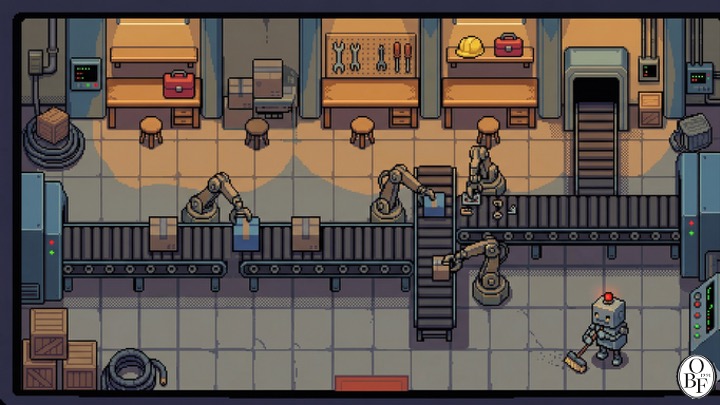
But here’s the key question: does a hardware advantage still hold up in the AI era?
The US and China are rapidly building full-stack systems that integrate hardware, software, and data. The US leads in the software and services layer, while China is aggressively mass-producing vertically integrated robot systems. Chinese companies alone are estimated to produce more than 10,000 humanoid robots in 2025.
Issei Takino, CEO of Japanese robot software company Mujin, names this gap bluntly: “American companies have taken an Apple-like approach — pairing a powerful software platform with hardware manufactured in Asia. But Physical AI requires a deep understanding of the physical properties of the hardware itself, so that model doesn’t translate directly.”
Japan’s task, then, is clear: hold onto its hardware advantage while racing to catch up in system-level AI integration.
🚀 From Lab to Field — Signs of a Real Deployment Shift
Since Sanae Takaichi took office as prime minister, the Japanese government has poured roughly $6.3 billion (~₩9.2 trillion) into strengthening AI and robotics capabilities. Microsoft’s announcement that it will invest $10 billion in Japan between 2026 and 2029 has further expanded the scale of combined public-private investment.
What matters more than the numbers, though, is the quality of the signal. Hogil Doh of Global Brain defines what counts as real deployment: “You have to distinguish between deployments customers actually pay for and pilot programs vendors are subsidizing. The real signal comes from stable operation across a full shift, uptime3, the frequency of human intervention, and productivity metrics.”
And those signals are, in fact, starting to appear. In logistics, autonomous forklifts and automated warehouse systems are being deployed. In facilities management, inspection robots are being placed in data centers and industrial sites. SoftBank has already applied Physical AI that combines vision-language models4 with real-time control systems, allowing robots to interpret their environment and autonomously carry out complex tasks.
The direction of investment is shifting too. Capital is moving beyond simple hardware toward orchestration software, digital twins5, simulation tools, and integrated platforms — evidence that Japan is well aware of its own weakness in software.
🤝 Hybrid, Not Winner-Take-All — The Character of Japan’s Ecosystem
What’s interesting about Japan’s Physical AI ecosystem is that it isn’t structured as winner-take-all.
Large corporations like Toyota, Mitsubishi Electric, and Honda hold overwhelming advantages in manufacturing scale, customer relationships, and deployment capacity. But startups have carved out their own critical niches. Mujin is building a multi-vendor automation platform that sits on top of existing hardware. Electric mobility company WHILL is drawing on Japan’s “monozukuri” (craftsmanship) tradition to build full-stack autonomous personal mobility devices. Terra Drone combines AI with operational data to support the real-world deployment of autonomous systems.
Yamanaka calls this relationship a “complementary ecosystem”: “Robotics demands heavy hardware development, deep operational know-how, and massive capital expenditure. When you combine the assets and domain expertise of large corporations with the disruptive innovation of startups, the collective competitiveness grows stronger.”
And a line from Global Brain’s Hogil Doh captures the core value of this ecosystem precisely: “The most defensible value will belong to whoever owns deployment, integration, and continuous improvement.”
Oz’s Lens
Honestly, what I see in Japan’s Physical AI strategy is “the strategic value of desperation.”
There’s a pattern I’ve seen again and again while building go-to-market strategies: the strongest products don’t come from “nice-to-have” — they come from “must-have.” Japan’s Physical AI is a textbook must-have. Without robots, factories stop running, logistics grinds to a halt, and nursing care collapses. That desperation is the most powerful force pulling this technology out of the lab and into the field.
But I do have one concern. Japan’s hardware advantage is the ability to make precise components — not a proven ability to design intelligent systems. And in the Physical AI market, value is increasingly shifting toward software — orchestration, simulation, and perception systems in particular. If Japan gets too comfortable inside its hardware moat, it could end up permanently supplying parts onto software platforms built by the US and China.
The data backs up this concern. The Physical AI software platform market is projected to grow from $2.1 billion in 2025 to $17.2 billion by 2030, a 42% annual growth rate. Whoever captures the value in this software layer will ultimately decide who wins.
I think the most favorable scenario for Japan is to become “the software integrator built on top of hardware.” As Mujin demonstrates, the play is to dominate the software layer that makes existing hardware smarter. Those who understand the hardware can build software on top of it that’s more practical and more stable than what those who don’t understand the hardware could ever build.
Japan’s story also carries a lesson for Korea. Low birthrates and an aging population are a demographic challenge Korea cannot escape either. The moment when we need to shift from the frame of “robots are taking our jobs” to “without robots, our industries stop” isn’t far off for us, either.
Closing
Here’s the core of today’s newsletter.
First, Japan’s Physical AI strategy starts from industrial survival, not efficiency. With a projected labor shortage of 11 million people by 2040, robots aren’t a choice — they’re a necessity. Second, Japan is a hardware powerhouse controlling 70% of the global industrial robot market, but as value shifts toward software, system integration capability is the critical challenge. Third, a hybrid ecosystem in which large corporations and startups divide roles is forming a competitive structure unique to Japan.
“Who owns deployment, integration, and continuous improvement” — this question will decide who wins in the Physical AI era. And it applies not just to Japan, but equally to Korea, which faces the same demographic challenge ahead.
References & Further Reading
- TechCrunch, “In Japan, the robot isn’t coming for your job; it’s filling the one nobody wants”, 2026.04.05. : TechCrunch’s report on Japan’s robot industry, with a grounded analysis based on interviews with VCs and company CEOs.
- News On Japan, “Japan Moves to Develop Domestic Physical AI, Targets 30% Global Share by 2040”, 2026.03.18. : Coverage of METI’s draft Physical AI strategy announcement.
- Prism News, “Japan Accelerates Physical AI Deployment to Combat Persistent Labor Shortages”, 2026.04.06. : Summarizes recent deployment cases including the FANUC-NVIDIA collaboration.
- The Diplomat, “Japan’s Grim Demographic Reality”, 2025.12. : An in-depth look at the structural causes of Japan’s population decline and the policy dilemmas it creates.
- CNN, “Japan’s population decline keeps getting worse”, 2025.08.07. : Detailed reporting on the record 900,000-person population decline in 2024.
- Microsoft Source Asia, “Microsoft deepens its commitment to Japan with $10 billion investment”, 2026.04.03. : Announcement of Microsoft’s $10 billion investment in Japan, detailing its AI infrastructure and workforce development strategy.
- Asia Tech Daily, “Japan’s AI Reset: What the Government’s First National Plan Means for Startups”, 2025.12.23. : A startup-focused analysis of Japan’s ¥1 trillion national AI strategy.

The author, Kwangseob Ahn, is a professor of business administration at Sejong University and lead consultant at OBF (Oswarld Boutique Consulting Firm). He teaches statistics and data analysis — business data management and business analytics — while leading GTM and AI strategy consulting in the field, designing the seam between technology and business. He has published academic research on a memory architecture for AI dialogue systems (HEMA) and runs Daily Arxiv, a daily curation of global AI papers. He holds a master’s from Korea University’s Graduate School of Technology Management and a KMBA. He is the author of Homo Brainless: The People Who Outsource Their Thinking.
Footnotes
-
Physical AI: AI that doesn’t just run inside software, but is embedded in physical devices like robots, autonomous vehicles, and drones — perceiving the world through sensors, moving on its own, and learning in real time. ↩
-
Actuator: A device that converts electrical signals into physical motion — think of it as a robot’s “muscle.” Motors and hydraulic cylinders are common examples. ↩
-
Uptime: The proportion of time a system operates normally. 99% uptime means the system runs without issue for 99 out of 100 hours. In industrial robotics, this figure is a key indicator of reliability. ↩
-
Vision-Language Model (VLM): An AI model that understands both images (vision) and text (language) simultaneously. When installed in a robot, it can combine visual information with a command like “put the red box on the shelf to the left” to carry out the task. ↩
-
Digital Twin: An exact virtual replica of a physical facility or piece of equipment. Think of it as being able to run simulations in a virtual factory before building the real one. It’s widely used to optimize robot deployment. ↩
Related issues
 Issue #79Society
What Teens Actually Talk About With AI Chatbots
The headlines scream danger, but kids turned to chatbots because we left them alone first
 Issue #78Society
Silent Users, Talkative AI: What Filled the Void
Half of social media users no longer post — and AI is quietly stepping into that silence.
 Issue #72Society
When a Philosophy PhD Says 'The Humanities Are Dead'
The world isn't a seesaw—one side rising rarely means the other crashes down.
Your take shapes the next issue
What resonated most in this issue, or where has your experience been different?