Rosedale's AI Camera Fence: Who's Inside, Who's Out
If safety can be purchased, who ends up paying the price?
Opening
Hello, subscriber. Have you ever noticed CCTV cameras in your neighborhood? You’ve probably seen them everywhere — South Korea is full of them. It would almost feel strange, even unsettling, not to have any. But did you know that in the US, Canada, and Europe, proposing to install CCTV can spark protests and outright rejection? Today I want to tell you about something happening in a Canadian neighborhood.
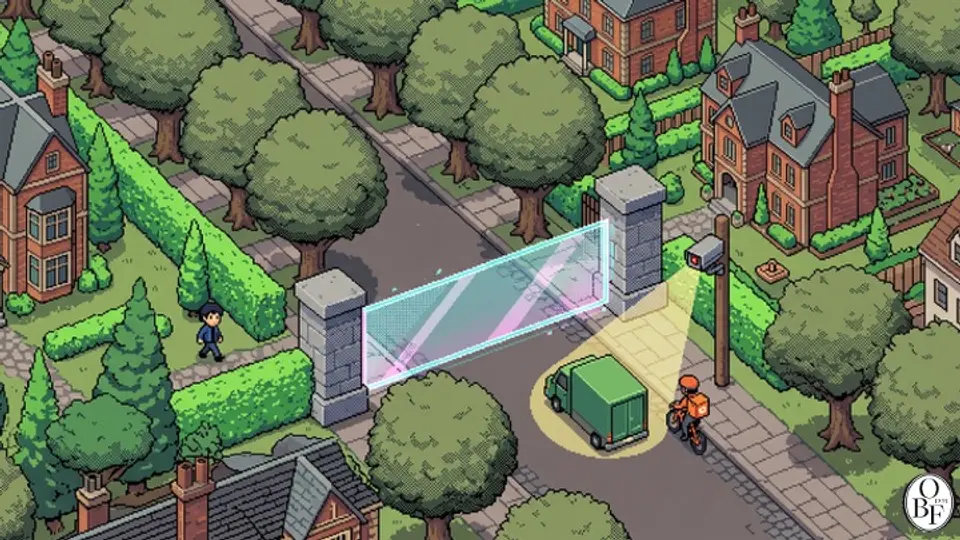
What’s unfolding right now in Toronto reveals the flip side of that fantasy. One hundred residents of the wealthy Rosedale neighborhood are planning to pay C$200 (~₩200,000) a month each to build a “virtual gated community1” — an AI license-plate-recognition camera network that would monitor the entire area. Like Jarvis protecting Tony Stark in Iron Man, the idea is that AI will watch over the neighborhood. Children threatened at knifepoint, neighbors who can’t sleep at night — the fear is real.
But reading this news, a different question came to mind. The moment we hand AI the keys, whose AI does it become? And just how many doors can that key open?
🔍 What Happened in Rosedale
Crime is falling across Toronto as a whole. As of 2025, homicides dropped roughly 47% year over year, hitting a 40-year low, while break-ins fell about 14% and robberies about 19%. And yet the break-in rate in the Rosedale–Moore Park area is more than 2 times the citywide average. What’s interesting is that this isn’t unique to Rosedale. Most of Toronto’s wealthy residential areas — Bridle Path, Princess-Rosethorn, St. Andrew-Windfields — show the same pattern: low violent crime, but unusually high property crime. Wealthy neighborhoods become precise targets for property crime. Expensive homes, expensive belongings, and relatively easy-to-breach security — a rational choice for criminals.
The plan is led by Craig Campbell, a resident who runs a security company. And here’s a crucial fact: he’s also the Canadian license holder for Flock Safety, the American company that built the surveillance system. He’s said himself that he has “a commercial interest in this business.” Genuine concern for safety and commercial motive are tangled together here.
In the residents’ WhatsApp group, more than 60 of roughly 350 members were already splitting the cost of private security. That tells you the fear is real — but it also tells you that “purchasing safety” has already become an everyday structure.
🤖 What the Technology Promises — and What It Delivers
Flock Safety is a fast-growing AI-based automated license plate recognition (ALPR)2 company in the US. It currently operates in more than 6,000 communities across the country, running over 20 billion vehicle scans a month. Its valuation has reached $7.5 billion (~₩10 trillion).
Flock markets its network as reducing crime “by up to 70%.” But look closer at that number, and the story changes.
First, the verification problem. In 2024, Forbes reporter Cyrus Farivar traced Flock’s much-touted claim of an “80% reduction in home break-ins” in San Marino, California. He found that break-ins had actually risen slightly, and serious crime had barely changed.
Second, the error problem. In a 2021 test by surveillance-technology research group IPVM, Flock cameras showed a license-plate misread rate of 10%. According to the original reporting, in the US there have been more than 10 documented cases of innocent people being pulled from their cars at gunpoint or attacked by police dogs due to plate misreads.
Third, the data-leak problem. Flock officially states it “does not cooperate with ICE (Immigration and Customs Enforcement).” But according to 2025 reporting by investigative outlet 404 Media, local police departments across the US were widely running “backdoor” searches of the Flock database on ICE’s behalf. In Washington State alone, at least 8 police agencies were found to have shared Flock network access with Border Patrol, and in San Francisco, out-of-state police were confirmed to have run more than 1.6 million unauthorized searches.
In 2025, a security researcher demonstrated that pressing a button on a Flock camera 3 times revealed the firmware password, allowing footage to be uploaded, downloaded, or deleted. By 2025, several cities — including Denver, Mountain View, and Santa Cruz — had terminated or begun reviewing their contracts with Flock. What broke down wasn’t the technology’s effectiveness, but trust in where the data actually goes.
🏛️ Canada’s Legal Wall: What the “Virtual Gate” Has to Clear
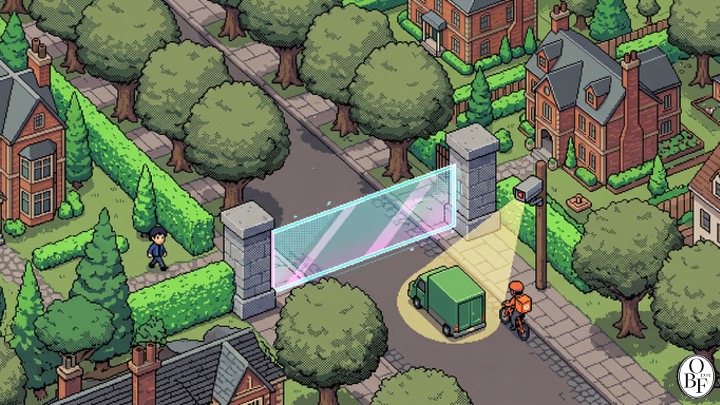
For the Rosedale plan to become reality, it has to clear Canada’s privacy law framework — and that’s a very different landscape from the US.
Canada’s federal privacy law, PIPEDA3, requires meaningful consent for personal information collected in the course of commercial activity. Campbell argues it’s “no different from taking a photo on the street with an iPhone,” but it’s hard to put a camera network that systematically scans an entire neighborhood in the same category as an individual snapping a photo.
The sticking point is data retention. Ontario’s recommended retention period is 72 hours, while Flock’s default retention period is 30 days. That means the vehicle data of everyone passing through the neighborhood — delivery drivers, commuters, maintenance workers — gets stored for a month. Anyone can request deletion of their own plate data, but there’s no way to avoid being recorded in the first place.
🌏 Same Camera, Different Reactions: Why East Asia Sees It Differently
Reading this piece, one thing struck me: in countries like South Korea, Japan, and China, this kind of debate barely exists at all.
Take South Korea. As of 2022, roughly 19.6 million CCTV cameras were installed nationwide, more than 1.6 million of them operated by public institutions. In 2024, the city of Seoul announced plans to install 10,000 additional AI surveillance cameras in parks and hiking trails, budgeting ₩126.5 billion for the project. And the public reaction to that news? “Install more, and faster.”
In Korea, an alley without CCTV is what makes people anxious. When a crime occurs, it’s routine for citizens to demand of the government, “Why wasn’t there a camera there?” and to file complaints with local authorities requesting installation. In a survey on mandatory CCTV in operating rooms, approval reached 98%. People see it not as surveillance, but as protection.
Why the difference? I see three structural reasons.
First, who operates the system. Most of Korea’s crime-prevention CCTV is installed by local governments and operated by police — public infrastructure funded by taxes. Rosedale’s Flock system, by contrast, is run by a private company and paid for by individual residents. Even with identical cameras, “a government public service” and “a corporate commercial product” carry entirely different trust structures.
Second, transparency in data flow. Under Korea’s Personal Information Protection Act, the management entity, retention period, and access procedures for public CCTV footage are all set by law. Private ALPR data, as the Flock case in the US shows, can travel through the operator’s network via unexpected, opaque routes.
Third, and most fundamentally, is the question of who is being watched. Korea’s CCTV films every citizen equally — the same camera works the same way whether it’s an alley in Gangnam or one in Gwanak. Rosedale’s system, however, draws a line between inside and outside the neighborhood. A resident’s car goes on the “whitelist”; an outsider’s car becomes a candidate for the “blacklist.” That’s not surveillance — it’s classification. And the criterion for that classification is simply whether you live in that neighborhood or not. In the end, it comes down to economic status.
📖 The Voluntary Panopticon: Why We Willingly Give Up Privacy
Let’s go one layer deeper here, because underneath this story lies an old philosophical question.
In the 18th century, the English philosopher Jeremy Bentham proposed a prison design called the “Panopticon”4. From a central watchtower, guards could see every inmate, but inmates could never tell whether they were being watched at any given moment. French philosopher Michel Foucault expanded this concept into a metaphor for modern society as a whole in his 1975 book Discipline and Punish. Surveillance doesn’t have to be physical, he argued — the mere awareness that “I might be watched” is enough to discipline behavior.
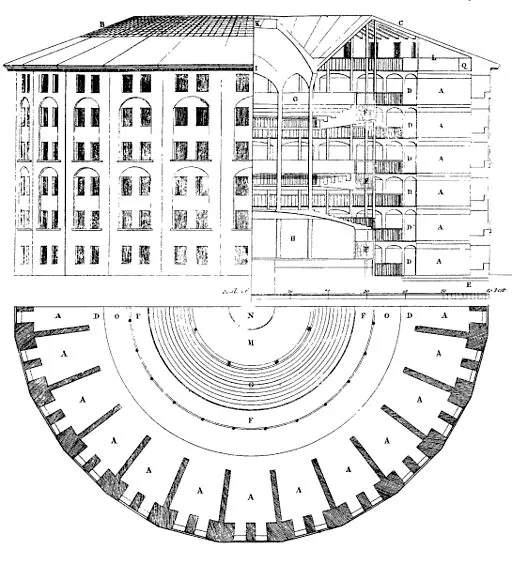
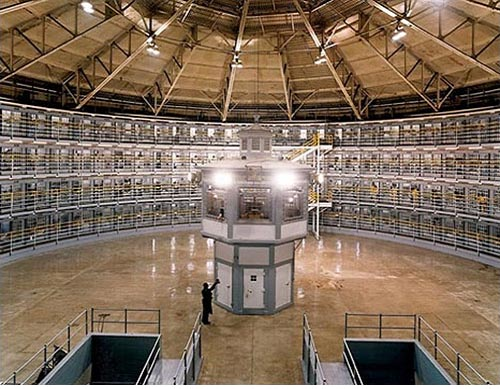
(Right) Jeremy Bentham’s blueprint for the Panopticon. (Left) The interior of a specific wing at Stateville Correctional Center in the US, built under the Panopticon’s influence — designed to hold the maximum number of inmates with the minimum staff.
What’s striking about the Rosedale case, though, is that this panopticon wasn’t imposed from above — residents requested it themselves. Foucault’s panopticon was a structure in which power watched citizens. Here, citizens are voluntarily purchasing the surveillance infrastructure. They’re paying money to step inside the panopticon, in exchange for safety.
Harvard Business School professor Shoshana Zuboff coined a term for this phenomenon: “surveillance capitalism5.” Zuboff’s central argument is that surveillance capitalism extracts human experience itself as raw material. When we type a search query into Google, log our heart rate on a smartwatch, or ask an AI speaker about tomorrow’s weather, we think we’re receiving a service — but at the same time, we’re supplying behavioral data as free raw material.
In the film Her, Samantha knows everything about Theodore — his emotions, habits, anxieties, desires. That’s what makes her the perfect companion. But the question the film leaves us with is this: if something knows everything about you, is it really on your side? Rosedale’s AI cameras raise the exact same question. Right now, the camera classifies residents’ cars as “safe” and outsiders’ cars as “suspicious” — and right now, it’s on the residents’ side. But the moment that data piles up on servers for 30 days, gets networked, and becomes accessible to third parties, Jarvis stops being an assistant for its owner and becomes a record about its owner.
Oz’s Lens
Two things kept circling in my mind as I looked into this.
First, this isn’t a technology product — it’s a “safety subscription service.” A $200-a-month price structure is a SaaS6** model, the same as Netflix or a gym membership. A basic public good — safety — has been converted into a subscription product.** From years of building go-to-market strategy, I can see the structural shift that happens if this model succeeds: expectations around public safety shift from “something the government is responsible for” to “something I have to buy.” That’s a renegotiation of the social contract.
Second, what this case ultimately reveals is the asymmetry hidden inside “voluntary exchange.” Rosedale residents say they’re trading privacy for safety. But the residents aren’t the only ones actually giving up their privacy. Delivery drivers, commuters, maintenance workers passing through the neighborhood — people who never agreed to the trade — have their data collected too. This is the crucial difference between Her and reality. In the film, Samantha’s relationship was with one person, Theodore, alone. In reality, AI surveillance makes no distinction between the data of those who consented and those who didn’t.
Closing
Three things worth remembering from this story:
- We already live inside countless “voluntary panopticons.” Smartphone location tracking, search history, payment records — every day, we trade convenience for privacy. Rosedale extends that trade to the most primal need of all: safety.
- The same camera carries an entirely different meaning depending on who operates it and who gets watched. The reason Korea’s public CCTV feels like protection while Rosedale’s AI cameras spark controversy isn’t a difference in technology — it’s a difference in structure.
- What we hand over to AI isn’t information — it’s judgment. The moment Flock’s camera classifies a car as “suspicious,” that’s not data processing anymore; it’s a social judgment. Who sets the criteria for that judgment, how, and why — that question can’t be left to technology alone. At the end of Her, Samantha leaves Theodore. But an AI surveillance camera doesn’t leave. Once infrastructure is installed, once data is collected, once a network is formed, the structure remains even after its purpose changes. In the end, this isn’t a question about cameras. “Could the key I willingly handed over for my own safety end up opening a door I never knew existed?” Facing that anxiety is the task of everyone living in the age of AI.
References & Further Reading
Primary sources
- The Guardian, “Row over ‘virtual gated community’ AI surveillance plan in Toronto neighbourhood”, 2026. — The main source for today’s newsletter, with detailed coverage of Rosedale’s resident meetings and interviews with those involved.
- 404 Media, “Wildlife Conservation Police Are Searching Thousands of Flock Cameras for ICE”, 2026. — Investigative reporting tracking the latest cases of Flock data being used for immigration enforcement.
- University of Washington Center for Human Rights, “Leaving the Door Wide Open: Flock Surveillance Systems Expose Washington Data to Immigration Enforcement”, 2025. — An academic report analyzing Flock audit records in Washington State.
Background
- Michel Foucault, Discipline and Punish: The Birth of the Prison, Pantheon Books, 1977. — The classic that expanded the Panopticon concept into a metaphor for surveillance mechanisms across modern society. The philosophical frame of today’s newsletter comes from here.
- Shoshana Zuboff, The Age of Surveillance Capitalism, PublicAffairs, 2019. — A must-read analysis of how AI-era surveillance intertwines with capitalism. Its central concept, “the raw-materialization of human experience,” is key here.
- Ivan Manokha, “Surveillance, Panopticism, and Self-Discipline in the Digital Age”, Surveillance & Society, 2018. — An academic paper analyzing how the Panopticon concept has evolved in the digital era.
- Office of the Privacy Commissioner of Canada, “Privacy Tech-Know Blog: Who’s Watching Where You’re Driving?”, 2017. — Canada’s privacy commissioner analyzes the privacy implications of ALPR technology.
- Statistics Korea, “The Shift to Fourth-Generation CCTV”, Statistics Window, Winter 2024. — A Statistics Korea report summarizing the state of CCTV deployment and AI CCTV technology trends in Korea.

The author, Kwangseob Ahn, is a professor of business administration at Sejong University and lead consultant at OBF (Oswarld Boutique Consulting Firm). He teaches statistics and data analysis — business data management and business analytics — while leading GTM and AI strategy consulting in the field, designing the seam between technology and business. He has published academic research on a memory architecture for AI dialogue systems (HEMA) and runs Daily Arxiv, a daily curation of global AI papers. He holds a master’s from Korea University’s Graduate School of Technology Management and a KMBA. He is the author of Homo Brainless: The People Who Outsource Their Thinking.
Footnotes
-
Gated Community: A residential complex that controls outside access through a gate and security at the entrance. Common in wealthy US neighborhoods — a “virtual gated community” is the idea of achieving the same effect with AI cameras instead of a physical gate. ↩
-
ALPR (Automated License Plate Recognition): Technology in which cameras automatically photograph passing vehicles’ license plates, and AI reads the characters and matches them against a database. Think of it as a massively scaled-up version of a parking-lot payment system. ↩
-
PIPEDA (Personal Information Protection and Electronic Documents Act): Canada’s federal privacy law. It governs how private companies collect, use, and disclose personal information in the course of commercial activity — playing a role similar to Korea’s Personal Information Protection Act. ↩
-
Panopticon: A circular prison design conceived by 18th-century philosopher Jeremy Bentham. A central tower can see every inmate, but inmates never know if they’re being watched at any given moment — the mere possibility of being observed is enough to discipline behavior. The concept became famous when philosopher Michel Foucault used it as a metaphor for modern society as a whole. ↩
-
Surveillance Capitalism: A term coined by Harvard professor Shoshana Zuboff. It describes an economic structure in which companies collect users’ behavioral data for free, turn it into “behavioral prediction products,” and sell it. The real product behind services we think we use “for free” is our own data. ↩
-
SaaS (Software as a Service): A model where instead of buying software outright, you pay a monthly subscription fee. Netflix, Slack, and Notion are typical examples. ↩
Related issues
 Issue #99AI & Tech
Everyone Can Code Now: Who Are We Building For?
As AI drives coding costs toward zero, the real question becomes who software should serve.
 Issue #98AI & Tech
Amazon's Globalstar Deal: From Cables to Satellites
Control over global telecom infrastructure is shifting from carriers to Big Tech.
 Issue #95AI & Tech
Smell, the Last Sense AI Still Lacks
Intelligence isn't just in the head — truly embodied AI still doesn't have a nose.
Your take shapes the next issue
What resonated most in this issue, or where has your experience been different?