Everyone Can Code Now: Who Are We Building For?
As AI drives coding costs toward zero, the real question becomes who software should serve.
Opening
Hey there — have you been experimenting with vibe coding or AI lately?
September 2007, a lecture hall at the University of Brighton. Ben Werdmüller, co-founder of the open-source social network Elgg, took the stage. The audience was made up of people running social networks with tens or hundreds of thousands of members. They were waiting eagerly to hear what features would ship in the next version. He put up a blank slide and said:
“None. The next version has no features.”
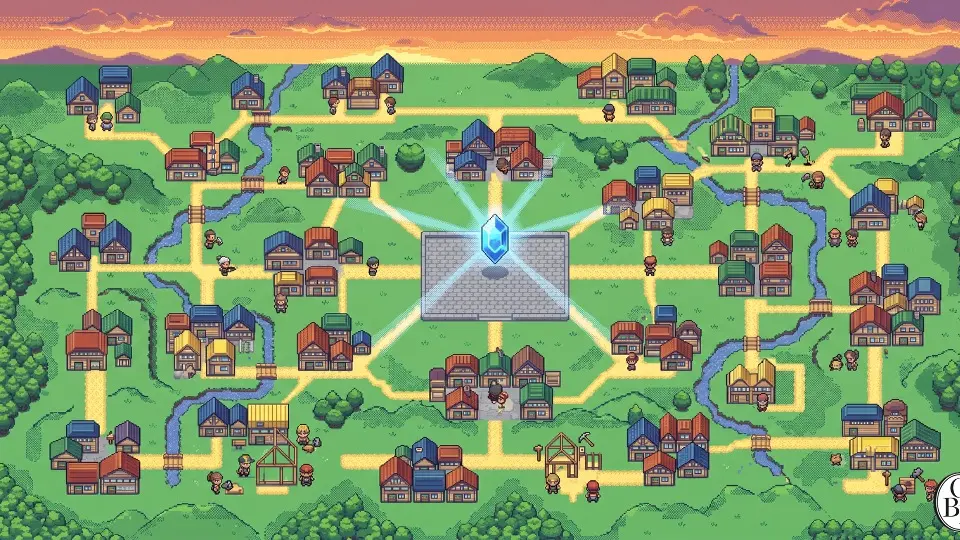
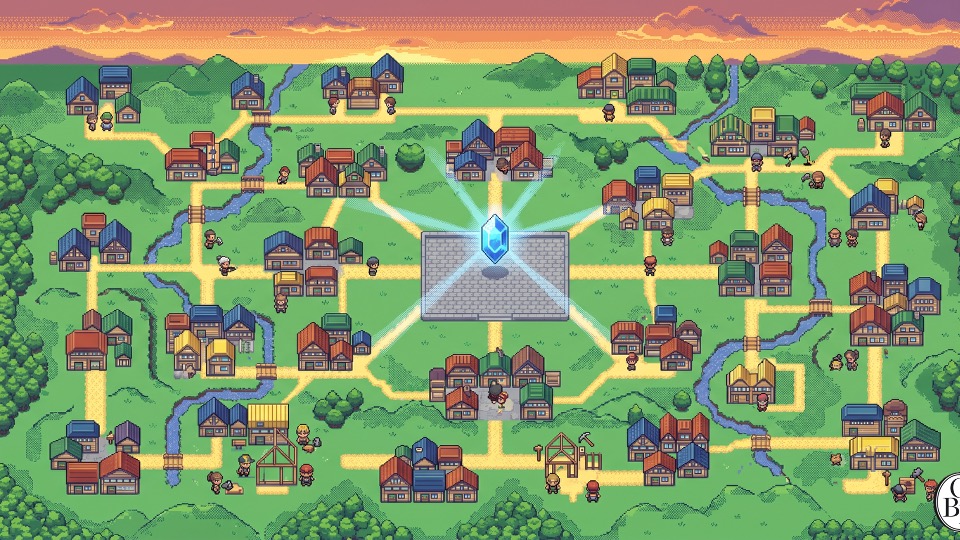
The room reportedly gasped. His point was this: every community needs something different, so how could a platform team possibly know what every single community needs? So Elgg’s answer was to strip out “features” and build in a “composable structure” instead — letting each community’s own operators pick and assemble whatever fit their community.
Eighteen years later, that same philosophy is being summoned again, in a completely different technical landscape — at the intersection of agentic coding1 and open protocols2. Today I want to talk about what’s becoming possible at that intersection.
🏗️ The Structural Limits of “One Size Fits All” Platforms
For the past 18 years, the history of social media has effectively been a history of homogenization. Facebook, Twitter, Instagram, TikTok — all of them applied a single design, a single set of rules, a single algorithm to billions of people worldwide.
The problem is that this one-size-fits-all design bakes in the cultural and intellectual assumptions of whichever team built it. Could a team headquartered in Menlo Park really understand the community dynamics of the Rohingya in Myanmar?
The result was catastrophic. The UN’s Independent International Fact-Finding Mission concluded in a 2018 report that Facebook had played a “determining role” in spreading hate speech against the Rohingya. In Myanmar, Facebook wasn’t just a social network — it was effectively the internet itself. At the time, the vast majority of Myanmar’s internet users consumed information almost exclusively through Facebook, while Facebook’s Burmese-language content reviewers numbered just 2 for 18 million active users.
This wasn’t a simple operational failure. It’s the structural limit that emerges whenever a single platform tries to cover the entire world with a single worldview. Some communities have specific identity-related needs; others need their unique cultural sensitivities reflected in trust and safety policy. A one-size-fits-all platform either ignores these needs or never even perceives them.
🔧 How Agentic Coding Is Rewriting the Economics of Building
But over the past few years, the cost structure of writing code itself has begun to shift.
LLM-based agentic coding has moved beyond being an “interesting tool” and become an actual code-production engine. There’s a striking passage in Werdmüller’s essay. Senior engineers who’ve been writing software for 30-plus years — Jesse Vincent, who maintained the Perl programming language, and Simon Willison, creator of Datasette and co-founder of Lanyrd — are now using LLMs as full-time coding engines. If LLMs were useless for coding, these are exactly the people who would have said so first. Instead, the opposite happened.
This isn’t a story about developer productivity. It’s a story about the barrier to producing software collapsing at a fundamental level. In the past, a community that wanted to build its own platform needed to assemble a development team. Even using open-source projects like WordPress or Elgg, customization still required substantial engineering capability.
Two new trends here are worth paying attention to.
First, the rise of the Citizen Developer. A citizen developer is someone outside the IT department or professional engineering — a line-of-business person building the software they need directly. The term originally emerged in the context of low-code/no-code3 platforms, but its possibilities are exploding now that it meets agentic coding. Gartner has forecast that citizen developers at large enterprises will outnumber professional developers 4 to 1. In community terms, this means a community leader can become a platform builder in their own right.
Second, a role shift called the Forward Developer. The traditional developer’s role is moving “forward” — away from writing code and toward architecture design, AI-agent orchestration, and quality verification. There are forecasts that by 2026, 75% of developers will spend more time on design and orchestration than on hands-on coding. In plain terms: citizen developers are widening the base of “who gets to build,” while traditional developers move up into higher-level design and quality control — a dual expansion happening at once.
Put these two trends together, and the landscape for community social platforms changes fundamentally. A community leader (the citizen developer) says, “our community needs this feature,” AI generates the code, and a forward developer verifies the architecture and safety — that structure becomes possible.
But this raises one problem. If every community builds its own custom software, what happens? You end up with thousands, tens of thousands, of isolated islands.
🌐 Open Protocols: A Bridge Between Isolated Islands
This is exactly where open protocols become important.
Just as the web runs on the open protocols of HTTP and HTML, the next generation of social platforms is being built on open protocols too. Right now, two major protocols are competing to shape this ecosystem.
ActivityPub is a protocol the W3C adopted as a formal recommendation in 2018. It lets different community platforms exchange messages on behalf of their users. Mastodon, Ghost, and even Meta’s Threads are all connected through this protocol. In plain terms, it’s “a common language that lets people using different social services still talk to each other.”
ATProto (Authenticated Transfer Protocol) is a protocol developed by Bluesky. It focuses more on user identity and data portability. You can use your own domain as your handle, and if you move services, you can bring your data and followers with you. Where ActivityPub focuses on “communication between servers,” ATProto puts its weight on “user-centered data sovereignty.”
Here’s the key point. Both protocols let anyone build a new, compatible platform. Just as anyone can build a web browser by following the HTTP and HTML specs, anyone can build a social platform by following the ActivityPub or ATProto specs — and that platform is instantly compatible with the existing ecosystem.
Until now, open protocols mostly played the role of coordinating “a small number of applications running as many instances” — thousands of Mastodon servers talking to each other, for instance. But as agentic coding causes an explosion in software production, the role of open protocols fundamentally changes. They become the coordination layer that connects an exploding ecosystem of custom applications.
🧩 The Missing Pieces: Trust, Safety, and Value Alignment
Of course, building a community platform and running a community “safely” are two different problems.
Trust and safety features — content moderation, reporting systems, abuse prevention — are the core of running any community. And this is precisely the biggest reason a “custom community platform” is needed at all. The signals of abuse differ from community to community, and the standards for safety differ from culture to culture. That’s exactly why Facebook failed in Myanmar.
Werdmüller also finds his answer to this problem in open protocols. If there’s a dedicated open protocol for trust and safety, community operators can connect to third-party safety tools. Multiple communities that share similar values could even pool resources to run a shared content-moderation system.
And there’s one more, more fundamental question: the value alignment of the AI itself that generates the code.
Right now, most LLMs reflect the culture and assumptions of Silicon Valley. Bias in training data has already been documented across numerous studies. To truly build community-centered software, the AI generating that software has to be aligned with that community’s own values.
There are notable moves in this direction. Small Language Models (SLMs)4 are being used to build AI specialized for minority languages and cultures. According to a 2025 Brookings Institution report, SLMs can be trained on small datasets to develop tools tailored to a specific language, which is being used to preserve and revitalize Indigenous languages. Canada’s Mila research institute is developing the FLAIR project, a speech-recognition AI for North American Indigenous languages, built together with the communities themselves. In November 2025, the Mozilla Data Collective officially launched, community-managing more than 300 datasets across 286 languages — a structure where data contributors set their own terms for how their data is used.
Oz’s Lens
Honestly, reading this piece, something clicked for me as a GTM strategy consultant. What Werdmüller describes isn’t idealism — it’s closer to a shift in market structure. When the cost of producing software collapses, the platform monopolies that were sustained by “economies of scale” start to wobble.
What catches my attention is channel strategy. Until now, a community has been a “tenant” moving into someone else’s platform. Open-protocol-based custom platforms make it possible for a community to own its own channel. This is really a story about channel sovereignty for communities.
The emergence of citizen developers and forward developers accelerates this shift. It’s a pattern I’ve seen repeat itself across companies of every size while building go-to-market strategy: every time a new tool appears, the boundary of “who gets to build” gets redrawn. Just as Excel democratized financial analysis and Canva democratized design. A collaboration model where citizen developers produce the “draft” and forward developers push it to production quality — this is the same logic behind the build-verify separation structures I’ve often designed in practice.
One caveat, though. When technology gets democratized, the ecosystem tends to re-consolidate around a handful of hubs again. A new kind of power is likely to concentrate around whoever controls the protocol specification. Does a community actually have the governance in place to exercise real technical autonomy? That question remains open.
Closing
To sum up:
First, as the Myanmar case shows, the limits of one-size-fits-all platforms aren’t a technical flaw — they’re a structural one. A model that serves communities worldwide through a single worldview has fundamental limits baked in.
Second, the combination of agentic coding and open protocols is opening up the possibility for communities to build spaces tailored to themselves while still staying connected to each other. Citizen developers are widening the base of “who gets to build,” and forward developers are guaranteeing quality and safety — this dual structure is turning that possibility into reality.
Third, the truly hard problem isn’t code — it’s people. Trust and safety, AI value alignment, community governance — the easier the technology gets, the more these human questions rise to the surface.
A line Werdmüller wrote has stayed with me: “Once code becomes a solved problem, the human things end up mattering most.” What’s needed, why it’s needed, who it’s for. An era is coming where it’s the community itself — not someone in Menlo Park — that gets to answer those questions.
References & Further Reading
Primary sources
- Ben Werdmüller, “One size fits none: let communities build for themselves,” werd.io, 2025. This is the source piece for today’s newsletter — a look at the possibilities of agentic coding × open protocols from the perspective of an open-source social network pioneer.
- The Fediverse Report, “A conceptual model of ATProto and ActivityPub,” 2024. A clear, accessible explainer on the conceptual differences between ActivityPub and ATProto. What stands out is how differently the two protocols interpret “decentralization.”
Background
- Brookings Institution, “Can small language models revitalize Indigenous languages?” 2025. Covers how SLMs are being used to preserve Indigenous languages, plus the ethical framework for community-led AI development.
- Mozilla Foundation, “Mozilla Data Collective Redefines How AI Data Is Created, Shared, and Who Benefits,” 2025. A new model for an AI data ecosystem in which communities hold sovereignty over their own data.
- Harvard Law School Systemic Justice Project, “Facebook and Genocide,” 2022. An analysis of Facebook’s Myanmar case through the lens of business model and structural failure.

The author, Kwangseob Ahn, is a professor of business administration at Sejong University and lead consultant at OBF (Oswarld Boutique Consulting Firm). He teaches statistics and data analysis — business data management and business analytics — while leading GTM and AI strategy consulting in the field, designing the seam between technology and business. He has published academic research on a memory architecture for AI dialogue systems (HEMA) and runs Daily Arxiv, a daily curation of global AI papers. He holds a master’s from Korea University’s Graduate School of Technology Management and a KMBA. He is the author of Homo Brainless: The People Who Outsource Their Thinking.
Footnotes
-
Agentic Coding: an approach where AI doesn’t just suggest snippets of code, but autonomously carries out an entire development workflow. A developer says “build me this feature,” and the AI handles everything from design to implementation. Tools like Claude Code are prime examples. ↩
-
Open Protocol: a public agreement on how software talks to other software. Just as HTTP is the agreement between web browsers and servers, ActivityPub is the agreement between social platforms. Anyone who follows the agreement can join the ecosystem. ↩
-
Low-code/No-code: a development approach that lets you build software through drag-and-drop or visual interfaces instead of complex programming. With the rise of agentic coding, it’s now possible to generate code just by giving instructions in natural language, further expanding the possibilities for citizen developers. ↩
-
Small Language Model (SLM): unlike large models such as GPT-4, an SLM is a smaller AI model specialized for a particular task or language. Because it can be trained with less data and computing power, it’s well suited to customization for minority languages or specific domains. ↩
Related issues
 Issue #98AI & Tech
Amazon's Globalstar Deal: From Cables to Satellites
Control over global telecom infrastructure is shifting from carriers to Big Tech.
 Issue #95AI & Tech
Smell, the Last Sense AI Still Lacks
Intelligence isn't just in the head — truly embodied AI still doesn't have a nose.
 Issue #92AI & Tech
An AI Ran a Store—and Paid Women Less
When you hand a decision over to a machine, who ends up owning the bias inside it?
Your take shapes the next issue
What resonated most in this issue, or where has your experience been different?