The Sheet of Paper That's Killing America's Prisoners
While regulators take one step, underground chemists sprint ten.
Opening
Dear reader, I was chatting with a friend recently who wondered aloud why the US takes drugs so seriously and keeps pushing China on fentanyl regulation. (We were probably talking about tariffs at the time.) This friend’s only exposure to drugs had been marijuana, Breaking Bad, and the occasional news headline. But another person at the table had actually seen people in California addicted to fentanyl and synthetic drugs firsthand, and the gap in how the two of them reacted to the issue was enormous. So I decided to look into it myself. What on earth is happening in the world of drugs?
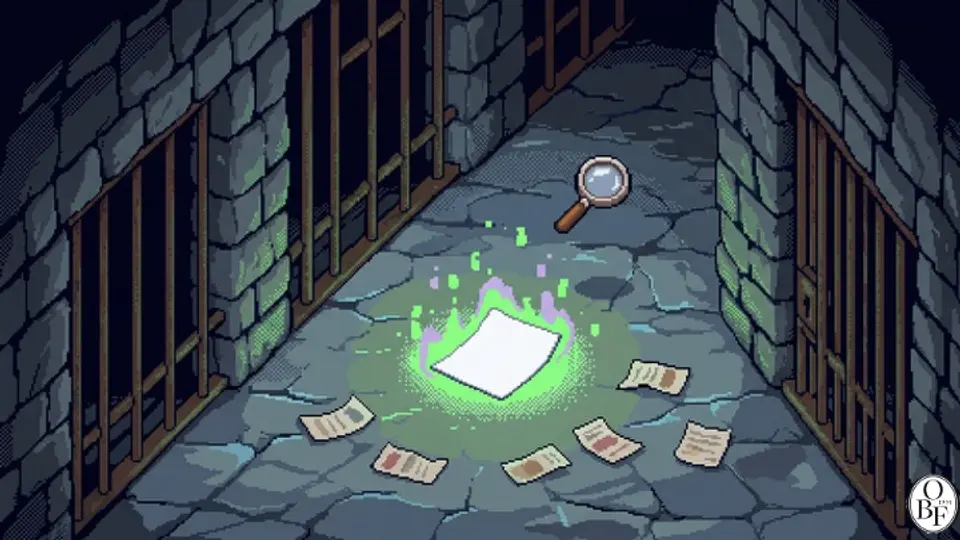
In January 2023, an inmate was found dead at Cook County Jail in Chicago. There were no signs of foul play — just a scrap of burnt paper on the floor. Investigators couldn’t pin down the cause of death at first. Over the following months, more inmates at the same jail began collapsing in a pattern. The culprit was neither heroin nor fentanyl. The only thing every death scene had in common was a piece of paper.
Letters, legal documents, books — ordinary-looking paper had been soaked in synthetic drugs, and inmates were tearing off pieces to smoke. At least 7 people died over 18 months. This might read like a crime story out of an American prison, but it’s actually a signal of something far more structural: synthetic chemistry is rewriting the fundamental rules of the illegal drug market, and existing enforcement systems simply can’t keep up.
The ‘Paper Era’ of Synthetic Drugs: What’s Actually Happening
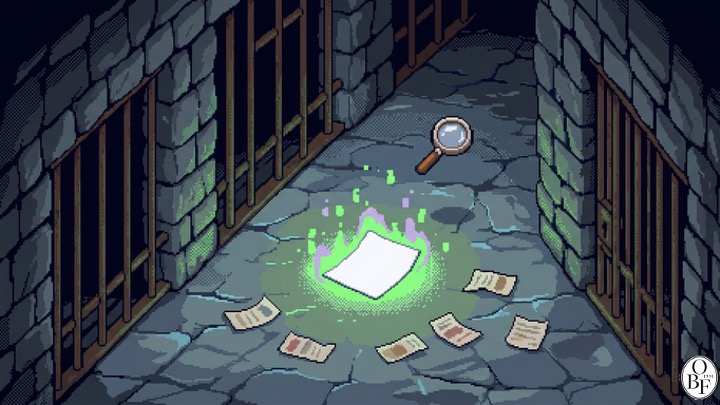
Justin Wilkes, chief investigator at Cook County Jail, uncovered something startling while probing the case: a single sheet of paper had been laced with 10 different synthetic drugs. Opioids, sedatives, synthetic cannabinoids1, hallucinogens, and stimulants were all mixed together on one page. Forensic pathologist Christopher Pardoni called it an extreme concentration of everything dangerous about the new generation of synthetic drugs.
Inside the jail, a driver’s-license-sized scrap of this paper sold for $800 (~₩1.1 million), while a full A4 sheet went for as much as $10,000 (~₩13.7 million). Outside, synthetic drugs are far cheaper than traditional ones — but inside the closed market of a prison, the difficulty of smuggling and the desperation of demand send prices through the roof.
And this isn’t just a Cook County problem. According to a New York Times analysis, arrests or indictments for smuggling drug-laced paper into prisons have occurred in more than 15 US states. In Texas, roughly 190 inmates died from drug-related causes between 2020 and July 2025, with synthetic cannabinoids identified as a cause or contributing factor in 110 of those cases. At Nevada prisons, 127 inmates were hospitalized for overdoses in 2025 alone — already surpassing the entire previous year’s total of 59.
The most troubling part is how hard these drugs are to detect. Drug-sniffing dogs can’t smell them, and there’s no field test kit that works. Sending confiscated paper to a specialized lab for analysis takes 5 to 6 weeks — and by then, a new variant has already emerged.
The Synthetic Chemistry Arms Race: Why Regulation Can’t Keep Up
For most of human history, drugs came from the earth. Opium came from the poppy, cocaine from the coca leaf, marijuana from cannabis. Throughout the 20th century, government drug enforcement worldwide focused almost entirely on these 3 plant-derived substances.
Today’s world is completely different. According to the UNODC (United Nations Office on Drugs and Crime), 688 new psychoactive substances (NPS)2 were reported in 2024 alone — an all-time record. Cumulatively, as of October 2025, 1,396 distinct substances have been identified across 153 countries, with 101 new ones appearing in 2024 alone.
What these numbers mean is clear: by the time regulators add one substance to the banned list, underground chemists have already cooked up several new ones that aren’t on it. Many of these new substances aren’t even illegal yet — they’re already circulating before the law catches up.
One especially concerning class is nitazenes3, a family of synthetic opioids. Developed as painkillers in the 1950s, they were never approved for medical use because they turned out to be too toxic. They reappeared on the illegal market starting in 2019. Some nitazene analogs are 20 to 40 times more potent than fentanyl and hundreds to 1,000 times more potent than morphine. Toxicology tests on the Cook County Jail deaths also turned up nitazenes.
Bob DuPont, who served as President Richard Nixon’s chief drug policy advisor, called this “a modern drug crisis unlike anything the world has ever seen.” Dr. Andrew Monte of the Rocky Mountain Poison Center was even blunter. “This is the most dangerous time in human history to use drugs,” he said, adding, “and tomorrow it’ll be worse.”
This isn’t simply a drug problem — it’s a structural asymmetry between the speed of innovation and the speed of regulation. Scientists have taken to calling this the “digitization of drugs”: recipes get shared online, precursor chemicals get ordered over the internet, and distribution happens through package delivery.
The Cook County investigation illustrates this perfectly. Smugglers registered as Amazon third-party sellers, packaging drug-laced books to look like official Amazon shipments and sending them straight to the prison’s receiving dock. Amazon issued a statement saying it had no confirmed information that a third-party seller had actually shipped drugs into a prison — but investigators tested the method themselves and confirmed that it works.
Is Korea Safe? The Global Spread of Synthetic Drugs
This might feel like a purely American problem. But the data tells a different story.
The Korea Customs Service seized 1,256 cases totaling 3,318 kg of drugs at the border in 2025 alone — an all-time high, up 46% in case count and 321% in weight from the previous year. Notably, so-called “club drugs” like ketamine and LSD — anesthetics and hallucinogens — more than doubled. The share of online drug offenses jumped from 21.4% in 2020 to 39.9% in 2025, and people in their 10s to 30s accounted for 63.5% of all arrests.
In its World Drug Report 2025, the UNODC noted that as the US and Canada tighten border controls, Latin American drug cartels are opening up new markets in Asia and elsewhere. Korea Customs believes this exact dynamic is now playing out domestically.
The defining traits of synthetic drugs — high potency in tiny quantities, difficulty of detection, online distribution — weaken the very concept of a border. If drug-laced paper works in an American prison, it can reach anywhere via international mail or express cargo. Korea has already caught smuggling operations disguised as e-cigarette cartridges, jelly-form food products, and eyelash remover. The number of drug types detected in e-cigarettes alone rose from 26 in 2022 to 33 in 2025.
Oz’s Lens
Reading this piece, what caught my attention wasn’t the drug problem itself but the structural pattern underneath it. The Cook County story is a textbook case of what happens when an attacker’s pace of innovation overwhelms a defender’s pace of response. It’s a pattern I’ve seen countless times building go-to-market strategy. In any market, the side circumventing the rules always moves faster than the side writing them.
When prison authorities tightened mail inspections, smugglers disguised the drugs as legal correspondence. When legal mail got inspected, they switched to Amazon packages. When drug-sniffing dogs were deployed, they cooked up new substances the dogs couldn’t smell. Every countermeasure gets met with adaptation — this is exactly the same pattern you see between hackers and security teams in cybersecurity, or between the pace of AI development and the pace of lawmaking.
There’s one more thing worth noting. US overdose deaths fell 27% in 2024, down to roughly 80,000. That sounds like good news, and it largely is — it reflects real progress against fentanyl. But here’s the catch: the harder fentanyl gets cracked down on, the more room opens up for something stronger and harder to detect, like nitazenes, to fill the vacuum. Catch one substance, and a more dangerous one takes its place — that paradox is the real structure of this crisis.
To me, the most important question this story raises is: “How do you regulate a threat you can’t see?” Drugs soaked into paper have no smell, no color, no weight. The ‘physical properties of drugs’ that existing enforcement infrastructure assumes exist have simply vanished. This isn’t only a drug policy problem — it’s a fundamental challenge our society will face as chemical and biological threats become increasingly invisible. What’s more, the drugs Korea currently monitors and regulates are the familiar ones we all know. When it comes to the synthetic drugs described above, there are essentially no detected cases and no method for catching them. Digging further, I found that since 2025, new synthetic drugs have started turning up in domestic use cases, and there are even reports of people manufacturing and using them at home.
Closing
Here’s the core of today’s story.
First, synthetic drugs are completely transforming the illegal drug market from plant-based to chemistry-based. Hundreds of new substances appear every year, circulating before the law can catch up. Second, these substances are getting more potent, harder to detect, and increasingly hidden inside everyday carriers — paper, e-cigarettes, food. Third, this isn’t just an American problem — Korea’s own drug seizure trends show the same pattern.
If this topic interests you, I’d recommend the UNODC’s The Challenge of New Psychoactive Substances — A Technical Update 2024 report. It systematically documents the chemical evolution of synthetic drugs.
References & Further Reading
- New York Times, “No Pills or Needles, Just Paper: How Deadly Drugs Are Changing” 2026. : The core source for today’s issue — an 18-month investigative report tracking the Cook County Jail investigation.
- UNODC, The Challenge of New Psychoactive Substances — A Technical Update 2024, June 2024. : A technical report cataloguing the chemical classification and market evolution of new psychoactive substances.
- UNODC Early Warning Advisory, “Record high of 688 individual NPS reported worldwide in 2024,” October 2025. : The latest data on global NPS reporting for 2024.
- CDC, “U.S. Overdose Deaths Decrease Almost 27% in 2024,” NCHS, May 2025. : The latest official statistics on US overdose death trends.
- Vanderbilt University Medical Center, “Forgotten opioid has resurfaced as lethal street drug” Pain Medicine review, September 2025. : A review paper summarizing the pharmacology and public health threat of nitazenes.
- JAMA Network, “Identification and Health Risks of an Emerging Means of Drug Use in Correctional Facilities,” December 2024. : A case series and substance analysis of drug-laced paper found in US correctional facilities.
- Korea Customs Service, “1,256 Cases, 3,318 kg of Drugs Seized in 2025,” January 2026. : An official announcement outlining Korea’s drug smuggling trends.
- Hwan-gyeong Gamsi Ilbo (Environmental Monitoring Daily), “Alarm Over Spread of ‘New Synthetic Drugs’ Disguised as E-cigarettes and Food,” February 2026. : Reporting that tracks the evolving methods of new synthetic drug distribution in Korea.

The author, Kwangseob Ahn, is a professor of business administration at Sejong University and lead consultant at OBF (Oswarld Boutique Consulting Firm). He teaches statistics and data analysis — business data management and business analytics — while leading GTM and AI strategy consulting in the field, designing the seam between technology and business. He has published academic research on a memory architecture for AI dialogue systems (HEMA) and runs Daily Arxiv, a daily curation of global AI papers. He holds a master’s from Korea University’s Graduate School of Technology Management and a KMBA. He is the author of Homo Brainless: The People Who Outsource Their Thinking.
Footnotes
-
Synthetic cannabinoids: chemicals engineered in labs to mimic the effects of THC, marijuana’s main active compound. Sometimes sold under names like “K2” or “Spice.” They can be 10 to 100 times more potent than natural cannabis, making them far more dangerous. ↩
-
NPS (New Psychoactive Substances): an umbrella term for new psychoactive chemicals not covered under existing international drug control treaties. Sometimes marketed as “legal highs,” but in reality their safety has never been tested. ↩
-
Nitazenes: a class of synthetic opioids developed as candidate painkillers in the 1950s but never approved for medical use due to extreme toxicity. Some analogs are 20 to 40 times more potent than fentanyl and go undetected by standard drug tests. They reappeared on the illegal market starting in 2019. ↩
Related issues
 Issue #82AI & Tech
What Is an AI Harness? The Secret Behind 100x Productivity
The Claude Code leak settled it: the gap between AI users comes not from intelligence, but from the shell wrapped around the model.
 Issue #77AI & Tech
Krafton Did What ChatGPT Said. The Court Reversed It All.
The CEO who let ChatGPT make the call ended up owing not ₩325 billion (~$250M) — but trust.
 Issue #76AI & Tech
Italy's New Law: Paid Leave When Your Pet Is Sick
Italy just made pet sick leave a legal right — and Korea's numbers suggest it might not be far behind.
Your take shapes the next issue
What resonated most in this issue, or where has your experience been different?