Krafton Did What ChatGPT Said. The Court Reversed It All.
The CEO who let ChatGPT make the call ended up owing not ₩325 billion (~$250M) — but trust.
Opening
Hello, dear reader. A remarkably interesting court ruling was recently made public. The CEO of a globally successful gaming company grew anxious about a looming payout when it looked like an indie studio’s sequel was headed for success, and asked ChatGPT exactly this: ‘Is there any way to avoid paying the $250 million I owe under contract?’ ChatGPT initially said it would be difficult. But when the CEO kept pressing, ChatGPT came up with a surprisingly plausible strategy. Form a task force. Get ahead of gamer-community sentiment. Lock down Steam publishing rights. Systematically prepare legal defense materials.
The CEO carried out that strategy almost to the letter. The result? A Delaware court ordered every single measure undone. The fired director was reinstated, publishing rights were returned, and the earnout deadline was extended by 258 days.
The company at the center of this story is Krafton, the maker of PUBG: Battlegrounds. Today, I want to explain why this isn’t just another gaming-industry dispute — it’s a case study in the structural traps of decision-making in the age of AI.
🎮 A $500 Million Acquisition, and the Regret of a ‘Bad Deal’
In 2021, Krafton acquired Unknown Worlds Entertainment, the American indie studio behind the undersea survival game “Subnautica,” for $500 million (about ₩650 billion). One more condition was attached: an earnout1 agreement under which, if the sequel Subnautica 2 hit certain revenue targets, Krafton would pay up to an additional $250 million (about ₩325 billion).
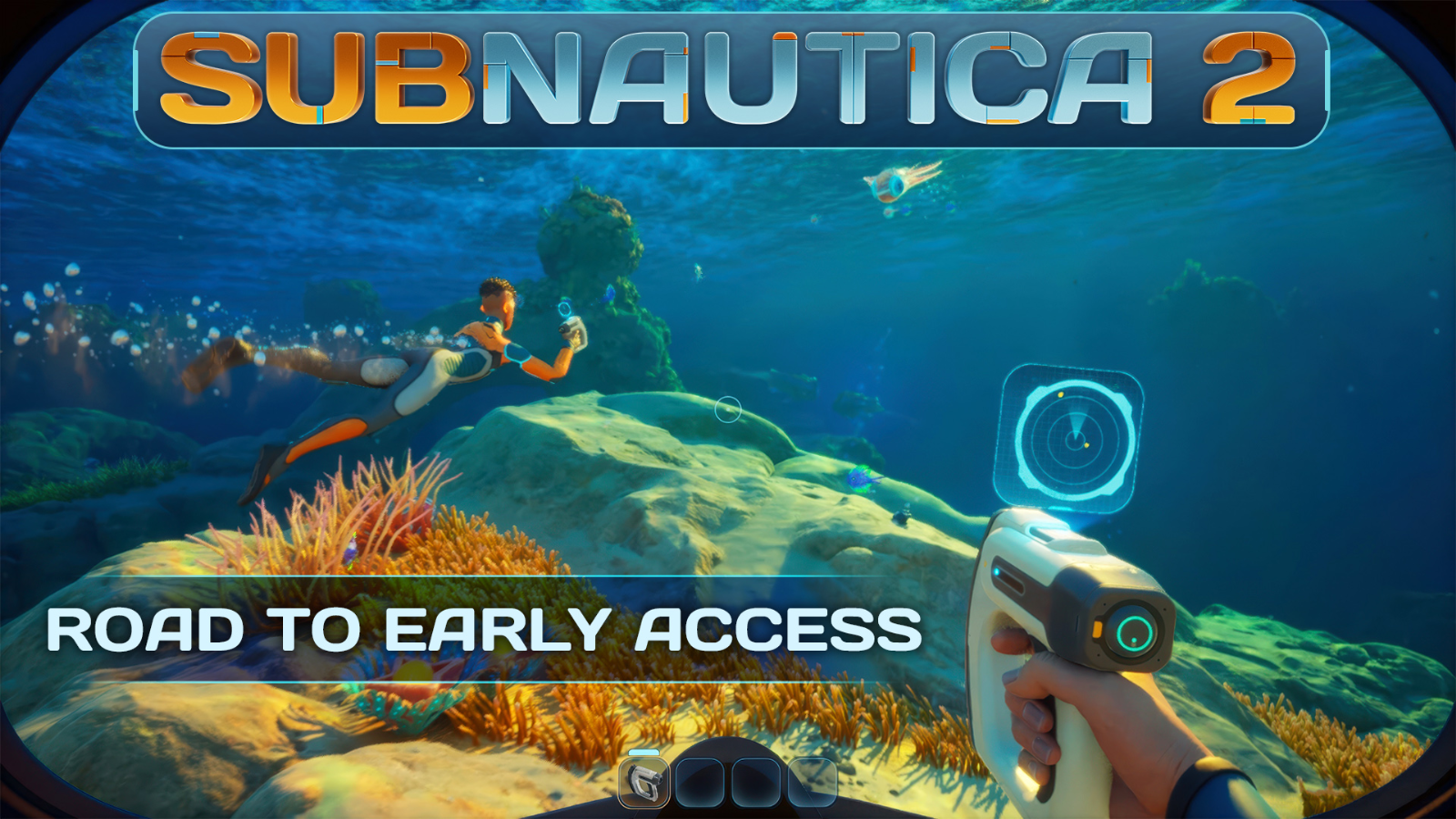
The structure of this deal was unusual. Once revenue crossed a $69.8 million baseline, Krafton had to pay $3.12 for every additional dollar earned — a highly leveraged structure, capped at $250 million. Co-founders Charlie Cleveland and Max McGuire, together with CEO Ted Gill — three people in total — were designated “Key Employees,” guaranteed operational control of the studio for the duration of the earnout period. Grounds for termination were narrowly limited to cases like felony conviction, willful fraud, or trade secret leaks.
The problem surfaced in the spring of 2025. As Subnautica 2’s Early Access launch approached, Krafton’s internal finance team ran revenue projections. They forecast sales of more than 1.67 million units by the fourth quarter following the August 2025 Early Access launch, putting the earnout payout at $191.8 million in the base scenario and $242.2 million in the best case — essentially at the cap. In some scenarios, the earnout payout even exceeded Krafton’s own valuation of the studio.
Here’s something worth noting: the earnout agreement itself was a condition both sides agreed to at the time of the 2021 acquisition — a structure Krafton itself proposed in order to win the bidding war. Paying extra if the game succeeds also means, conversely, not having to pay if it flops. It was a risk-reducing device for the buyer, too. But once it looked like the game was really going to succeed, that very risk hedge turned into a burden.
Court records show that Krafton CEO Kim Chang-han called the deal a “bad deal” in an internal Slack message and said he felt “taken advantage of.” He was also reportedly worried that paying the earnout would make him look like a “pushover.” Maria Park, head of corporate development, warned that “even if the Key Employees are terminated, the earnout must still be paid, and doing otherwise exposes the company to litigation and reputational risk.”
🤖 ‘Project X’: The Acquisition Strategy Designed by ChatGPT
After receiving that warning, what CEO Kim Chang-han (hereafter “the CEO”) did next is the crux of this case.
Instead of turning to his own legal team or outside counsel, he asked ChatGPT.
ChatGPT initially said “it would be difficult to cancel the earnout.” But as the CEO kept pressing with follow-up questions, ChatGPT began offering increasingly specific strategies. According to the court’s opinion, the strategy that emerged from this conversation took shape as an internal task force called “Project X.” Its core elements were:
- Preemptive narrative framing: Recast the dispute not as a “money” issue but as one of “fan trust” and “game quality.”
- Securing control points: Lock down Steam and console publishing rights and access to the game’s code.
- Systematic legal defense preparation: Document all communications and preemptively prepare a legal response.
- Negotiate or take over: If the earnout can’t be renegotiated, take direct control of the studio.
According to court records, Krafton went on to carry out most of ChatGPT’s recommendations almost verbatim over the following month. On June 12, 2025, Krafton posted a message to fans on the Unknown Worlds and official Subnautica websites, which falsely claimed the co-founders were “considering” returning. The studio’s leadership had no involvement in that message whatsoever. Court records show that the CEO had asked ChatGPT to draft this very message.
Ultimately, on July 1, 2025, Krafton terminated all three Key Employees, citing their attempt to “force a premature launch of Subnautica 2.” The court found that this reason did not meet the contractual bar for termination “for cause.”
⚖️ What the Court Really Focused On: Outsourcing Judgment to AI
⚠️ I’m not a legal expert. This is a summary of facts based on the ruling officially released by the Delaware court. Please refer to the original opinion for details. [Link]
On March 16, 2026, Vice Chancellor Lori Will of the Delaware Court of Chancery2 handed down a complete defeat for Krafton. The core of the ruling was unambiguous:
“Krafton breached the Equity Purchase Agreement (EPA) by terminating the Key Employees without cause and by wrongfully seizing operational control.”
The remedies ordered by the court were as follows:
- Immediate reinstatement of Ted Gill, with full operational authority over the Subnautica 2 launch restored
- Immediate restoration of Steam platform access
- The July 1, 2025 board resolution declared void
- The earnout measurement period extended by the full 258 days of wrongful termination (from the original December 31, 2025 to September 15, 2026, with a further extension possible to March 15, 2027)
But legal experts are focused on a different aspect of this ruling. The opinion itself doesn’t contain an explicit legal condemnation of using ChatGPT. What matters is that the judge, in ruling that Krafton’s entire course of conduct was a “pretext,” cited the content of the ChatGPT conversations in detail as key evidence. Fortune interpreted the ruling as sending the message that “corporate executives must exercise independent human judgment and should not outsource good-faith decision-making to AI.” Among legal experts, this ruling is also being watched as possibly the first dispute at the intersection of AI use and fiduciary duty.
There’s another practically important point here. The CEO’s conversation with ChatGPT wasn’t conducted through legal counsel. According to Sidley Austin’s legal analysis, this meant the conversation wasn’t protected by attorney-client privilege3, and as a result, the ChatGPT conversation was used as evidence in court, becoming decisive material revealing Krafton’s intent. The ruling also records that the CEO admitted at trial to having deleted portions of the relevant ChatGPT chat logs.
Meanwhile, Krafton’s stated grounds for termination kept shifting throughout the trial. At first, the company argued that “Subnautica 2 wasn’t ready for launch.” Later, it changed its argument to claim the founders had “effectively gone into semi-retirement and neglected their duties.” The judge saw this inconsistency itself as evidence that the real motive behind the terminations was avoiding the earnout.
🧠 ChatGPT Didn’t Give “Bad Advice”
Watching this case unfold, many people are saying “ChatGPT gave bad advice.” But I see it a bit differently. In fact, ChatGPT’s first answer was correct: “it would be difficult to cancel the earnout.” That was the right call, both legally and from a business standpoint.
The problem is what came after. When the user kept pushing, saying “find a way anyway,” ChatGPT produced increasingly sophisticated strategies — preemptive sentiment management, securing publishing rights, building a legal defense framework. Taken individually, none of these is irrational advice; these are things actual corporate strategy consulting engagements deal with.
The real problem is the absence of context. ChatGPT had no legal context to understand that this advice would constitute a breach of contract. There was no real-world feedback loop — no counterparty reaction, no court judgment. And above all, it had no incentive whatsoever to say “you shouldn’t carry out this strategy.”
This isn’t a flaw in the AI. It worked exactly as designed. When a user steers the conversation in the direction they want, the AI generates the most plausible answer in that direction. You might call this the automation of confirmation bias.
Looking back at the pattern of the CEO’s consultations: his own legal team warned it was risky. The head of corporate development said there was litigation risk. But the CEO ignored both experts’ advice and kept asking ChatGPT until it gave him the answer he wanted to hear. Then he treated ChatGPT’s output as if it were “expert opinion” and put it into action.
Oz’s Lens
Honestly, watching this unfold, it reminded me of a corporate executive meeting. In consulting, the most dangerous client is the one who “already has the answer and is just looking for justification.” When a consultant tells such a client “that’s difficult,” the client switches consultants — until they find someone who’ll give them the answer they want. As an aside, people just starting out in consulting or SI businesses sometimes say “yes” to everything just to win the contract. That might get you something that looks like a satisfied client in the short term, but it ultimately ends in ruin.
ChatGPT is a consultant who can never be swapped out. Whatever the question, it generates an answer, and if the user is dissatisfied, it produces a more refined version. Instead of saying “this can’t be done,” it keeps offering alternatives: “how about this instead?” In most situations, that’s a strength. But in situations where legal and ethical boundaries matter, it becomes an advisor with no freedom to disagree.
The most important message left by this ruling isn’t a technical lesson. It’s a reaffirmation of the principle that responsibility for decisions cannot be delegated. No matter how sophisticated a strategy AI produces, judging its legality and ethics is still a human’s job. And the moment you hand off that judgment to AI, you become accountable not for your own judgment, but for the AI’s output.
Closing
There are three key things to remember from this case. These are points I emphasize repeatedly in my consulting work, before signing contracts, and even when I teach.
First, AI is a tool that helps you think — it’s not a substitute decision-maker. Treating AI output as “expert opinion,” especially in legal and financial judgments, is dangerous.
Second, if a user keeps pushing an AI conversation in the direction they want, the AI will eventually produce an answer in that direction. This isn’t the AI “agreeing” — it’s the automation of confirmation bias.
Third, conversations with AI may not be legally protected. This ruling was the first to show that AI consultations conducted without a lawyer can be used as evidence in litigation.
Subnautica 2 is set for Early Access launch in May 2026. Ted Gill, now reinstated, will decide the launch timing and direction. If the game succeeds, Krafton will ultimately have to sign a check for up to ₩325 billion. Perhaps that amount isn’t the price of a “bad deal” — it’s the legitimate cost of keeping a contract. Since no domestic outlet has covered this case, I decided to write about it. I honestly assumed a channel I personally enjoy, like Kim Sung-hoe’s G-sikbaekgwa [Korean: “G-Encyclopedia”], would cover it, but since they haven’t… now that the ruling has officially come out, I’m covering it here as an exclusive for subscribers.
📎 References & Further Reading
Key Sources
- Vice Chancellor Lori Will, Fortis Advisors LLC v. Krafton, Inc., Delaware Court of Chancery, March 16, 2026. This is the basis for all the legal facts in this newsletter. The section quoting the ChatGPT conversation (pp. 40–55) is especially key.
- Fortune, “A gaming CEO asked ChatGPT how to avoid paying a $250 million bonus. It didn’t work,” March 17, 2026. The article that best lays out the full timeline of the case.
- Sidley Austin LLP (Enhanced Scrutiny Blog), “Earnouts, AI, and Equitable Remedies,” March 31, 2026. An analysis of this ruling’s precedential significance from the perspective of M&A legal experts, explaining why conversations with AI aren’t legally privileged.
Background
- Darrow Everett LLP, “From Chatbot to Chancery: How Krafton’s Subnautica 2 Takeover Plan Sank,” March 2026. A deep dive into the earnout structure and its implications for M&A practice.
- VinciWorks, “The $250 million AI gamble,” April 2026. A discussion of the boundaries of AI use from a corporate governance perspective.
- Steam, Subnautica 2: The Steam page where you can wishlist Subnautica 2, launching into Early Access in May 2026.

The author, Kwangseob Ahn, is a professor of business administration at Sejong University and lead consultant at OBF (Oswarld Boutique Consulting Firm). He teaches statistics and data analysis — business data management and business analytics — while leading GTM and AI strategy consulting in the field, designing the seam between technology and business. He has published academic research on a memory architecture for AI dialogue systems (HEMA) and runs Daily Arxiv, a daily curation of global AI papers. He holds a master’s from Korea University’s Graduate School of Technology Management and a KMBA. He is the author of Homo Brainless: The People Who Outsource Their Thinking.
Footnotes
-
Earnout: In M&A, this refers to contingent consideration where part of the acquisition price isn’t paid upfront but is paid later if the acquired company hits certain performance targets after the deal closes. It’s used to bridge valuation gaps between buyer and seller — but as this case shows, the better the performance, the heavier the burden on the buyer. ↩
-
Delaware Court of Chancery: A specialized court in Delaware, often called the capital of U.S. corporate law. Since most major U.S. corporations are incorporated in Delaware, a large share of M&A and corporate governance disputes are heard here. It’s notable for having judges decide cases alone, without juries. ↩
-
Attorney-Client Privilege: A legal protection under which communications between a client and their lawyer seeking legal advice cannot be used as evidence in litigation. In this case, because the conversation with ChatGPT wasn’t legal advice obtained through an attorney, it wasn’t protected by this privilege. ↩
Related issues
 Issue #76AI & Tech
Italy's New Law: Paid Leave When Your Pet Is Sick
Italy just made pet sick leave a legal right — and Korea's numbers suggest it might not be far behind.
 Issue #73AI & Tech
Tokens Are the Product: Inside Alibaba's Token Hub
In China, the idealism of AI research is colliding head-on with the realities of monetizing a business.
 Issue #68AI & Tech
The Price of One Token Changes Everything
A 125x gap — $25 vs $0.20 per million tokens — is quietly redrawing who can afford to run AI
Your take shapes the next issue
What resonated most in this issue, or where has your experience been different?