Apple's Caviar Store Forgot How to Sell Cheese
Vision Pro's failure wasn't about the product — it was the cost of gutting retail's soul in the name of 'efficiency.'

Opening
Hello, dear reader! This is Oswarld’s Knowledge Talking. Have you ever visited an official Apple Store — the kind where employees in blue shirts walk you through the product and put you through what they call an “onboarding” experience? In South Korea, there are 7 of them: Garosugil, Yeouido, Myeongdong, Jamsil, Gangnam, Hanam, and Hongdae — all well-known Seoul shopping districts. Today’s story starts right there, in the Apple Store.
In January 2024, Apple summoned hundreds of retail employees to its Cupertino headquarters for special training ahead of the Vision Pro launch. Staff had to sign non-disclosure agreements and seal their phones in GPS-blocking Faraday bags. Those who trained earlier weren’t even allowed to tell colleagues coming later what the experience was like — all to protect the element of surprise for the new product.
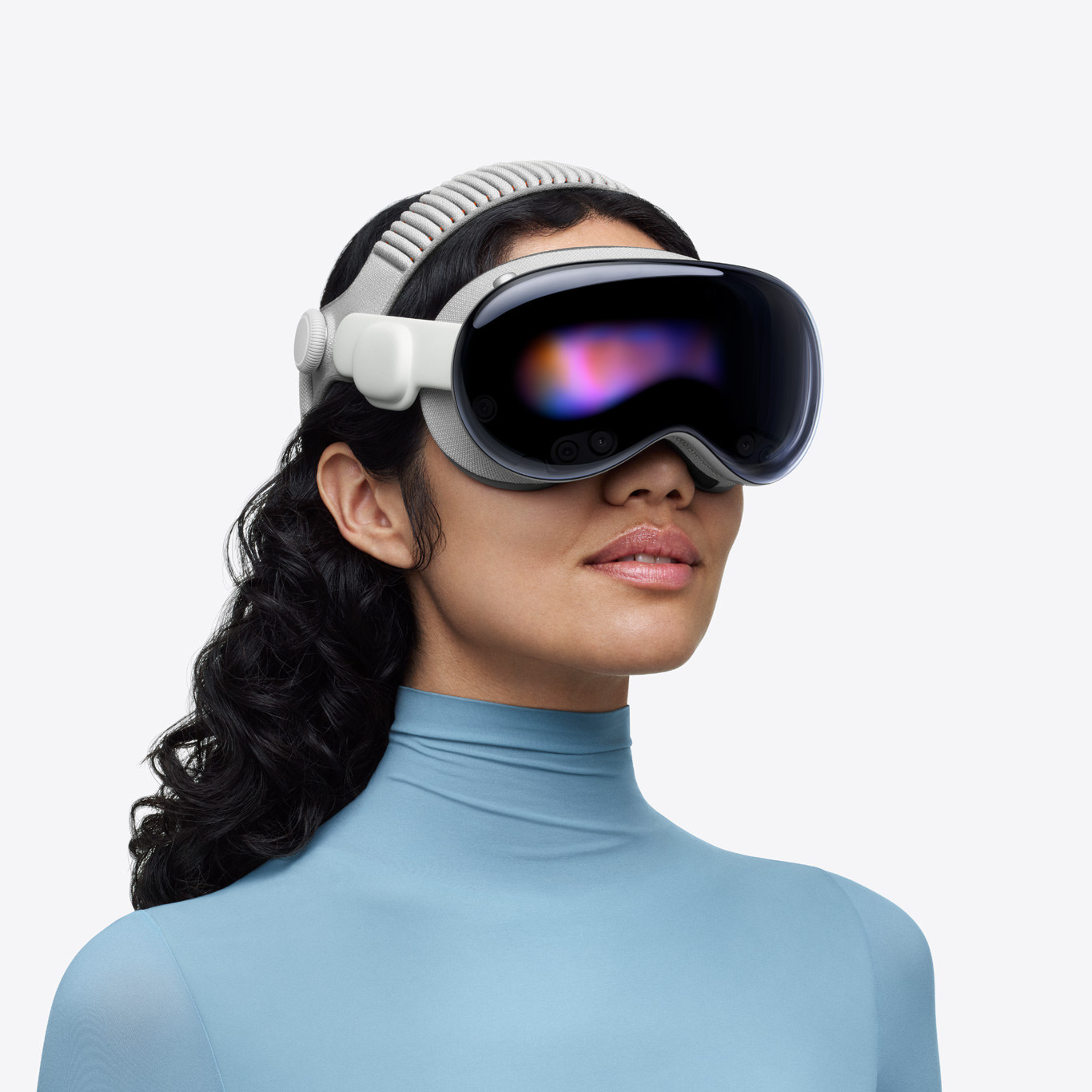
And the moment employees actually put the device on, the reaction was overwhelming.
The problem came next. On the retail floor — where this marvel of a device had to be delivered to customers — everything began to fall apart. Over the course of 2024, Vision Pro sold fewer than 500,000 units. Compare that to the Apple Watch, which shipped more than 12 million units in its first year — a dismal number by any measure.
Why did this happen? Most analyses focus on the device itself — too heavy, too expensive, too few apps. That’s all true, of course. But today I want to talk about a side of the story that rarely gets covered: the structural collapse of the Apple Store that Vision Pro’s failure exposed, and the shadow cast by the optimization of the Tim Cook era behind it.
As it happens, breaking news arrived on April 20: Tim Cook will step down as CEO effective September 1, with John Ternus, head of hardware engineering, taking over. It marks the official end of a 15-year “era of efficiency.” To understand what this transition means, we first need to look at what changed, and how.
🏪 The Cathedral Jobs Built
When Steve Jobs opened the first Apple Store in 2001, Wall Street’s reaction was frosty. Apple’s former CFO at the time put it bluntly: “Apple’s problem is that it’s trying to sell caviar in a world happy with cheese and crackers.”
But to Jobs, the Apple Store was never just a store. He designed it as “a cathedral for the unconverted.” Six days before the world’s first Apple Store opened in Tysons Corner, Virginia, Jobs said in a video tour that half of the store’s space wasn’t devoted to selling hardware at all — it was devoted to teaching people how to use it.
Jobs and retail chief Ron Johnson had a clear philosophy on staffing. They didn’t skimp on benefits like health insurance, and the logic was simple: “an employee who feels like a second-class citizen will make customers feel the same way.” Store leaders personally interviewed every single hire, and part-time workers were avoided wherever possible.
There was also the ‘One to One’ program: a $99 annual subscription for unlimited 1-hour personal coaching sessions with a Creative. It didn’t pencil out financially, but it built loyal customers. For Jobs, the store wasn’t a cost center — it was the front line of the brand experience.
📉 Tim Cook’s Mantra: “Inventory Is Fundamentally Evil”
After Jobs’s death in 2011, Tim Cook became CEO, and a new mantra took hold at Apple: “Inventory is fundamentally evil.” For Cook, an industrial engineer by training, cost-cutting and margin maximization were practically written into his DNA.
Cook’s efficiency strategy was a resounding financial success. Look at Services revenue alone: in fiscal year 2024, Apple’s Services segment (App Store, iCloud, Apple Music, and so on) generated roughly $96.2 billion, up 13% year over year, accounting for about 25% of total revenue. Its margin was 73.9% — nearly double Hardware’s 37.2%.
But the shadow of this optimization was quietly spreading across the retail floor. Right after taking over, Cook brought in John Browett, a veteran of British electronics retail, as head of retail and tasked him with “trimming the fat.” Browett tried to cut hours and shrink headcount, and store employees pushed back hard. Inside Apple, it came to be known as “organ transplant rejection.” He was fired in less than 1 year.
But the underlying direction never changed. Under his successor, former Burberry CEO Angela Ahrendts, the transformation continued.
- 3 weeks of classroom training became 1 week of self-paced computer modules
- The ‘One to One’ personal coaching program was replaced by free group sessions called ‘Today at Apple’
- And starting in 2019, even those sessions increasingly turned into blatant product marketing pitches
When Deirdre O’Brien took over after Ahrendts departed in 2019, she pushed a more traditional retail approach. The metric for evaluating employees shifted from customer satisfaction (NPS) to sales indicators — new phone activations, accessory sales, AppleCare+ enrollments. Store headcount shrank further, and the share of part-time hires rose during peak seasons.
A long-tenured employee in Kansas City put it this way: “By the script, an Apple Store now asks you ‘Would you like AppleCare+?’ 57 times in a single transaction.”
🔥 What Vision Pro Blew Open
This structural decay revealed itself most dramatically in February 2024, at the Vision Pro launch.
The Vision Pro demo demanded more human skill than any previous Apple product. Employees had to scan a customer’s face, choose the correct fit from roughly 25 light seal sizes, and attach it precisely — any light leak would ruin the display. Operating the device relied on subtle eye and finger movements that weren’t intuitive at first. The demo script alone ran more than 12 screens.

Cupertino knew all of this. So it drew up an elaborate training plan. What it failed to grasp was that the store organization had already changed too much to execute that plan.
Here’s what actually happened on the ground.
Understaffed stores couldn’t spare employees for demo training. At one store in Columbus, the training itself was so shoddy that employees ended up with blurry photos and videos from devices they hadn’t fitted properly. Within a week of launch, many stores abandoned the requirement to memorize the script and let staff read straight off an iPad — some reciting it in a stilted, robotic cadence. Months later, the script itself was scrapped.
Even with a 25% employee discount, almost no staff could afford a $3,500 device. And it’s hard to sell something with genuine passion when you’ve never used it yourself. Eric Brown, an employee at the Tysons store, put it this way: “Most of us have an iPhone, and a lot of us have an iPad. When you actually use the product, you have something to talk about — you get enthusiastic.”
A darkly funny irony emerges here. Training was simplified in the name of “efficiency,” so there was no longer anyone equipped to explain a complicated product like Vision Pro to customers. Part-time hiring expanded in the name of “lean store operations,” which meant lower pay, which meant no one could afford a Vision Pro, which meant no one had actually used the product they were selling. And because employees were made to recite “performance”-driven scripts, their own sense of loyalty to the product eroded too.
Eventually, customers lost interest even in watching demos, let alone buying the device. Employees at multiple stores reported running dozens of demos without a single sale. When one employee guessed, “Maybe one a week?” a colleague corrected him: “No — zero a week. And if a return comes in, we’re in the negative.”
Oz’s Lens
Reading this story, I kept thinking of a pattern I’ve seen countless times in GTM strategy work. Many companies believe that “if the product is good enough, that’s all that matters.” But in reality, if you neglect the path a product takes to reach the customer — sales-team capability, frontline staff skill, the quality of every customer touchpoint — even a great product will fail. In GTM circles, this is called “last-mile failure.”1
What makes Apple’s case especially ironic is that in Jobs’s era, this exact last mile was Apple’s core competitive edge. The 2015 Apple Watch launch is a good point of contrast. It, too, got off to a rough start — initial sales targets were revised down by more than 70%. But store employees bought the Watch themselves, used it, and brought field feedback — “here’s what customers are actually responding to” — to daily morning meetings. Much of the pivot to positioning it as a ‘health and fitness device’ came directly from that on-the-ground insight.
Ten years later, at the Vision Pro launch, the same organization produced the opposite result: store employees didn’t cushion the problem, they amplified it. One store manager said, “Just get people to try the device and they’ll have a good experience” — a textbook case of the ‘product determinism’2 fallacy. The belief that technology will sell itself removes any reason to invest in frontline human capability.
Zoom out, and this is the paradox of the 14 years of efficiency under Tim Cook. $96 billion in Services revenue, a 74% margin — the numbers are dazzling. But along the way, employee training went from 3 weeks to 1 week of self-study, evaluation criteria shifted from customer satisfaction to sales metrics, and one-on-one coaching turned into product ad sessions. Every time costs were trimmed, an invisible asset — employee skill, commitment, and customer trust — was shaved away, little by little.
Denise Young, Jobs-era retail HR chief, summed it up precisely. In Jobs’s time, Apple explicitly refused to rely on part-time labor, the retail industry standard. “That would never work for us,” they were convinced — the capability gap between part-time and full-time staff was simply too large. Fourteen years later, at the Vision Pro launch, the fact that many sales employees had only converted from part-time to full-time a few months earlier shows just how far that conviction had eroded.
Closing
Still, I remain very positive about Apple as a company. The AI infrastructure ecosystem built on the silicon in the Mac lineup, the rock-solid cash cow that is the iPhone, the irreplaceable position of the iPad, and the steady pipeline provided by consumable products like the Apple Watch and AirPods — all of it holds up remarkably well. In a way, I think Vision Pro might be Tim Cook’s version of “Apple’s second Lisa.” And all of these achievements came under Cook’s management. So I don’t think the way Cook has run Apple is simply “bad.” What I’ve shared today is meant to offer one way of looking at it, not a final verdict. Personally, as an Apple shareholder, I’m genuinely grateful to Tim Cook.
- Vision Pro’s failure was as much about “organizational capability” as it was about “the product.” Cupertino built an elaborate training plan without realizing that a store organization already in decline couldn’t execute it.
- Efficiency erodes assets that never show up on a balance sheet — employee skill, love for the product, customer trust. These only become visible in a crisis.
- The “last mile” isn’t optional — it’s a competitive advantage. The Apple Watch’s rescue in the Jobs era and the Vision Pro’s foundering in the Cook era are opposite outcomes produced by two different investment philosophies, in the same company, at the same point in the org chart.
Vision Pro’s technical limitations — weight, price, the lack of apps — can be improved in the next generation. In fact, an updated model with the M5 chip launched in October 2025. But store-level capability doesn’t come back just because you swap out a chip. It’s no coincidence that the first unionized Apple Store in the U.S. formed in 2022, and that its first collective bargaining agreement was ratified in 2024. It’s an attempt by employees to reclaim what they’ve lost.
And this issue will only matter more going forward. According to a recent Bloomberg report, Apple is preparing to launch smart glasses — the so-called “Apple Glass” — in 2027, testing 4 different frame styles. Choosing a frame that fits your face shape, demoing an AI-powered Siri, explaining camera and sensor features — it’s lighter than Vision Pro, but fundamentally still “a product that needs explaining” in-store. Whether Apple can fix the last mile this time around is worth watching closely.
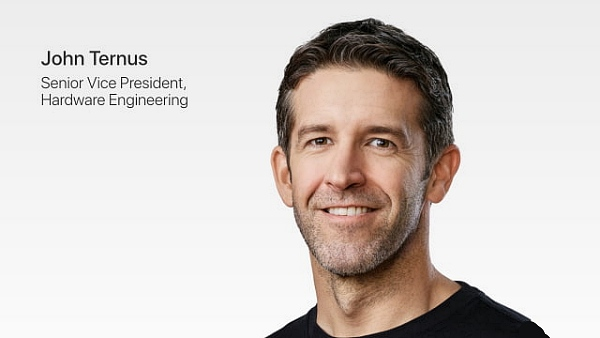
But the announced retirement of Tim Cook, and John Ternus’s ascension to CEO, add a new variable to this story. Unlike Cook, who came up through supply chain and operations, Ternus is a hardware engineer with a background in mechanical engineering. For 25 years since 2001, he’s personally built the hardware for the iPad, AirPods, Mac, and iPhone. Interestingly, before joining Apple, he worked at a company that designed VR headsets — Virtual Research Systems.
When someone who has actually built the products becomes CEO, will he rediscover the value of the last mile that delivers those products to customers? I’ll keep tracking how Ternus tackles the challenges left behind by the Cook era, right here on Oswarld’s Knowledge Talking.
I’d encourage you to check whether your own organization has any invisible assets quietly disappearing in the name of “efficiency.”
References & Further Reading
Primary sources
- Noam Scheiber, “How the Vision Pro Rollout Inflamed Tensions at Apple”, Wired, 2025. : The core source for today’s newsletter — it contains vivid firsthand accounts from store employees.
- Tripp Mickle, After Steve: How Apple Became a Trillion-Dollar Company and Lost Its Soul, William Morrow, 2022. : A book tracing Apple’s cultural shifts after Jobs. It offers deep background on the Browett episode.
Background
- Walter Isaacson, Steve Jobs, Simon & Schuster, 2011. : Essential for understanding Jobs’s retail philosophy and the context behind the mantra “Don’t worry about the price.”
- IDC, “Apple Vision Pro Won’t Cross 500,000 Sales in 2024”, Bloomberg, 2024. : The market analysis behind the Vision Pro sales figures cited in this issue.
- IAM CORE, “First U.S. Unionized Apple Retail Store Workers Ratify Historic Labor Agreement”, 2024. : Details on the specific terms of the collective bargaining agreement at the unionized Tysons store.
- Jeonghyun Lee, “Apple Glass to Compete With Four Frame Styles, Distinctive Camera Design”, ZDNet Korea, 2026. : The latest reporting on Apple Glass’s development status and its expected 2027 launch.

The author, Kwangseob Ahn, is a professor of business administration at Sejong University and lead consultant at OBF (Oswarld Boutique Consulting Firm). He teaches statistics and data analysis — business data management and business analytics — while leading GTM and AI strategy consulting in the field, designing the seam between technology and business. He has published academic research on a memory architecture for AI dialogue systems (HEMA) and runs Daily Arxiv, a daily curation of global AI papers. He holds a master’s from Korea University’s Graduate School of Technology Management and a KMBA. He is the author of Homo Brainless: The People Who Outsource Their Thinking.
Footnotes
-
Last Mile: A term originally from logistics meaning “the final leg of delivery.” In GTM (Go-To-Market) strategy, it refers to the last touchpoint where a product reaches the end customer — a salesperson’s pitch, an in-store demo, customer service, and so on. It’s the most expensive segment, and the one most prone to failure. ↩
-
Product Determinism: The belief that a good product will sell itself. A bias especially common in the tech industry, it leads people to underestimate the importance of “non-product” factors like distribution, marketing, and customer education. It’s the same mindset as “build it and they will come.” ↩
Related issues
 Issue #83Business
The Sea's Toll Booths: A History of Maritime Passage Fees
The sea was never free by nature—'freedom of navigation' was forged through centuries of war and negotiation.
 Issue #75Business
Harvey's $11B Bet: Can Law Survive Without Billable Hours?
A $1 trillion legal industry's hourly billing model is buckling under AI-driven efficiency gains.
 Issue #74Business
The Wuxia Cult That Traces Back to Middle East Oil
A 3rd-century Persian faith became wuxia fiction's Cult of Light — and that same flame ignited the 20th-century oil industry
Your take shapes the next issue
What resonated most in this issue, or where has your experience been different?