The Sea's Toll Booths: A History of Maritime Passage Fees
The sea was never free by nature—'freedom of navigation' was forged through centuries of war and negotiation.
Opening
Hello, subscribers. This is Oswarld’s Knowledge Talking.
A little while ago, Iran announced it would charge a $1-per-barrel toll on oil tankers passing through the Strait of Hormuz. The payment method: Bitcoin. A toll booth had effectively gone up on this narrow waterway, through which roughly 20% of the world’s seaborne crude oil passes.
International maritime law experts have called this uniformly “illegal.” Charging passage fees on a naturally formed strait is something modern international law explicitly forbids. But here’s the curious part: this principle that “the sea is free” is, historically speaking, a surprisingly recent invention.
Until just 170 years ago, it was taken for granted that every ship passing through a strait paid a toll. Today, I want to trace that history and explain why Iran’s move isn’t simply about money.
🏰 Straits Used to Be “Toll Roads”
The practice of charging tolls at straits is startlingly old. Under the Byzantine Empire, merchant ships passing through the Dardanelles1 paid taxes depending on their cargo. Wine merchants handed over 6 folles2 plus 2 sextarii3 of wine as a toll, while wheat merchants paid 3 folles per modius4. After the Ottoman Empire captured Gallipoli in 1354, the system grew even more organized. The Ottomans treated the Black Sea as effectively their own inland sea, either banning foreign ships outright or imposing steep transit taxes.
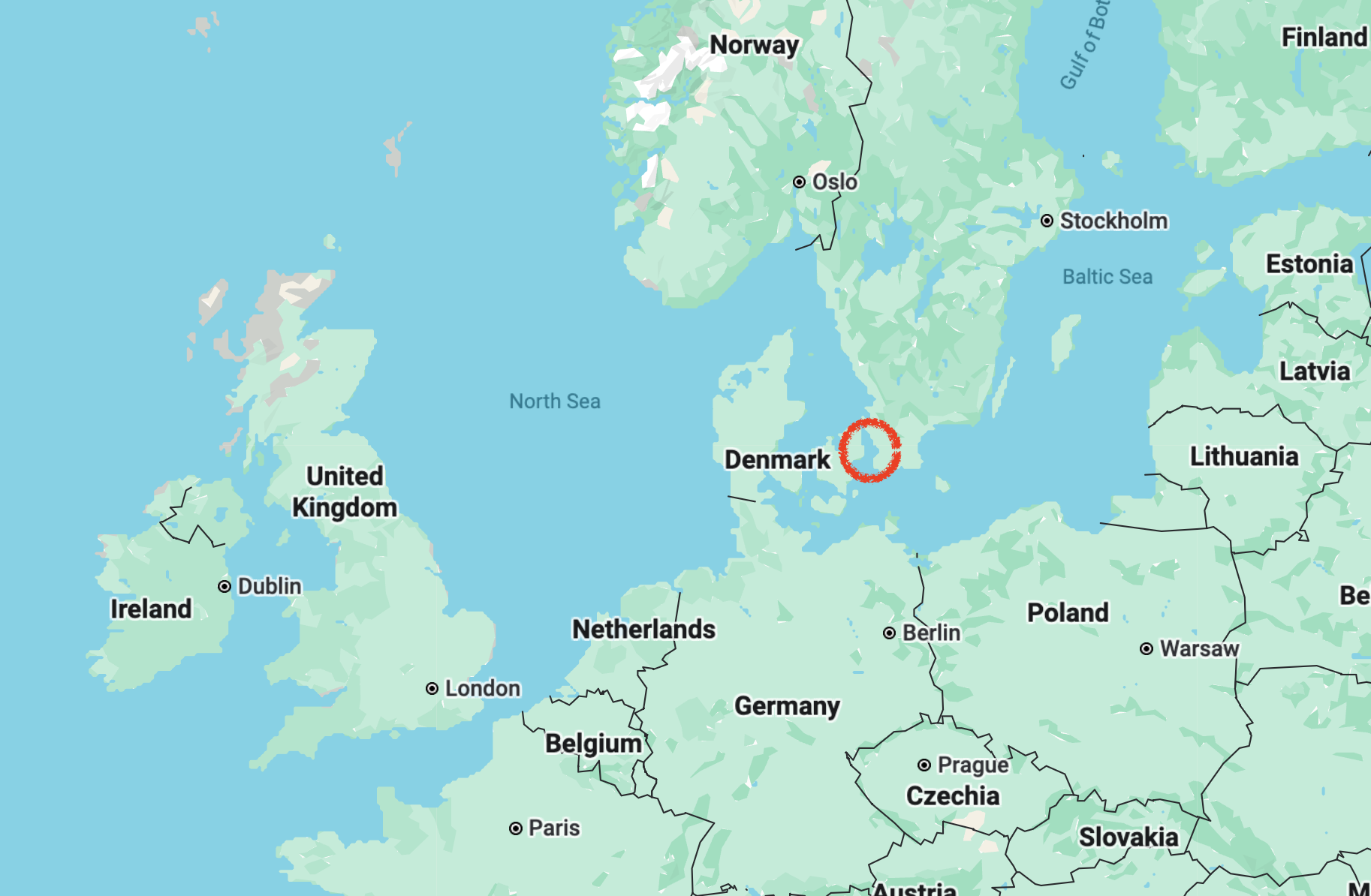
But the most dramatic case of maritime tolling happened in Northern Europe. In 1429, Denmark’s Eric VII (Eric of Pomerania) began levying a toll on every foreign ship passing through the Øresund Strait5. This strait was, for all practical purposes, the only gateway from the North Sea into the Baltic.
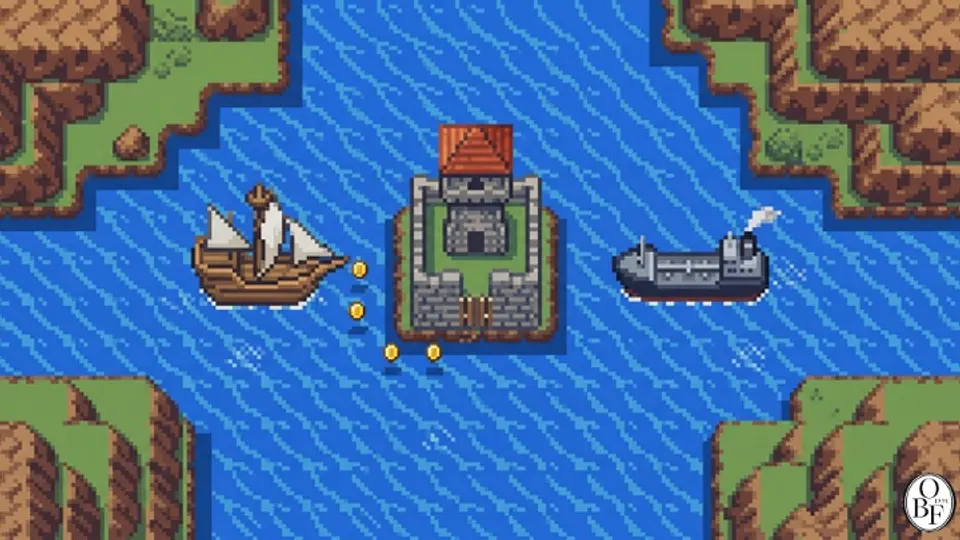
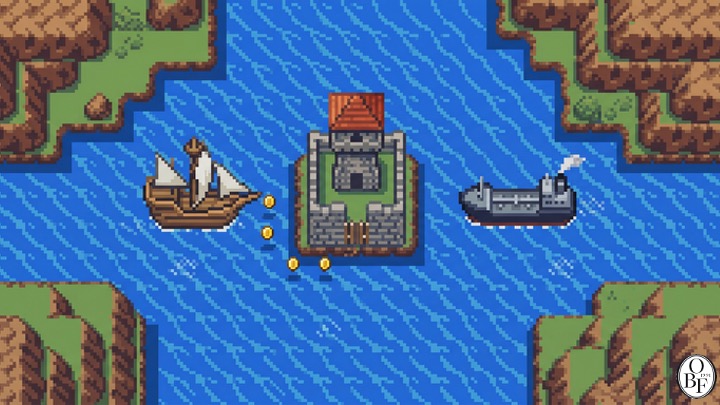
The rule was simple. A ship had to anchor at Helsingør (Elsinore, the setting of Shakespeare’s Hamlet) and pay the Danish crown its toll. Refuse, and cannons from the fortresses on either side of the strait would open fire. From 1567 onward, the system shifted to a tax of 1–2% of the cargo’s declared value—with one ingenious twist. Once a captain declared the value of his cargo, the Danish king had the right to buy the entire cargo at that declared price. Under-declare to cheat the system, and the king could simply buy your goods for a pittance. Doesn’t that sound clever enough to still work today?
In any case, the “Sound Dues” persisted for a staggering 428 years. In the 16th and 17th centuries, this toll accounted for as much as 2/3 of Denmark’s national revenue. Kronborg Castle6 wasn’t just a fortress—it was effectively a giant customs house.
⚖️ “The Sea Belongs to Everyone” — A Declaration from 400 Years Ago
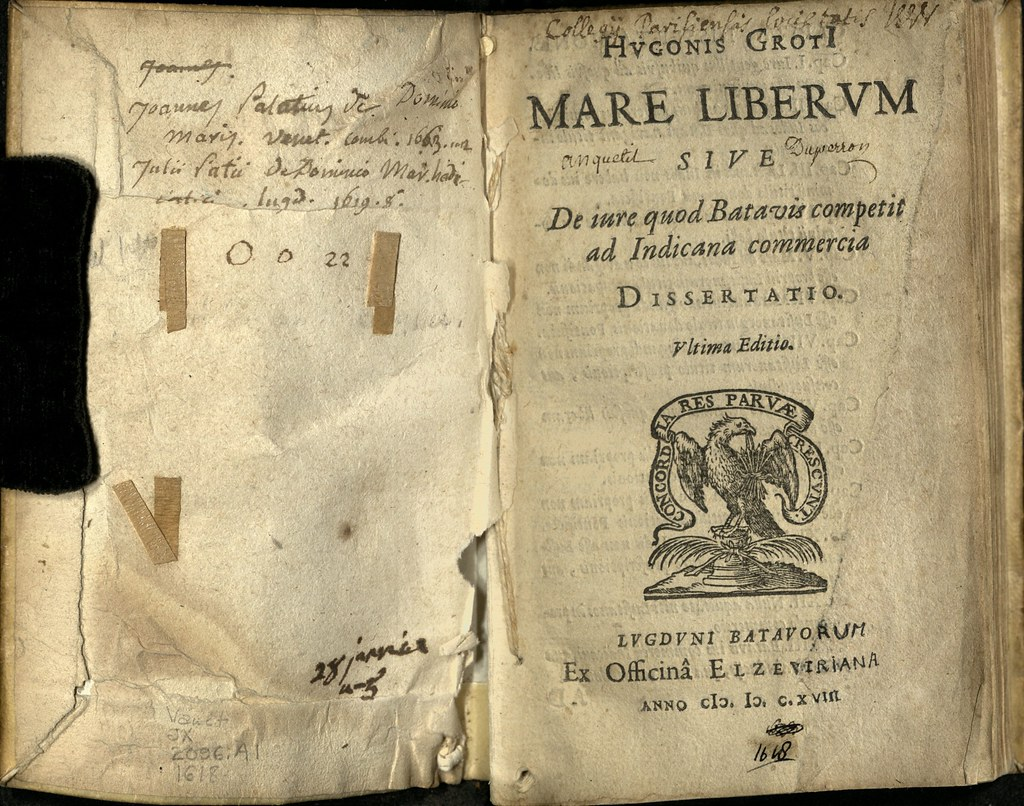
The first systematic rebuttal to strait tolls came in 1609, from the Dutch jurist Hugo Grotius. At 26, Grotius published a slim, 68-page book titled Mare Liberum, “The Free Sea”7. In it, he made a radical argument: “The sea is like the air—it cannot belong to anyone, and every nation has the right to freely navigate and trade upon it.”
The book’s origins, in truth, were fairly worldly. In 1603, a Dutch East India Company fleet seized the Portuguese merchant ship Santa Catarina near the Strait of Singapore8, sparking a dispute over its legality. Portugal claimed exclusive navigation rights over East Indian waters, and Grotius, serving as the East India Company’s legal counsel, developed the counter-argument that “no monopoly over the sea is possible.”
Whatever the motive, this principle went on to become a cornerstone of international law. But it took another 250 years for the principle to actually take hold in practice—because Denmark’s Øresund toll remained firmly in place.
The turning point came in the mid-19th century. As Baltic trade expanded rapidly, major maritime powers—Britain, France, the United States—began pushing back hard against the Danish toll. A British House of Commons report at the time called it “the most irrational of all taxes levied on trade.”
Finally, in 1857, the Treaty of Copenhagen was signed. Major European maritime powers—Austria, Belgium, Britain, France, Prussia, Russia, and others—paid Denmark a lump sum of 33.5 million rixdollars9 (roughly $14–15 million in today’s value) in exchange for turning the Øresund into a permanent, toll-free international waterway. The United States, through a separate agreement, paid about $393,000.
This treaty was more than a simple abolition of tolls. It was the moment humanity, for the first time, paid money to purchase the principle that “natural straits must remain open to everyone.” It took 248 years for the principle Grotius wrote at his desk to become actual, enforced law.
🚢 Why Canals Can Charge Tolls, but Straits Can’t
Here we need an important distinction. Why can the Suez Canal and the Panama Canal charge tolls, while the Strait of Hormuz cannot?
The answer is simple: the difference between what humans built and what nature made.
Since it opened in 1869, the Suez Canal has been an artificial waterway cutting through Egyptian territory. Egypt (and before it, France and Britain) poured enormous capital into building, maintaining, and operating it. The same goes for the Panama Canal. Both canals operate under separate international treaty regimes—the 1888 Convention of Constantinople and the 1977 Torrijos–Carter Treaties, respectively. Their tolls are legally guaranteed as a way to cover infrastructure costs.
The Suez Canal posted record revenue of $10.3 billion in 2023. But amid conflict in the Red Sea, that revenue collapsed to roughly $3.9 billion in 2024. The Panama Canal, too, brings in billions of dollars in annual toll revenue.
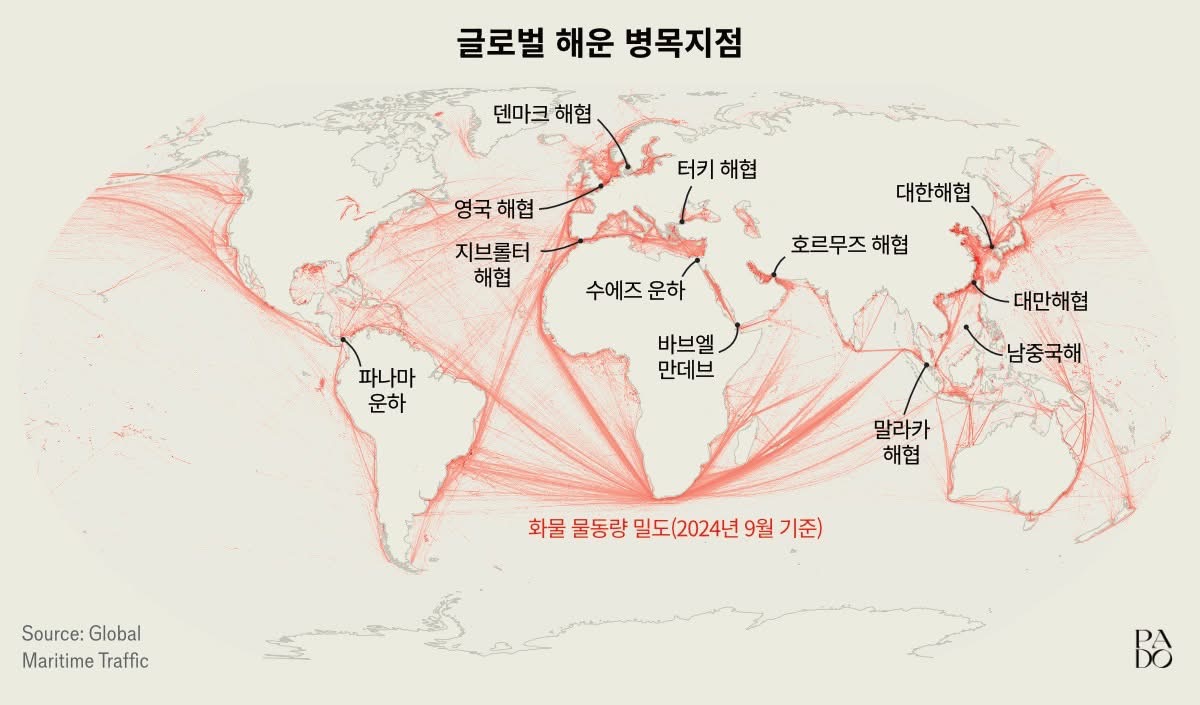
By contrast, natural straits like Hormuz and Malacca are guaranteed “transit passage” rights under the UN Convention on the Law of the Sea (UNCLOS)10. No state may block passage through these straits or charge a fee for it.
This is exactly what’s behind the news you’ve likely seen: “Charging tolls in the Strait of Hormuz is impossible under international law.” (A brief but useful fact, if I do say so.)
There’s one interesting exception, though: Turkey. The Bosphorus and the Dardanelles are governed by the 1936 Montreux Convention11, and Turkey charges ships not a “toll” per se, but fees labeled as lighthouse maintenance, health quarantine, and rescue services. Nominally not a toll, but these charges bring in roughly $250 million a year from ships that pass through without docking. Turkey has essentially found a way to monetize the geographic peculiarity of a strait running through the heart of Istanbul, under the banner of “safety services.”
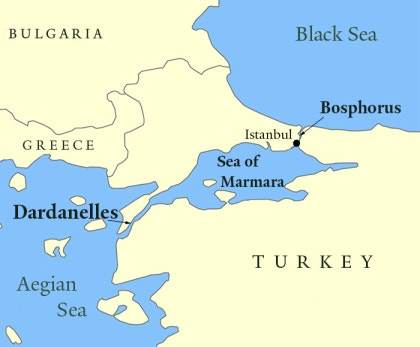
Legal scholars see this as the closest precedent Iran might draw on. But there’s a crucial difference. Turkey controls both banks of its straits and has decades of treaty infrastructure behind it. Iran controls only one side of the Strait of Hormuz—the other side belongs to Oman’s territorial waters.
🔥 What Iran’s Move Really Means
So if it’s illegal under international law, why is Iran making this claim now? Setting up a toll booth in the Strait of Hormuz isn’t simply about making money.
According to estimates by the analytics firm Kpler, formalizing a toll on the Strait of Hormuz could generate $5–8 billion a year in revenue for Iran and Oman. TRM Labs reports that Iran’s Islamic Revolutionary Guard Corps (IRGC) has already been collecting fees of up to $2 million per ship since mid-March 2026, accepting payment in yuan, Bitcoin, and the USDT stablecoin.
The key detail here is that the payment method is crypto. Iran is under comprehensive U.S. sanctions and cannot use international financial systems like SWIFT. Cryptocurrency offers a path around the U.S. banking system. According to Chainalysis, Iran’s crypto ecosystem grew to $7.8 billion in 2025, with the IRGC accounting for roughly half of it.
Andrew Serdy, a professor of international maritime law at the University of Southampton, points out that unlike Suez or the Bosphorus, the Strait of Hormuz has “no separate treaty regime.” Hormuz currently falls under general international maritime law—and here’s the critical wrinkle: neither Iran nor the United States has ratified UNCLOS. When Iran signed the convention in 1982, it attached a declaration stating that “non-parties to the convention cannot enjoy the freedom of transit passage through straits.”
Andrew Rigden Green, a maritime disputes lawyer at Watson, Farley & Williams, summed up the situation this way: “The question of tolls on international waterways is complicated, and there is scope for illegality.” Maritime analyst Yörük Işık is more blunt: “Toll collection in a natural waterway cannot be permitted—allowing it would open a Pandora’s box, overturning centuries of maritime law.”
Oz’s Lens
Honestly, watching this unfold, I couldn’t help but feel that history is repeating a pattern.
In the 15th century, Denmark used a single geographic advantage—the Øresund Strait—to wield influence far beyond its size among the great powers of Europe. In 2026, Iran is running the same playbook. The only difference is that the currency has shifted from gold coins backed by cannon fire to Bitcoin on a blockchain.
But what the 1857 Treaty of Copenhagen teaches us is that this kind of chokepoint control only ever ends through “agreement among states with both the will and the power to enforce the law.” The Danish toll lasted 428 years because neighboring states were willing to absorb the cost—and it ended only once trade had grown large enough that they no longer could.
Looking at this through a business strategy lens, Iran is trying to cash in on a “chokepoint premium.” It’s structurally identical to a company with a monopoly distribution channel raising its fees. The only difference is that the platform here is the ocean, and the counterparty in the fee negotiation is a nation-state. And strategies like this only work when there’s no alternative. The moment an alternative exists, the monopoly position evaporates.
In the end, the real question here isn’t legal legitimacy. It’s “who will defend this principle, and at what cost.” 600 years of history show us that freedom of the seas isn’t natural law—it’s a settlement forged by a balance of power.
Closing
If you’ve been following the news lately, you’ve probably heard a lot about the Strait of Hormuz and toll fees. You might have found yourself wondering: how exactly do they collect this money? Is there some sensor scanning passing ships like an E-ZPass? What’s the legal basis for any of it? And why does the story keep flip-flopping—tolls on, tolls off, passage allowed, passage denied? I put this issue together to help clear up at least some of that confusion.
- Collecting tolls on natural straits has been explicitly prohibited under international law since the 1857 Treaty of Copenhagen. But that prohibition’s history is far shorter than most people assume.
- Iran’s attempt to toll the Strait of Hormuz is legally illegitimate, but the combination of cryptocurrency and sanctions evasion is creating a situation where traditional enforcement mechanisms struggle to function.
- Freedom of the straits isn’t something to take for granted—it’s a principle every generation must reaffirm and defend.
If you’d like to dig deeper into this topic, I’d especially recommend the sources below on Grotius’s Mare Liberum and the history of Denmark’s Øresund toll. You might be surprised by how relevant a 400-year-old jurist’s argument still is for understanding today’s headlines.
References & Further Reading
Primary sources
- Andrew Rigden Green, George Macheras, Watson Farley & Williams, Fees for seas: a history of taxing waterways, Financial Times, 2026.4.: The original article covering the international legal issues around Iran’s Hormuz toll.
- TRM Labs, “Iranian Crypto Tolls in Strait of Hormuz”, 2026.4.: A report analyzing the IRGC’s crypto toll collection and sanctions-evasion mechanisms.
- Chainalysis, “Iran’s Strait of Hormuz Crypto Toll”, 2026.4.: Covers the technical structure of Iran’s crypto ecosystem and its stablecoin-based toll system.
Background
- Hugo Grotius, Mare Liberum (The Free Sea), 1609.: The 68-page classic that launched modern maritime law. The Liberty Fund edition comes with excellent annotations.
- Ole Degn, The Sound Toll at Elsinore: Politics, Shipping and the Collection of Duties 1429–1857, University of Chicago Press, 2018.: A study tracing 428 years of the Sound Dues through original passage records, based on materials from a UNESCO Memory of the World listing.
- “Copenhagen Convention of 1857” — The treaty that established the principle of free strait passage as binding international law.

The author, Kwangseob Ahn, is a professor of business administration at Sejong University and lead consultant at OBF (Oswarld Boutique Consulting Firm). He teaches statistics and data analysis — business data management and business analytics — while leading GTM and AI strategy consulting in the field, designing the seam between technology and business. He has published academic research on a memory architecture for AI dialogue systems (HEMA) and runs Daily Arxiv, a daily curation of global AI papers. He holds a master’s from Korea University’s Graduate School of Technology Management and a KMBA. He is the author of Homo Brainless: The People Who Outsource Their Thinking.
Footnotes
-
The Dardanelles: A strait in northwestern Turkey connecting the Aegean Sea and the Sea of Marmara. Together with the Bosphorus, it’s one of the only gateways to the Black Sea. ↩
-
Follis: A bronze currency unit used in the Byzantine Empire. Hard to convert precisely into today’s value, but it was a small-denomination coin used for everyday transactions. ↩
-
Sextarius: An ancient Roman unit of volume, primarily used for measuring liquids and grain. ↩
-
Modius: A unit of grain volume used in ancient Rome and Byzantium, equal to roughly 8.7 liters—about 1/10 of a standard sack of rice. ↩
-
The Øresund Strait: The strait between Denmark and Sweden, and a key gateway from the North Sea into the Baltic. Its narrowest point is only about 4km wide. The two countries are now connected there by the Øresund Bridge. ↩
-
Kronborg Castle: A castle in Helsingør, Denmark, famous as the setting for Shakespeare’s Hamlet. It was originally built as a fortress for collecting the Øresund toll. ↩
-
Mare Liberum (The Free Sea): A work of international law written by Grotius in 1609, the first systematic articulation of the principle that “the sea cannot belong to anyone and must remain open to all nations.” It became the legal foundation of modern maritime freedom. ↩
-
The Santa Catarina Incident: In 1603, the Dutch East India Company seized a Portuguese merchant ship in the waters near Singapore. The value of the seized cargo was 2 times the company’s total capital, and the legal dispute over its legitimacy led directly to Grotius writing Mare Liberum. ↩
-
The rixdollar (Rigsdaler) was a silver coin circulated across Europe—particularly Denmark, the Netherlands, and Germany—from the 16th through the 19th centuries. ↩
-
The UN Convention on the Law of the Sea (UNCLOS): A comprehensive international treaty on the sea adopted in 1982, setting rules on territorial waters, exclusive economic zones, and transit passage through straits. It has been ratified by 168 countries, but the United States and Iran have not ratified it. ↩
-
The Montreux Convention (1936): An international treaty setting the rules for passage through the Turkish Straits (the Bosphorus and Dardanelles). It guarantees free passage for merchant ships in peacetime while granting Turkey the authority to restrict warship passage during wartime. Turkey actually invoked this clause during the 2022 Russia-Ukraine war. ↩
Related issues
 Issue #75Business
Harvey's $11B Bet: Can Law Survive Without Billable Hours?
A $1 trillion legal industry's hourly billing model is buckling under AI-driven efficiency gains.
 Issue #74Business
The Wuxia Cult That Traces Back to Middle East Oil
A 3rd-century Persian faith became wuxia fiction's Cult of Light — and that same flame ignited the 20th-century oil industry
 Issue #66Business
Meta's $6M Verdict Just Gave PMs a New Job
It's not the $6 million verdict that matters — it's the 30-year-old legal shield that just cracked.
Your take shapes the next issue
What resonated most in this issue, or where has your experience been different?