The New Moon Race: Why Go Back At All?
Returning to the Moon isn't a technology race — it's a contest over who gets to write the rules first.
Opening
Hello, dear subscriber. Did you happen to read any space books as a kid? I remember my mother buying me Isaac Asimov’s space series, and I read them cover to cover. Looking back, it was already the 1990s by then, so space already felt a little… out of fashion, if I’m honest. But right now, humanity is talking about space more than ever.
Let me be more precise. It’s been 53 years since Eugene Cernan of Apollo 17 lifted off from the lunar surface in December 1972. In that time, a single smartphone has become more powerful than all of NASA’s computers combined, and more than 10,000 satellites now orbit Earth. Yet humans have never gone back to the Moon.
That 53-year silence is about to break. Yesterday, on April 1st, NASA’s Artemis II launched with four astronauts aboard, headed for the Moon. This time, though, there’s no landing — it’s a flight that loops around the Moon along a free-return trajectory1 and comes back. But what caught my attention isn’t the launch itself. It’s the fact that a month before launch, on February 27th, NASA overhauled the entire Artemis program. And behind that overhaul stands China.
Why It Took 53 Years — Not That We Skipped the Moon, We Simply Had No Reason to Go Back
The Apollo program was never really about scientific exploration. It was Cold War regime propaganda. When the Soviet Union launched Sputnik 1 in 1957, the United States was gripped by fear of falling behind technologically, and to quiet that fear, it poured 4.4% of the federal budget into NASA. In today’s dollars, that’s roughly $280 billion — about ₩380 trillion.
The goal was achieved. Neil Armstrong set foot on the Moon, and American pride was restored. But once the goal was met, the reason for going evaporated. With the Vietnam War straining the federal budget, the U.S. could no longer justify spending big on space exploration that offered no further practical gain. Apollo missions 18 through 20 were cancelled, and NASA scientists’ dreams of a lunar base and Mars expeditions were shelved indefinitely.
But two things changed in the 21st century.
First, resources were discovered on the Moon. In 2008, India’s Chandrayaan-1 confirmed more than 600 million tons of ice at the Moon’s north pole. Water is drinkable, and when split into hydrogen and oxygen, it becomes rocket fuel — meaning the Moon could supply its own resources in situ. On top of that, helium-32, seen as a future fuel for nuclear fusion, is estimated to exist on the Moon in quantities exceeding one million tons.
Second, a new competitor emerged: China. A country with almost no presence in the 1960s now operates its own space station, Tiangong, and has successfully returned soil samples from the far side of the Moon via Chang’e 6. China has declared it will put astronauts on the Moon by 2030.
The old motive of a prestige contest is gone, but a new motive — resources and geopolitical competition — has taken its place.
Two Moon Programs — Same Destination, Completely Different Paths
The United States: Ambitious but Creaking — Artemis, and SpaceX
The Artemis program has already burned through about $93 billion (~₩126 trillion) between 2012 and 2025. Each mission costs roughly $4.1 billion — a level even NASA’s own Inspector General has called “unsustainable.” The core hardware, the SLS3 rocket, is built from recycled Space Shuttle parts and is single-use. Critics have dubbed the SLS the “Senate Launch System” — a jab suggesting it’s less a rocket program than a budget-allocation scheme designed to protect aerospace jobs in congressional districts.
During Artemis I, the uncrewed test flight in 2022, the Orion capsule’s heat shield suffered more damage than expected. The heat-shield material (AVCOAT)4 cracked and flaked off during atmospheric reentry. Rather than replacing the heat shield outright, NASA worked around the problem by altering the reentry trajectory — a fix that former astronaut and heat-shield expert Charles Camarda, in an open letter, warned was a “serious risk.”
The decisive shift came on February 27 of this year. NASA Administrator Jared Isaacman announced a sweeping restructuring of the Artemis program. Artemis III, originally slated to be the first crewed lunar landing, dropped the landing altogether and was converted into a 2027 low Earth orbit5 docking test with the lander. The actual Moon landing was pushed to Artemis IV in 2028. As Isaacman explained it, “Launching uncrewed, waiting three years, circling the Moon, waiting another three years, then landing — that just doesn’t make sense.” And this is where SpaceX completely flips the board.
The SLS Block 1B upgrade and Mobile Launcher 2 were both scrapped entirely. Instead, NASA plans to standardize the existing Block 1 configuration and cut the launch cadence from three years to ten months. It’s a return to the strategy of the Mercury, Gemini, and Apollo eras: launch fast and often, and build experience through repetition.
China: Slow but Consistent — A Step-by-Step Approach
China’s lunar program traces back to the “921 Project” launched in 1992. The biggest difference from the U.S. approach is that, despite more than three decades and multiple changes in leadership, the overall direction has barely wavered. IEEE Spectrum put it this way: China has achieved “what other countries haven’t — integrating everything.”
China’s crewed lunar landing plan relies on two Long March 10 rockets — one launching the three-person Mengzhou (梦舟) capsule, the other launching the Lanyue (揽月) lunar lander. After the two dock in lunar orbit, two astronauts descend to the surface aboard the lander — a structure similar to Apollo’s, but a more modern version.
This February, China completed a series of tests in succession: a low-altitude test flight of the Long March 10, a maximum dynamic-pressure escape test for Mengzhou, and a combined landing-and-liftoff test for Lanyue. Infrastructure construction at the Wenchang Space Launch Site in Hainan Province is also accelerating in earnest this year. The roadmap runs through robotic prototype tests (2027–2028) and uncrewed joint missions (2028–2029), aiming for a crewed landing in 2030.
Comparing the two programs reveals an interesting contrast. The U.S. is betting on a technically innovative but unproven system — SpaceX’s Starship HLS6, which requires orbital refueling7, a technology that has never been attempted before, as an essential precondition. China’s Lanyue, by contrast, is closer to Apollo’s flat, leggy lunar lander — a conservative, lower-risk design. It doesn’t need unproven technology like orbital refueling either.
The Real Stakes — It’s Not the Launchpad, It’s the “Rules”
Behind the technology race lies a more fundamental one: who gets to use the Moon’s resources, and under whose rules. The 1967 Outer Space Treaty states that “no nation may claim sovereignty or ownership over outer space.” But that treaty was an arms-control agreement drafted in the Cold War era. It says essentially nothing about mining resources on the lunar surface or the commercial activities of private companies.
The card the U.S. played to fill this vacuum is the Artemis Accords. Launched with 8 signatory countries in 2020, it now counts 61. Its core claim: “extracting lunar resources is not the same as claiming territory.” In plain terms, the logic goes — mining water or minerals on the Moon is legal, and doing so is not the same as that country claiming sovereignty over the land.
But this is a unilateral U.S. interpretation. China and Russia have not signed the Artemis Accords. Russia has criticized it as “a blatant attempt by the U.S. to write international space law on its own terms,” while Chinese state media has denounced it as “no different from the enclosure movement8** of Europe’s colonial era.” Instead, China and Russia are pushing a separate framework: the International Lunar Research Station (ILRS)9.** Pakistan, South Africa, Belarus, and others have joined it. Personally, I can’t help but see this as the NATO-versus-BRICS rivalry playing out in space, too.
One particularly notable feature is the Artemis Accords’ concept of “safety zones” — temporary buffer areas set up around lunar bases or mining facilities, requiring prior coordination before other nations can approach. It sounds reasonable in theory, but Stephan Hobe, director of the Institute of International Space Law at the University of Cologne, points out that “a safety zone amounts to securing a specific area — which is precisely what the Outer Space Treaty prohibits.”
What’s happening now, in the end, isn’t simply a technology race. It’s an institutional contest over who gets to write the rules of the game on the Moon before anyone even arrives there. And once those rules are settled, they’ll determine how space resources get divided up.
Oz’s Lens
Honestly, I find it hard to view this new Moon race through the lens of pure exploration.
There’s a pattern I see often when building GTM (go-to-market) strategy. Whoever seizes the “standard” in a market wins. VHS versus Betamax, USB-C versus Lightning, the standardization wars in payment systems — technical superiority doesn’t decide the winner; whoever lays down the rules first dominates the market.
The Artemis Accords are exactly that strategy. Before the U.S. has even sent people to the Moon, it has already negotiated a code of conduct for the lunar surface with 61 countries. This isn’t a technology project — it’s a regulatory land-grab. On the other side, China is building a rival bloc through ILRS. For reference, South Korea signed the Artemis Accords as the 10th member country.
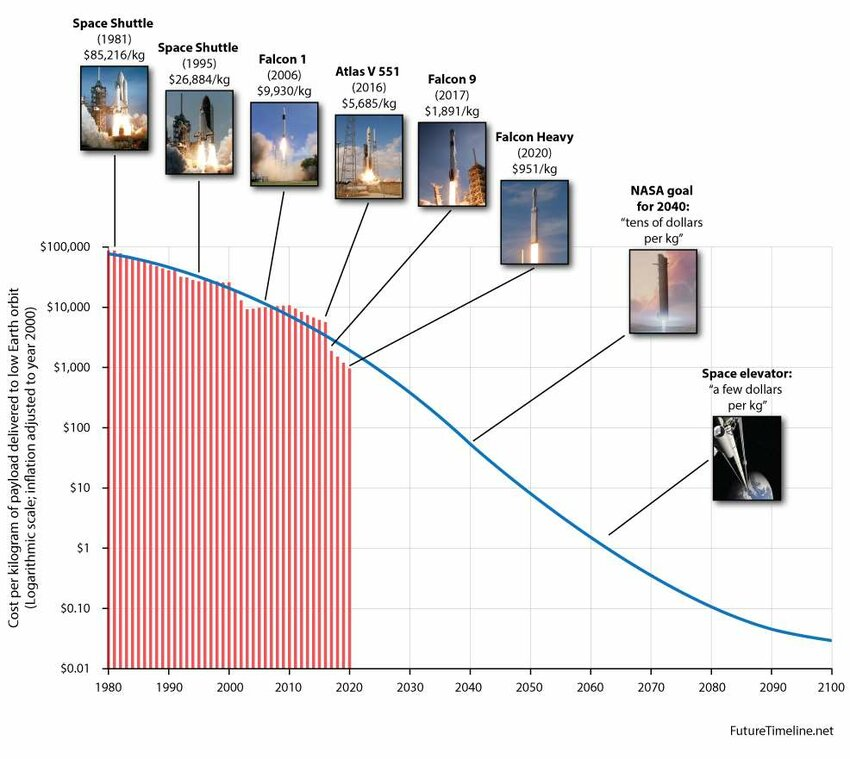
From a data standpoint, the cost structures of the two programs contrast dramatically. The U.S. spends roughly $4.1 billion per SLS launch, while SpaceX’s Starship targets under $100 million once fully reusable — a 40x gap. NASA knows this, too. That’s why it cancelled the SLS Block 1B upgrade this year and declared a long-term shift toward commercial launch vehicles. The Artemis program itself, in effect, has become a transitional system.
What worries me most is the institutional vacuum. More than 100 countries have joined the 1967 Outer Space Treaty, but it stays silent on resources. The Artemis Accords have 61 signatories, but they’re a non-binding political commitment. China and Russia’s ILRS still has only a handful of participants. If the two superpowers end up clashing over resources on the Moon, there’s no settled body of international law to apply. It’s a textbook case of technology outrunning institutions.
Closing
Returning to the Moon after 50 years tells us three things at once. First, the Moon now has economic value. Water, helium-3, and rare earth elements10** are no longer science-fiction material.** Second, the U.S.-China rivalry is playing out in institutions before it plays out in technology. What matters more than who arrives first is who writes the rules once they get there. Third, every other country now has to decide which bloc’s rules to follow in this contest.
As for SpaceX: if Artemis II launches successfully, it marks a symbolic event — humanity returning to lunar orbit after 53 years. But the real game begins after that. It’s not about who plants a flag on the Moon first — the essence of this contest is who writes the rules for mining rights first.
If you’d like to dig deeper into this topic, I recommend the ASIL analysis of international space law in the reference list below.
References & Further Reading
Primary sources
- NASA, “NASA Adds Mission to Artemis Lunar Program, Updates Architecture”, 2026.02.27. : The primary source on the Artemis program restructuring. Covers the mission change for Artemis III and the plan to accelerate the launch cadence.
- NASA, “NASA Strengthens Artemis: Adds Mission, Refines Overall Architecture”, 2026.02.27. : Covers the technical details of the restructuring and the background behind cancelling SLS Block 1B.
- RAND Corporation, “China Is Going to the Moon by 2030. Here’s What’s Known About the Mission—and Why It Matters”, 2025.11. : An objective rundown of the timeline and technical status of China’s crewed lunar exploration program.
- IEEE Spectrum, “China Moon Mission: Aiming for 2030 Lunar Landing”, 2026.03. : A technical comparison of the U.S. and Chinese Moon programs. Explains well why China’s “integrated approach” carries lower risk.
Background
- American Society of International Law, “The Artemis Accords and the Future of International Space Law”, ASIL Insights, Vol.24(31). : Covers the legal issues surrounding the Artemis Accords, especially the debate over safety zones and the legality of resource extraction. Essential reading to go deeper into this issue’s “rules race” argument.
- NASA Inspector General, Artemis Program Cost Report (2022) : The source for the $4.1 billion per-mission cost and the cumulative $93 billion figure.

The author, Kwangseob Ahn, is a professor of business administration at Sejong University and lead consultant at OBF (Oswarld Boutique Consulting Firm). He teaches statistics and data analysis — business data management and business analytics — while leading GTM and AI strategy consulting in the field, designing the seam between technology and business. He has published academic research on a memory architecture for AI dialogue systems (HEMA) and runs Daily Arxiv, a daily curation of global AI papers. He holds a master’s from Korea University’s Graduate School of Technology Management and a KMBA. He is the author of Homo Brainless: The People Who Outsource Their Thinking.
Footnotes
-
Free-Return Trajectory: A flight path in which a spacecraft uses the Moon’s gravity to loop back toward Earth naturally, without firing its engines again. Think of it as a built-in “insurance policy” — even if something goes wrong aboard the spacecraft, it can still return safely. This is the trajectory that allowed Apollo 13 to make it home safely after its 1970 accident. ↩
-
Helium-3: An isotope of helium with one fewer neutron than the common form. As a fusion fuel, it produces far less radioactive waste than conventional fuels like deuterium and tritium. It’s extremely rare on Earth, but thought to exist in large quantities on the Moon due to solar wind exposure. ↩
-
SLS (Space Launch System): NASA’s massive launch vehicle and the centerpiece of the Artemis program. It’s built from recycled Space Shuttle engines (RS-25) and solid rocket boosters. It can lift about 95 tons to low Earth orbit, but because it’s single-use, launch costs are extremely high. ↩
-
AVCOAT (heat-shield material): A material that protects a spacecraft’s capsule from the extreme heat (about 2,800°C) generated during atmospheric reentry. It’s an “ablative” shield — its surface melts away, absorbing and dissipating heat as it does. This material flaking off more than expected during Artemis I became a point of controversy. ↩
-
LEO (Low Earth Orbit): An orbit roughly 200–2,000 km above Earth’s surface. The International Space Station, orbiting at about 400 km, is a prime example. Compared to the distance to the Moon (about 380,000 km), it’s essentially right above Earth. ↩
-
HLS (Human Landing System): The lander that carries astronauts from lunar orbit to the Moon’s surface in the Artemis program. SpaceX (based on Starship) and Blue Origin (based on Blue Moon) are each developing one. Because the Orion capsule cannot land on the Moon directly, an HLS is essential. ↩
-
Orbital Refueling: The technology of refueling a rocket in space. Because SpaceX’s Starship HLS burns through most of its fuel just leaving Earth, it needs to be refueled with liquid methane and liquid oxygen from a separate Starship in orbit before it can reach the Moon. This technology has never been demonstrated. ↩
-
Enclosure Movement: The historical process, from the 15th to 19th centuries in Britain, of fencing off common land for private use — turning land once shared by an entire village into a landlord’s private property. When China invokes this comparison against the Artemis Accords, the implication is that the U.S. is effectively trying to privatize the Moon, which belongs to everyone. ↩
-
ILRS (International Lunar Research Station): A Moon-base project led by China and Russia. It serves as an alternative framework to the U.S.-led Artemis Accords, aiming to build a permanent research station near the lunar south pole sometime in the 2030s. Pakistan, South Africa, and others are participating. ↩
-
Rare Earth Elements: A group of 17 elements including lanthanum, neodymium, and yttrium. They’re essential to advanced industries — semiconductors, batteries, EV motors, missile guidance systems. Despite the name “rare,” the actual reserves aren’t especially scarce; what limits supply is that mining and refining them is difficult and environmentally damaging. ↩
Related issues
 Issue #54AI & Tech
Inside America's $165 Billion Bet to Rebuild Chipmaking
America invented the semiconductor — now it's relearning how to make one, with $165 billion riding on the Arizona desert.
 Issue #52AI & Tech
Adobe Paid $75M Over Dark Pattern Subscription Traps
If signing up takes one click but canceling takes six, that's not UX — that's a trap.
 Issue #51AI & Tech
How a Memory-Saving Algorithm Tanked Memory Stocks
Google's TurboQuant compression algorithm rattled memory stocks Wednesday — but what actually got shaken?
Your take shapes the next issue
What resonated most in this issue, or where has your experience been different?