A 17-Year-Old's 3-Day Farm Game Beat Fortnite
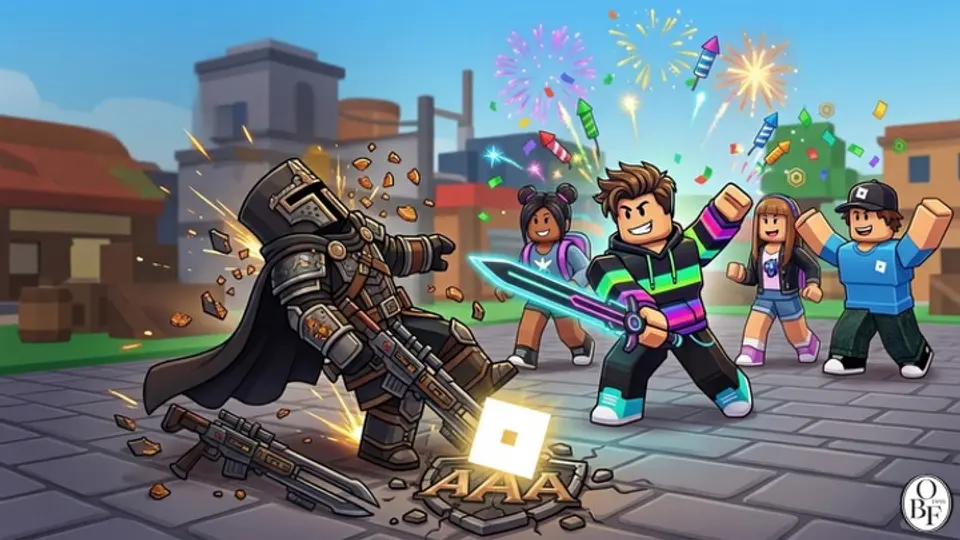
The gaming industry's value chain is flipping upside down, with teenagers driving the shift.
Opening
Hello, subscriber.
Last week, Bloomberg ran a fascinating story. A 19-year-old who grew up in a trailer park in Nova Scotia, Canada, with nothing but an iPad, is now making ₩500,000,000 (~$360,000) a month. What he built wasn’t some cutting-edge 3D game — it was a ‘fishing game,’ made in the gaps between homework and a part-time job at a Chinese restaurant. (Yes, actual fishing!)
At the same time, EA and Ubisoft — companies with thousands of employees and hundreds of millions of dollars in spending — are facing a historic crisis. A game Sony poured $400 million (₩520 billion) into vanished just 14 days after launch. What on earth is happening in the gaming industry? Today I want to talk about the massive economy that teenagers have built, largely under our radar. EA is the studio behind the FIFA soccer series; Ubisoft is known for the Unity development tool and the Assassin’s Creed franchise.
What’s Happening in the Nation of Roblox
Let’s start with scale. In Q4 2025, Roblox had 144 million daily active users — more than the entire population of Japan. Annual revenue reached roughly $5 billion (₩6.5 trillion), and payouts to creators alone topped $1.5 billion (₩2 trillion).
But what’s truly striking is the profile of the people earning this money. The Roblox millionaires Bloomberg interviewed share a common thread: almost none graduated from college. More than half stopped their education after high school.
Nate Colley, the 19-year-old mentioned above, earns $400,000 a month from his fishing game ‘Fisch.’ Lego and Walmart advertise on in-game fishing rods. Chrollo, 20, earns eight figures a year — more than $10 million — and drives a McLaren. Jonathan Courtney, 26, makes $100,000 a month designing avatar items, sponsored by Adidas.
And then there’s the most iconic case of all. A 16-year-old developer built a farming game called ‘Grow a Garden’ in just three days — a simple game where you plant, grow, harvest, and sell crops. It hit 22.3 million concurrent players in the summer of 2025, breezing past Fortnite’s all-time record of 15.3 million. In May 2025 alone, it generated $12 million (₩15.6 billion) in revenue.
The Giants Are Falling
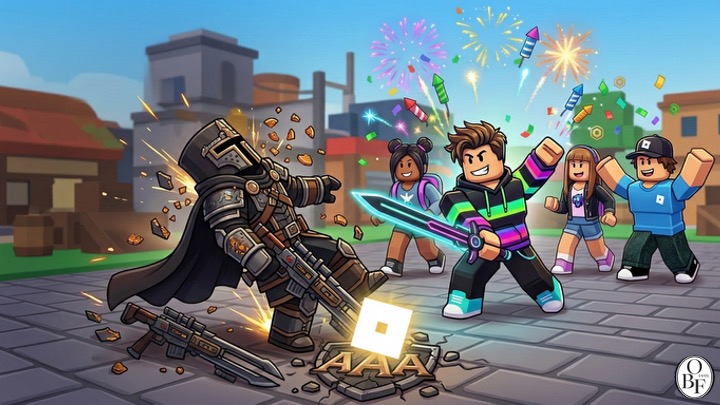
While these teenagers are thriving, the giants of the gaming industry are heading in the opposite direction.
In September 2025, EA announced the largest private equity buyout in history, valued at $55 billion (₩71 trillion). The buyers are Saudi Arabia’s Public Investment Fund (PIF), Silver Lake, and Jared Kushner’s Affinity Partners. The decision came after three straight years of annual revenue stuck at $7.5 billion. Taking on $20 billion in debt to go private signals an intent to restructure without the pressure of public markets.
Sony’s ambitious ‘Concord’ — eight years and $400 million in development — shut down just 14 days after launch. Estimated sales: 25,000 copies. The studio behind it, Firewalk Studios, was shuttered a month later. It’s now recorded as one of the most expensive failures in gaming history. Between 2023 and 2025, according to a GDC survey, one in three developers in the Western gaming industry experienced layoffs. This isn’t a temporary restructuring — it’s a sign that the industry’s underlying structure is cracking.
Here’s the core problem. AAA game development costs now regularly exceed $200 million, and with marketing included, some titles run past $500 million. Yet game prices haven’t moved much beyond $60–70. Costs have grown exponentially, but there’s no way to recover if a game fails.
Platforms Are Replacing Publishers
Look at Roblox’s structure and you’ll see it isn’t a game company — it’s a platform for building and distributing games. The traditional value chain of the gaming industry worked like this: a major publisher invests hundreds of millions of dollars, develops, markets, distributes, and prays for a hit. One failure and the whole company wobbles.
Roblox flipped this on its head. It offers its development tool (Roblox Studio) for free, and handles hosting, distribution, payments, and customer support. Creators can build a game with zero upfront cost. In exchange, Roblox takes a substantial cut of revenue as fees.
The core of this model is risk distribution. There are over 50 million games on Roblox. An algorithm watches user reactions and surfaces the hits among them. The cost of discovering a hit is effectively zero — there’s no need to gamble $400 million the way Concord did.
It’s the same structure by which YouTube replaced broadcast networks, and app stores transformed software distribution. The “invest hundreds of millions to build a perfect product” model is starting to lose ground to the “build cheaply and fast, let the community choose” model.
According to gaming industry analyst Matthew Ball, Roblox accounted for 40% of global gaming market consumer spending growth in 2024, excluding China. A single platform absorbed nearly half of the entire industry’s growth.
But This Isn’t All Rosy
Here’s where we need to strike a balance.
First, the fee structure is brutal. Roblox takes about 70% of revenue — more than double Steam’s 30%. When creators convert Robux (Roblox’s in-platform virtual currency) into actual cash, the effective payout rate drops even further. Roblox emphasizes that upfront costs are zero since it provides development tools, hosting, and distribution for free, but for a successful creator, that cut is a significant burden.
Second, it’s an extreme winner-take-all structure. The top 1,000 creators earned an average of $1.3 million each — but that same group of 1,000 captured 87% of all creator payouts. Out of 50 million games, only a tiny fraction generate meaningful revenue. The narrative that “anyone can get rich on Roblox” carries as much survivorship bias1 as the claim that “anyone can succeed on YouTube.”
Third, child-protection controversies persist. 35% of Roblox users are under 13. Brazil’s Public Labor Prosecutor’s Office is investigating the earnings structure for underage developers, and countries including Turkey (2024) and Russia (2025) have blocked access over child-safety concerns. Since 2024, Roblox has introduced facial-recognition age verification, chat restrictions, and privacy tools, but the criticism hasn’t let up.
Oz’s Lens
I look at this phenomenon through the lens of “an inversion in the cost structure of the content industry.” The most dangerous moment for any market is when its cost structure and its value-creation structure come apart. The AAA game industry is exactly there. Development costs have climbed past $200 million toward $500 million — but has the value consumers actually perceive risen proportionally? Honestly, I doubt it.
Roblox’s teen developers, by contrast, take the opposite approach: build with minimal cost, watch how users react, fix fast, and grow the community. The developer of Grow a Garden built a prototype in three days, then shipped weekly updates based on user feedback. That’s structurally identical to what I call ‘Lean GTM’ in my own work.
One thing I want to make clear, though: this isn’t the “end” of AAA games. Titles like the GTA series or Elden Ring still carry enormous cultural impact. What’s collapsing is the assumption that “every game must be AAA.” It’s the same way not every piece of video content needs to be a Netflix Original — millions of people are perfectly happy watching YouTube Shorts.
And as someone who works with data, one more point: the Roblox millionaire story needs to be stripped of survivorship bias. In a structure where the top 1,000 creators capture 87% of all payouts, the headline “teenagers making ₩500 million a month” comes from six interviews Bloomberg conducted — not the reality for the more than 3.5 million active developers on the platform.
Closing
To sum up: the gaming industry’s value chain is being reshaped. The “invest heavily to build the perfect product” model has structurally begun to lose ground to the “invest little and iterate fast” model. And at the center of this shift is a massive economy built by teenagers, one most of us barely know exists.
But this economy is entirely platform-dependent. A single policy change at Roblox could shake the whole earnings structure. Nate Colley himself hinted at this in his Bloomberg interview, saying he wants to “live off investment income alone within ten years.”
If your kid plays Roblox, understand that it’s not just a game — it’s an economic ecosystem. There’s clear value in it as coding education, but it’s more realistic to treat it as a chance to understand together “how a digital platform economy actually works,” rather than harboring the expectation that “my kid could become a millionaire too.”
Personally, I wanted to cover this topic in the age of vibe coding and AI because we’re surrounded by stories of everyone using vibe coding to build the next big game or app and chase a jackpot — and I wanted to remind us that there’s more than one path forward.
References & Further Reading
- Cecilia D’Anastasio, “Roblox Is Minting Teen Millionaires”, Bloomberg, 2026.03.06. : The interview piece with six Roblox millionaires that sparked today’s issue.
- Roblox Corp, Form 10-K Annual Report, SEC Filing, 2026.02.11. : The source of key financial figures cited here, including 144 million DAU and $1.5 billion in creator earnings.
- “Grow a Garden”, Wikipedia. : Lays out the timeline of how a 16-year-old developer’s farming game set the all-time concurrent-player record.
- “Concord (video game)”, Wikipedia. : Documents the full arc from its $400 million budget to its shutdown 14 days after launch.
- “EA Announces Agreement to be Acquired by PIF, Silver Lake, and Affinity Partners for $55 Billion”, Electronic Arts IR, 2025.09.29. : The official announcement of EA’s go-private deal, useful for grasping the bigger picture of structural change in the gaming industry.
- “Roblox Creator Earnings 2025: Top Developers Average $1.3 Million as Platform Grows”, GamesHub, 2026.02. : A solid analysis of the creator earnings structure and shifting age demographics.

The author, Kwangseob Ahn, is a professor of business administration at Sejong University and lead consultant at OBF (Oswarld Boutique Consulting Firm). He teaches statistics and data analysis — business data management and business analytics — while leading GTM and AI strategy consulting in the field, designing the seam between technology and business. He has published academic research on a memory architecture for AI dialogue systems (HEMA) and runs Daily Arxiv, a daily curation of global AI papers. He holds a master’s from Korea University’s Graduate School of Technology Management and a KMBA. He is the author of Homo Brainless: The People Who Outsource Their Thinking.
Footnotes
-
Survivorship bias: a distorted perception of reality that occurs when only successful cases are visible while the many failures remain unseen. The headline “teenagers make ₩500 million a month on Roblox” showcases only a tiny handful of success stories among more than 3.5 million developers. ↩
Related issues
 Issue #33Business
$250 Billion in AI Spending, So Why Isn't It in the Data?
AI's technical capability and its economic payoff are running on two different clocks.
 Issue #32Business
The CIA's 1944 Manual for Wrecking a Company
The playbook that sinks an organization, run in reverse, turns out to be exactly what saves one.
 Issue #28Business
AI and Jobs: What the Data Actually Shows
The real risk isn't mass layoffs — it's the quietly narrowing door into a first job.
Your take shapes the next issue
What resonated most in this issue, or where has your experience been different?