Founders Banned, $2 Billion Meta-Manus Deal Unwound
The chip war's next battlefield: AI agents.
Opening
Hello, dear reader. This is Oswarld, and welcome to OZ Talking.
Last December, Meta acquired agentic AI startup Manus for $2 billion. The whole process—from the start of negotiations to signing—took just 10 days. By January of this year, Manus’s technology had already begun integrating into Meta Ads Manager, and its employees were showing up to work at Meta’s Singapore office.

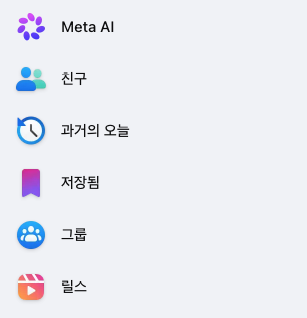
It was even added directly to the Facebook UI—then quietly disappeared. Any guesses why?
But just five months later, the entire deal was unwound. China’s National Development and Reform Commission (NDRC) ordered the transaction voided. Co-founders Xiao Hong and Ji Yichao were slapped with exit bans.
Let me cut to the chase: this isn’t just an M&A dispute. It’s a signal that Beijing has started classifying agentic AI as a strategic asset on par with semiconductors.
🧩 Sealed in 10 Days, Blown Up in 5 Months
Manus’s trajectory was dizzyingly fast.
March 2025: viral demo goes public → April: raises $75 million in a round led by Benchmark → July: relocates Chinese staff to Singapore → December: Annual Recurring Revenue (ARR)1 crosses $100 million → December 29: Meta acquisition announced. Hitting $100 million ARR just 8 months after launch is the fastest ramp in the history of AI startups worldwide.
For Meta, Manus was the “execution layer.” AI agent technology that goes beyond chatbots that merely converse, and actually gets work done. To justify his $70 billion bet on AI infrastructure, Mark Zuckerberg needed AI that acts, not just AI that talks.

The problem was Manus’s birthplace. All three co-founders are Chinese nationals, and the company was originally named ‘蝴蝶效应’ (Chinese for “Butterfly Effect”). It had offices in Wuhan and Beijing and received Chinese government backing. Then, in July 2025, ahead of the acquisition, it shut down its Chinese offices, deleted its Chinese social media accounts, and relocated key staff to Singapore.
This “Singapore detour” rubbed Beijing the wrong way. The Ministry of Commerce launched an investigation on January 8 of this year, and on April 27, the NDRC voided the deal in a single sentence.
The core of the NDRC’s statement came down to a single sentence. “Foreign investment in the Manus project is prohibited, and the parties are required to unwind the transaction.” No reasoning. No cited statute. No grace period.
What’s worth noting is that the NDRC used the word “project,” not “entity.” It amounts to a declaration that Beijing will assert jurisdiction based on where a technology originated, regardless of where the legal entity happens to be incorporated—Singapore or anywhere else.
🔬 From Chip War to Agent War
To understand this episode, you need to see the broader map of the US-China tech rivalry.
Until now, the front line was clear: semiconductors. Since 2022, the US has steadily tightened export controls on advanced AI chips, chipmaking equipment, and design software. ASML’s EUV equipment and NVIDIA’s high-performance GPUs were the archetypal chokepoints2. Washington’s strategy rested on the logic that choking off hardware would cap AI capability too.
But cracks appeared in that logic. DeepSeek trained a state-of-the-art model using NVIDIA H20 chips—which weren’t even under export controls. It essentially routed around the hardware bottleneck with software efficiency. China proved, by its own hand, that choking off chips can’t fully choke off AI capability.
Both sides have now started recognizing a new front: AI software, and agentic AI in particular.
Agentic AI is fundamentally different from a simple chatbot. It operates directly inside a user’s browser, autonomously logging into CRMs, extracting data, writing code, and even completing payments. This isn’t just software—it’s “digital labor.” The market itself is projected to grow from $7.9 billion in 2025 to $236 billion by 2034, a compound annual growth rate above 45%.
Beijing blew up an already-closed $2 billion deal because it judged agentic AI to be a strategic asset on the same tier as semiconductors. It’s also the first time the NDRC’s Foreign Investment Security Review (FISR)3 regime has been applied in earnest to AI technology.
And this wasn’t confined to Manus alone. Around the same time, the NDRC directed major AI firms—ByteDance, Moonshot AI, StepFun, and others—to obtain government approval before accepting US capital. Moonshot AI was in the middle of raising a $1 billion round at an $18 billion valuation, and StepFun was preparing a Hong Kong IPO. In effect, China’s own version of AI investment export controls has begun.
🔄 The Technical Problem With Rewinding
In theory, the NDRC’s order is simple. “Unwind the deal.” In practice, it’s anything but.
Something that’s already happened has to be undone. Manus employees are working at Meta’s Singapore office as Meta staff. The capital has already changed hands, and the original investors—Tencent, ZhenFund, and HongShan Capital—have already collected their payouts from the share sale. Above all, Manus’s agentic AI technology has already started integrating into Meta’s systems. Since February of this year, Manus-powered automation features have been embedded in Meta Ads Manager.
Against this backdrop, Bloomberg reported on a plan the three co-founders—Xiao Hong, Ji Yichao, and Zhang Tao—are weighing: raise roughly $1 billion from outside investors, cover the rest with personal funds, and buy Manus back from Meta. The target valuation exceeds the $2 billion Meta paid, after which the plan is to restructure as a Chinese joint venture and pursue a Hong Kong listing.
There’s a reason investors are interested: Manus’s projected 2026 revenue is around $1 billion. If it hits $1 billion in revenue a year and a half after launch, a $2 billion valuation is only about 2x revenue—a fairly reasonable price by AI-sector standards.
But nothing is settled yet. The biggest challenge is technical separation. How do you pull Manus’s technology back out once it’s already fused into Meta’s systems? There’s almost no precedent for this. As I showed you earlier, Manus is already woven throughout Meta’s services, and those products have already shipped to customers.
There is a somewhat similar case in the US: in 2019, the Committee on Foreign Investment in the United States (CFIUS)4 forced China’s Kunlun Tech to sell off the dating app Grindr. But Grindr was a standalone app whose technology hadn’t been integrated into any other system. A forced separation like Manus’s—where the technology is already fused into the acquirer’s core product—truly has no precedent.
Oz’s Lens
Honestly, I think the most important signal in this whole episode isn’t the dollar figure—it’s the speed.
It took the NDRC just 4 months to blow up an already-closed deal. Given the pace at which government bureaucracies typically move, that’s essentially an instant response. Here’s a pattern I’ve noticed while working on tech strategy: when a government moves this fast, it isn’t reacting to a single deal—it has already, internally, reclassified the strategic tier of that entire asset category.
Chips were already classified as a “strategic asset.” Agentic AI has now taken the seat right next to it. And this cuts both ways—since 2025, the US has also been enforcing rules restricting American investment in Chinese AI, semiconductor, and quantum companies.
What I’m watching closely is the “double blockade” this dynamic creates. Chinese AI founders can’t take US capital (Beijing blocks it), and they can’t sell Chinese technology into the US either (the NDRC blocks it). Try to route around it by incorporating in Singapore? As Manus proved, Beijing tracks a technology back to its origin and catches it anyway.
In the end, the biggest casualties of this “agent war” are the founders themselves. The technology is moving faster than ever, while the choices available to the people who built it keep narrowing.
Closing
Here’s the recap.
First, agentic AI has been elevated to a strategic asset on par with semiconductors. Both governments now rate the strategic value of AI software highly enough to blow up an already-closed $2 billion deal.
Second, “incorporation-location arbitrage” no longer works. The NDRC has begun asserting jurisdiction based on where the technology and talent originated, which rewrites the rules of cross-border AI M&A altogether.
Third, if the Manus buyback goes through, it will create an unprecedented case of “forced separation followed by relisting.” Whether or not it succeeds, every cross-border tech deal from here on now carries a new variable: retroactive geopolitical risk.
If you want to dig deeper, the O’Melveny analysis linked below does a great job laying out the FISR regime and its legal implications.
References & Further Reading
Primary sources
- Bloomberg, “Manus Weighs Raising $1 Billion to Unwind Meta Takeover”, 2026.5.21. : The Bloomberg exclusive that sparked today’s issue.
- O’Melveny, “China Unwinds Meta’s Acquisition of Manus: Implications for Cross-Border AI Transactions”, 2026.5. : The most systematic breakdown of the FISR regime and its legal implications.
- CNBC, “China blocks Meta’s $2 billion takeover of AI startup Manus”, 2026.4.27. : The first report right after the NDRC’s order.
Background
- Fortune, “China’s decision to block the $2 billion Meta-Manus deal shows how far Washington and Beijing are drifting apart over AI”, 2026.4.28. : An analysis surveying the bigger picture of US-China AI decoupling.
- CSIS, “Choking off China’s Access to the Future of AI”, 2026.2. : Useful for understanding US semiconductor export-control strategy and the expanding AI front.
- Contrary Research, “Deep Dive: Export Controls and the AI Race”, 2025.11. : A balanced look at the effectiveness and limits of export controls, and China’s countermeasures.

The author, Kwangseob Ahn, is a professor of business administration at Sejong University and lead consultant at OBF (Oswarld Boutique Consulting Firm). He teaches statistics and data analysis — business data management and business analytics — while leading GTM and AI strategy consulting in the field, designing the seam between technology and business. He has published academic research on a memory architecture for AI dialogue systems (HEMA) and runs Daily Arxiv, a daily curation of global AI papers. He holds a master’s from Korea University’s Graduate School of Technology Management and a KMBA. He is the author of Homo Brainless: The People Who Outsource Their Thinking.
Footnotes
-
ARR (Annual Recurring Revenue): a core performance metric for SaaS companies, representing the annualized revenue generated from recurring subscriptions. Often calculated as monthly revenue × 12. ↩
-
Chokepoint: an irreplaceable bottleneck point in a supply chain. In semiconductors, this refers to critical equipment that only one company can make, like ASML’s EUV equipment. ↩
-
FISR (Foreign Investment Security Review): China’s foreign investment security review system. Enacted in 2021, it grants the NDRC the authority to review foreign investments—before or after the fact—that could affect national security. ↩
-
CFIUS (Committee on Foreign Investment in the United States): the US agency that reviews whether foreign acquisitions of American companies pose national security threats. The forced divestitures of TikTok and Grindr are its best-known cases. ↩
Related issues
 Issue #109Business
Why Anthropic Is Hiring a $320K Copywriter
AI can write, but only humans can figure out what to say.
 Issue #108Business
Why Starbucks Pulled AI Out of Its Stores
It promised 99% accuracy, but baristas trusted their own hands more.
 Issue #104Business
The Red Crayfish Is Disappearing From Search
Where did all those crayfish go?
Your take shapes the next issue
What resonated most in this issue, or where has your experience been different?