BYD's 5-Minute Charging Is About Structure, Not Speed
It's not about who can build the same technology — it's about who shares the same industrial structure
Opening
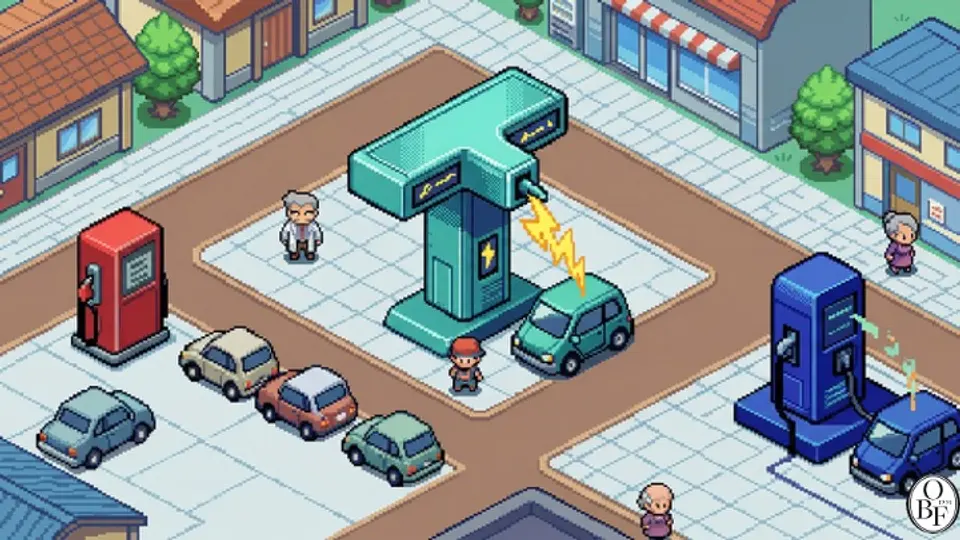
Dear reader, how long does it take to fill up a car with gas at a gas station? About 5 minutes. Now, we’ve entered an era where electric vehicles can charge at roughly that same speed.
On March 5, in Shenzhen, China, BYD Chairman Wang Chuanfu (王传福) took the stage himself to announce something far more than just a charger. Combine the 1,500kW1 Flash Charging system with Blade Battery 2.0, and a battery can go from 10% to 70% in 5 minutes, and to 97% in 9 minutes. Even at -30°C, it can reach near-full charge in 12 minutes.
The numbers alone might not mean much. But consider that in the US, a 350kW charger — considered “ultra-fast” — takes 15 to 25 minutes to reach 80%. BYD’s charging speed is more than 4 times the previous best. But I think there’s a more important question than the raw numbers. I drive a Tesla Model Y now; before that, I drove an Ioniq 5. So this charging speed really hits home for me. With the Ioniq, DC fast charging took about 40 minutes; with the Tesla, on a Supercharger, it’s around 20 minutes. So going from 10 minutes down to 5… it genuinely feels like we’re closing in on gasoline-car territory.
Why can only BYD do this? And is it really only BYD’s story? Or to put it bluntly — is this just hype?
Today’s topic is genuinely difficult and complex. I wrote and deleted footnotes several times myself.But!If you read closely, you’ll come away with a clear overall picture of both the EV industry and the secondary battery industry!
The Secret Behind the 5-Minute Charge: It’s a ‘System,’ Not a Charger
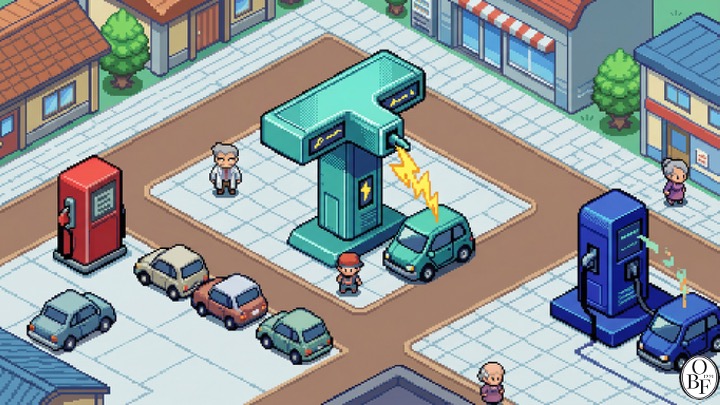
You can’t explain why BYD’s Flash Charging is fast by pointing to the charger alone. It’s possible because the car, the battery, the charger, and even the power infrastructure were all designed together as a single system. Ironically, this is also something they could do precisely because they started late.
Let’s start with Blade Battery 2.0. This battery, developed by BYD over six years, is still based on LFP (Lithium Iron Phosphate)2 chemistry, but its internal structure has been completely redesigned. BYD calls it the “FlashPass ion transport system”: the cathode3 particle structure is engineered in multiple layers so lithium ions can escape faster, an AI-optimized electrolyte4 boosts ion conductivity, and the anode5 is designed so lithium ions can insert in all 360 degrees. Energy density6 improved 5% over the previous generation, and by CLTC7 standards it delivers a range of more than 1,000km (about 621 miles).
Let me flag one fact-check here. Some foreign media reported that this battery uses LMFP (Lithium Manganese Iron Phosphate)8 chemistry, but BYD’s official announcement specifies LFP. LMFP raises energy density by adding manganese — so if BYD actually raised LFP’s energy density through structural innovation alone, that’s arguably an even more remarkable achievement.
Next is the charger itself. A T-shaped overhead design keeps the cable off the ground, and a pulley system that slides along a rail lets you connect regardless of where the charging port is located. It looks like a design innovation on the surface, but the real substance is the hardware capability to deliver 1,500kW through a single connector. For reference, last year’s first-generation system needed two GB/T9 cables connected simultaneously just to reach 1,000kW.
And the cleverest part is the ESS (Energy Storage System)10. Each charging station is equipped with battery storage that charges slowly from the grid and then acts like an amplifier when a vehicle needs charging. This prevents a sudden 1.5MW11 load spike from hitting the grid. Thanks to this approach, charging stations can be installed even in places where the power infrastructure isn’t sufficient.
Vertical Integration as a Structural Weapon
There’s a fundamental reason all of this is possible. BYD makes its own batteries, semiconductors, motors, power electronics, software, and now even charging infrastructure. According to a UBS teardown analysis, about 75% of the components in the BYD Seal are made in-house. By comparison, the China-made Tesla Model 3 sits at around 46%.
BYD Chairman Wang Chuanfu has joked that the company “makes everything except tires and glass,” but this level of vertical integration12 is nearly unprecedented in the auto industry. Tesla, too, has proven the value of vertical integration by building its own Supercharger network, but it still buys about 90% of its battery cells from Panasonic or CATL. BYD, through its subsidiary BYD Semiconductor, even manufactures SiC (Silicon Carbide)13 power semiconductors in-house, and it holds stakes in lithium mines.
This structural difference matters because ultra-fast charging can’t be achieved by speeding up a single component. The battery has to handle a high C-rate14, the vehicle’s electrical architecture15 has to be able to carry that current, the charger has to reliably deliver that power, and software has to orchestrate all of it in real time.Under the traditional auto manufacturing model — sourcing components from separate companies — this level of optimization is structurally difficult to achieve.
BYD’s Flash Charging isn’t a victory for charger technology. It’s a victory for industrial structure.
Not Just BYD’s Story: What CATL Reveals About the Depth of China’s Battery Industry
BYD is getting attention for its vertical integration, but limiting this story to BYD alone means missing the bigger picture. The technological leap that CATL (Contemporary Amperex Technology Co., Limited, or Ningde Era)16 — the world’s largest battery manufacturer — revealed around the same time may be even more staggering. In April 2025, at its ‘Super Tech Day,’ CATL unveiled three battery technologies at once.
First, the second-generation Shenxing (神行) ultra-fast charging battery. Its peak charging rate reaches an astonishing 12C — higher than the 10C of BYD’s Blade Battery 2.0. Peak charging power exceeds 1.3MW, so on a compatible charger, it can secure 520km (CLTC) of range in just 5 minutes. Even at -10°C, it can go from 5% to 80% in 15 minutes. It’s already scheduled to be installed in more than 67 vehicle models.
Second, the Naxtra sodium-ion17 battery. This is a completely different technological dimension.Because it uses sodium instead of lithium, it can fundamentally reduce dependence on lithium resources. With an energy density of 175Wh/kg18 — the highest among existing sodium-ion batteries — it enables 500km of range in a pure electric vehicle. It withstands more than 10,000 charge-discharge cycles and retains 90% of its output even at -40°C. Mass production began in December 2025, and in February 2026, together with Changan (長安) Automobile, CATL unveiled the world’s first mass-produced passenger car with a sodium-ion battery.
The tests CATL showed to prove the safety of its sodium-ion battery were quite extreme — even when a battery cell was pierced with a nail, drilled through with a power drill, or cut clean in half with a circular saw, there was no fire or thermal runaway19.
Third, the Freevoy dual-power battery. It’s a ‘dual-core’ structure that puts cells of two different chemical compositions inside a single battery pack, and depending on the combination, it can achieve up to 1,500km of range. Sodium+LFP, LFP+LFP, NCM20+LFP — optimal combinations can be tailored to different use cases. In particular, by applying “self-forming anode” technology, CATL says it raised energy density by weight by 50% and by volume by 60% compared to conventional LFP.
Here’s the point worth noting. If BYD is competing through vertical integration of “car + battery + charger,” CATL is competing through “diversity of battery technology.” With roughly 38% of the global EV battery market as of 2025, CATL supplies batteries to more than 200 automakers worldwide. If Tesla is BYD’s rival, then CATL’s real rival is arguably the element lithium itself — it’s trying to transcend the limits of the resource itself through sodium-ion technology. According to IRENA’s projections, at scale, sodium-ion cell costs could fall to about $40 per kWh, roughly half the current average for lithium-ion.
The fact that these two pillars of China’s battery industry — BYD’s vertical integration and CATL’s chemical diversity — are moving forward at the same time is evidence that this competition isn’t simply about charging speed.
Why It’s Hard for the US to Catch Up: It’s the ‘Plumbing,’ Not the Technology
Gil Tal, director of the UC Davis Institute of Transportation Studies, assessed BYD’s Flash Charging as “a nice technical improvement, but not something that will change most people’s daily lives.” His reasoning: most US EV owners charge at home, and public fast chargers are used only for long trips. This is because American cars are fundamentally built around long-distance driving, with gas station infrastructure as the default.
It’s a fair point. But I think this view reflects the perspective of people who already own an EV. As Tal himself acknowledged, people who still drive gas cars “compare it to the gas station experience.” And winning that comparison is exactly the role ultra-fast charging plays. So, at least in Asia and Europe, China’s strategy is one that works.
The more fundamental problem is the power grid21. Even if you dropped a 1,500kW charger straight into the US, the existing 150-350kW charging station “plumbing” (power capacity) simply can’t push that much current through. New transformers22, new distribution equipment, and long-term negotiations with utility companies are all needed — and industry experts say this kind of power infrastructure upgrade takes 12 to 18 months. The cost runs into the hundreds of thousands of dollars per site.
In fact, this is exactly where opportunity and demand open up for Korean companies that make transformers and cables!
It’s not that megawatt-class charging doesn’t exist at all in the US. It’s just that it’s the MCS (Megawatt Charging System)23 built for long-haul trucks, not passenger cars. Tesla’s V4 Supercharger targets a max of 500kW, but even that falls far short of BYD’s 1,500kW or the 1.3MW that CATL’s battery can accept.
And crucially, the US policy environment is making things even harder. Just this month alone, Honda canceled three EV models in the US (the 0 Series sedan and SUV, and the Acura RSX), recording a loss of about $15.7 billion. Hyundai discontinued the base trim of the Ioniq 6, and Kia indefinitely postponed the EV6 GT. Even Lamborghini has put its EV plans on hold. Honda issued an unusually candid statement, saying “launching production and sales of these three models in an environment where EV demand is sharply declining would result in greater losses in the long run.”
EV market share in the US has fallen back to around 6%, roughly 2022 levels. As federal EV subsidies shrink and fossil fuel regulations loosen, manufacturers are pivoting sharply back to hybrids. Meanwhile, China’s NEV (New Energy Vehicle)24 sales grew more than 40% year-over-year in 2025. It’s the same industry, running in completely opposite directions.
Oz’s Lens
Far more often than technology gaps, it’s infrastructure gaps that determine markets. BYD’s Flash Charging is technically impressive, but what I really pay attention to is the pace of deployment. BYD unveiled its first-generation 1,000kW charger in March 2025, and exactly one year later, rolled out the 1,500kW second generation. Already, 4,239 charging stations are operating, with a target of 20,000 by the end of this year. The plan is to place one roughly every 100km along Chinese highways.
This is not just a technology demonstration — it’s an infrastructure platform strategy. BYD is building a closed ecosystem where only its own vehicles can charge at maximum speed, while simultaneously opening the network so other vehicles can charge at a slower rate. It’s similar to how Apple integrates hardware, software, and services while still opening the App Store to third parties.
And CATL’s moves make this picture even bigger. If BYD achieves fast charging through a “closed ecosystem,” CATL is trying to universalize ultra-fast charging through an “open standard,” supplying its 12C Shenxing battery to more than 67 vehicle models — while also opening up an entirely new chemical axis with sodium-ion. The fact that both approaches are operating at the same time means China’s entire EV industry is converging toward an ultra-fast charging ecosystem.
Of course, we need to keep some balance.Both BYD’s and CATL’s official charging speeds are figures under optimal conditions, and they may be lower in real-world road conditions. In Europe in particular, CCS225 connector limitations mean the realistic ceiling for BYD may be around 1,000kW. The long-term impact of ultra-fast charging on battery lifespan is also something to watch — BYD claims no thermal runaway even after 500 fast-charge cycles, and CATL touts 10,000 cycles, but long-term data from real-world usage is still insufficient.
But in the bigger picture, this signals that the axis of competition is shifting. In the past, the competition was over “who builds the better car.” Now, it’s becoming a competition over “who has the more complete ecosystem.” While China and Europe race on charging infrastructure, the US still hasn’t decided which direction to head, still standing at the starting line.
Closing
I did a lot of studying to write this issue. There are three tech events I personally always keep an eye on: Apple WWDC, NVIDIA GTC, and CATL’s Super Tech Day. The reason I follow all three is that they tend to unveil genuinely surprising technologies or concepts — and as of now, all three companies hold a firm, overwhelming #1 position in their respective fields.
- BYD’s 5-minute charging isn’t a single technology — it’s the result of designing battery, charger, ESS, and vehicle together as one integrated system. CATL’s 12C battery and sodium-ion technology show that this trend isn’t just BYD’s story, but the direction of China’s entire battery industry.
- The reason it’s hard for the US to catch up isn’t a lack of technical capability — it’s the structural differences in power infrastructure, industrial structure, and policy direction.
- The real competition is shifting toward a structure where the side with ‘the more complete ecosystem’ wins — not the side with ‘the faster charger.’ Next time you spend 5 minutes filling up at a gas station, think about this — in China, during that same 5 minutes, an EV battery is charging up to 70%. And that battery might now be made not with lithium, but with sodium. This speed gap doesn’t come from a difference in technology — it comes from a difference in how the industry itself is designed.
References & Further Reading
- BYD, “BYD breaks down final barriers to electrification with Blade Battery 2.0 and FLASH Charging”, BYD Media, March 6, 2026. This is BYD’s official press release — the most accurate source for the technical specs of Blade Battery 2.0 and Flash Charging.
- CATL, “Naxtra Battery Breakthrough & Dual-Power Architecture: CATL Pioneers the Multi-Power Era”, CATL, April 21, 2025. This is CATL’s official announcement from its Super Tech Day, covering the full technical specs of Shenxing 2.0, Naxtra, and Freevoy.
- Aarian Marshall, “How BYD Got EV Chargers to Work Almost as Fast as Gas Pumps”, WIRED, March 2026. The article that sparked this issue, including an interview with UC Davis’s Gil Tal.
- InsideEVs, “Why BYD’s 5-Minute Fast-Charging Is Our Technology Of The Year”, InsideEVs, December 19, 2025. A solid analysis of the structural advantages BYD’s vertical integration gives its charging technology.
- Inside China Auto, “CATL Announces 12C 1.3MW Charging Battery, Sodium-ion Battery, And Dual-Power Battery”, April 21, 2025. A rundown of CATL’s Tech Day announcements with technical context and competitive analysis.
- R&D World, “The post-lithium materials race is no longer theoretical”, R&D World Online, March 19, 2026. A recent overview of post-lithium battery technologies — sodium-ion, calcium-ion, solid-state, and more. Good for understanding where CATL’s Naxtra fits.
- EVBoosters, “The blueprint of an EV empire: how BYD built global dominance through vertical integration”, 2025. A full overview of BYD’s vertical integration strategy, from batteries to semiconductors.
- Honda Motor Co., “Losses Associated with Reassessment of Automobile Electrification Strategy”, Honda Global, March 12, 2026. Honda’s official announcement canceling three US EV models — a key primary source for understanding the current state of the US EV market.
- Paolo Gerbaudo, “The Electric Vehicle Developmental State”, Phenomenal World, 2024. An academic essay analyzing BYD’s vertical integration in the context of Chinese industrial policy.

The author, Kwangseob Ahn, is a professor of business administration at Sejong University and lead consultant at OBF (Oswarld Boutique Consulting Firm). He teaches statistics and data analysis — business data management and business analytics — while leading GTM and AI strategy consulting in the field, designing the seam between technology and business. He has published academic research on a memory architecture for AI dialogue systems (HEMA) and runs Daily Arxiv, a daily curation of global AI papers. He holds a master’s from Korea University’s Graduate School of Technology Management and a KMBA. He is the author of Homo Brainless: The People Who Outsource Their Thinking.
Footnotes
-
kW (kilowatt): A unit indicating the amount of electrical power. 1kW equals 1,000 watts. A home air conditioner uses roughly 2-3kW, and EV fast chargers run 50-350kW. 1,500kW is roughly the amount of power used simultaneously by about 500 households. ↩
-
LFP (Lithium Iron Phosphate): One of the chemical compositions used in EV batteries. It has lower energy density than nickel-cobalt-based batteries (NCM), but is cheaper, longer-lasting, and safer. BYD’s Blade Battery and CATL’s Shenxing battery are prime examples. ↩
-
Cathode: The side of the battery from which lithium ions leave during charging. In simple terms, it acts as the battery’s “energy warehouse.” The material used greatly affects the battery’s capacity, lifespan, and safety. ↩
-
Electrolyte: The liquid (or solid) inside a battery that acts as a “pathway” allowing lithium ions to move between the cathode and anode. The faster ions can move, the faster charging becomes — which is why the electrolyte’s ionic conductivity is one of the key variables in ultra-fast charging. ↩
-
Anode: The side of the battery that receives lithium ions during charging. It’s usually made of graphite, and the direction and speed at which ions insert into it is a major factor determining charging speed. ↩
-
Energy Density: The amount of energy a battery can store per unit of weight or volume. The higher it is, the farther a battery of the same size can take you. Usually expressed in Wh/kg (by weight) or Wh/L (by volume). ↩
-
CLTC (China Light-duty Vehicle Test Cycle): China’s range testing standard for light vehicles. Its conditions are more lenient than Europe’s WLTP or the US EPA standard, so the same vehicle will show its highest range figure under CLTC. A realistic estimate of actual range is about 70-85% of the CLTC figure. ↩
-
LMFP (Lithium Manganese Iron Phosphate): A battery chemistry that adds manganese to LFP to raise energy density. It’s drawing attention as a next-generation LFP technology because it can extend range while preserving LFP’s safety. ↩
-
GB/T: China’s EV charging connector standard. It’s physically different from Europe’s CCS2 and North America’s NACS[^27] (Tesla’s standard). Part of the reason BYD can achieve 1,500kW in China is the flexibility of the GB/T standard. ↩
-
ESS (Energy Storage System): A device that stores power in batteries and releases it when needed. At BYD charging stations, it acts as a “buffer” that eases the load on the power grid. Instead of drawing 1.5MW directly from the grid during peak times, it supplements with power stored in advance. ↩
-
MW (megawatt): 1MW = 1,000kW. BYD’s 1,500kW charger is in the 1.5MW class. For reference, a typical apartment complex needs roughly 2-5MW of power. That means a single charger can momentarily draw as much power as an entire apartment complex. ↩
-
Vertical Integration: A strategy where a single company directly handles multiple stages of the supply chain, from sourcing raw materials to selling the finished product. In simple terms, instead of “buying parts and assembling them,” the company “makes the parts itself.” It’s advantageous for cost savings and quality control, but can come with the drawback of reduced flexibility. ↩
-
SiC (Silicon Carbide): A semiconductor material that can withstand higher voltage and temperature than conventional silicon. When used in EV inverters or chargers, it reduces energy loss and allows higher power to be handled efficiently. It’s one of the core components BYD manufactures in-house. ↩
-
C-rate: A unit indicating a battery’s charge/discharge speed. 1C means charging the battery’s full capacity in 1 hour; 10C means charging it in 6 minutes. BYD’s Blade Battery 2.0 supports 10C or higher, and CATL’s second-generation Shenxing supports 12C. Most EVs sold in the US are around 3-5C at peak. ↩
-
Electrical Architecture: The way a battery, motor, charging system, and other components are electrically connected inside an EV. The higher the voltage (400V → 800V → 1,000V), the more energy can be delivered in the same amount of time. BYD uses an architecture of up to 1,000V. ↩
-
CATL (Contemporary Amperex Technology Co., Limited, or Ningde Era/宁德时代): The world’s largest EV battery manufacturer, headquartered in Ningde, Fujian Province, China. As of 2025, it holds about 38% of the global EV battery market. CATL batteries power more than 20 million new energy vehicles worldwide, and its cumulative R&D investment over 10 years exceeds 80 billion yuan (roughly ₩15 trillion). ↩
-
Sodium-ion Battery: A battery that uses sodium instead of lithium. Sodium is roughly 1,000 times more abundant on Earth than lithium, and can even be extracted from seawater. It has lower energy density than lithium-ion, but is cheaper and performs better in low temperatures. MIT Technology Review named it one of its 10 Breakthrough Technologies for 2026. ↩
-
Wh/kg (watt-hours per kilogram): A unit indicating a battery’s energy density by weight. The higher the number, the farther a lighter battery can take you. For reference, current LFP batteries typically run 140-180Wh/kg, and NCM batteries 200-280Wh/kg. CATL’s sodium-ion battery, at 175Wh/kg, rivals some LFP batteries. ↩
-
Thermal Runaway: A phenomenon in which a chemical reaction inside a battery spirals out of control, causing temperature to spike rapidly and leading to fire or explosion. It’s a leading cause of EV fires and one of the most critical benchmarks for battery safety. ↩
-
NCM (Nickel Cobalt Manganese): A battery chemistry that uses nickel, cobalt, and manganese in the cathode. It has higher energy density than LFP, making it favorable for long-range driving, but it’s more expensive and relatively less thermally stable. Also known as a “ternary” battery. ↩
-
Power Grid: The entire system that delivers electricity generated at power plants to homes and industrial facilities. It’s made up of transformers, transmission lines, distribution equipment, and more. Installing a megawatt-class charger requires this grid to have sufficient capacity — and most existing facilities fall short. ↩
-
Transformer: A device that raises or lowers voltage. It converts electricity from high-voltage transmission lines into a voltage that chargers can use. Megawatt-class charging stations need far larger-capacity transformers than typical commercial facilities, and installing or replacing them takes months. ↩
-
MCS (Megawatt Charging System): A megawatt-class charging standard under development for commercial vehicles like large trucks. It’s designed to charge up to 3.75MW. The international standard (IEC TS 63379) was published in February 2026, and commercial deployment is still in its early stages. ↩
-
NEV (New Energy Vehicle): A term used in China that encompasses battery electric vehicles (BEVs), plug-in hybrids (PHEVs), and fuel-cell vehicles (FCEVs). Conventional hybrids (HEVs) are not included. ↩
-
CCS2 (Combined Charging System 2): The EV fast-charging connector standard used mainly in Europe. Most CCS2 chargers currently support up to about 350kW, with 600kW-class chargers only recently beginning to be deployed in limited numbers. It’s difficult to implement BYD’s full 1,500kW through CCS2 as-is, and in Europe, around 1,000kW appears to be the realistic ceiling. ↩
Related issues
 Issue #59Business
From a Garage to $3.8 Trillion: Apple at 50
Three growth curves — economic, ecosystem, and creative — explain why the company's flywheel is so hard to break.
 Issue #58Business
Economists Got 5x Faster. But What About Quality?
The real contest is between how fast we catch errors and how fast we create them.
 Issue #53Business
TikTok's $10 Billion 'Fee' Isn't Really About a Fee
The US government is testing how to turn regulatory power into a revenue-generating asset
Your take shapes the next issue
What resonated most in this issue, or where has your experience been different?