How AI Agents Could End the UI-Based Annoyance Economy
Canceling a subscription takes 4 pages and 6 clicks — this annoyance costs $165 billion a year.
Opening
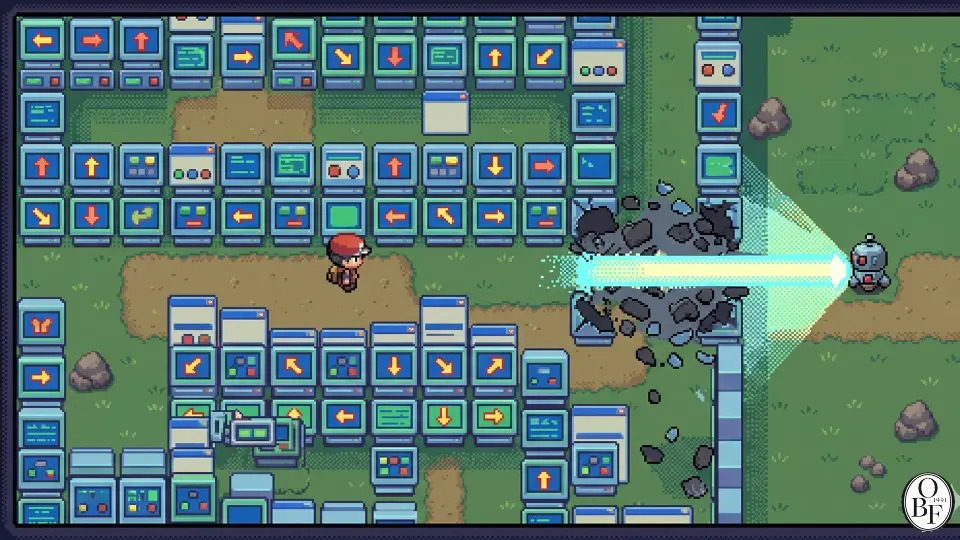
Hello, subscriber! Do you remember the newsletter I wrote about Adobe’s dark patterns a while back? Lately, the topic has been heating up in the US as a string of dark-pattern lawsuits reach their verdicts. Have you ever tried to cancel Amazon Prime? You have to click through 4 pages, hit 6 buttons, and navigate 15 separate choices. Amazon employees internally called this cancellation process the “Iliad Flow” — a name borrowed from Homer’s epic poem The Iliad, meaning a journey as long and grueling as the ten-year Trojan War.
And this isn’t unique to Amazon. A report published this past February by Stanford economist Neale Mahoney and Chad Maisel of the Groundwork Collaborative calculated the total cost of this “annoyance.” The figure: $165 billion a year for American households — roughly ₩250 trillion in Korean won. The report called this the ‘Annoyance Economy.’
Reading this report, a different question came to mind. This annoyance only works under one precondition: a human has to sit in front of a screen and click through it themselves. What happens if that precondition disappears?
🔍 Anatomy of a ₩250 Trillion Annoyance
Mahoney and Maisel’s report broke the annoyance economy’s costs down by category: $33 billion (~₩50 trillion) in damage from spam and robocalls, $21.6 billion (~₩33 trillion) in insurance-related administrative overhead, $90 billion (~₩136 trillion) in hidden fees of various kinds, and $19 billion (~₩29 trillion) lost to medical wait times. On average, 130 million spam and illegal marketing calls are placed in the US every day, and 20 billion spam texts go out every month.
But here’s the truly interesting part. Research shows that companies which made cancellation harder saw revenue increase by anywhere from 14% to as much as 200%. That’s the central finding of a 2023 paper1 by Stanford’s Liran Einav, Benjamin Klopack, and Mahoney. It means that hard-to-cancel processes aren’t a simple mistake or an inertia problem — they’re a deliberately engineered revenue model.
Amazon’s “Iliad Flow” is the textbook example. In September 2025, just three days into its trial against the FTC (the US Federal Trade Commission), Amazon agreed to settle for $2.5 billion (~₩3.8 trillion). Internal emails released during the trial showed employees referring to unwanted subscriptions as an “unspoken cancer” and describing the practice of pushing subscriptions on customers as “a bit of a shady world.”
Annoyance isn’t a bug. It’s a feature.
And the damage doesn’t stop at people’s wallets. According to a 2019 survey, nearly a quarter of respondents said they had delayed or given up on medical care because of administrative hassle. The time spent on scheduling appointments, filing insurance claims, and processing paperwork alone amounts to $21.6 billion a year. The annoyance economy isn’t just draining money and time — it’s eating into our health.
🖱️ How the Annoyance Economy Works: UI as the Stage
Let’s take a step back and think about how this annoyance actually works.
The core of deceptive UI design, known as dark patterns2, is exploiting human cognitive biases on-screen: loss aversion (framing cancellation as losing a benefit), status quo bias (the tendency to stick with defaults), and inertia (putting off annoying tasks). According to a 2025 study by the European Association of Cognitive Ergonomics (EACE), cancellation flows built with dark patterns saw user trust drop by 28% and usability scores fall by 54%.
But every one of these strategies rests on a shared premise: that a human interacts with the service through a UI. For the 4-page, 6-click Iliad Flow to work, a person’s eyes have to look at the screen, their hand has to press the buttons, and their brain has to feel fatigue as it wades through 15 choices.
The FTC tried to solve this problem through law. The “Click-to-Cancel” rule, finalized in October 2024, enshrined the principle that “canceling should be as easy as signing up” — but a federal appeals court struck it down in July 2025 on procedural grounds. The FTC restarted the rulemaking process in March 2026, but finalizing a new rule is expected to take years.
Before the law can catch up with the annoyance economy, technology might change the structure first.
🤖 AI Agents Don’t See the UI
Here’s the shift I’ve been watching closely: the rise of AI agents. As of 2026, the AI agent market is growing fast. Gartner projects that 40% of enterprise applications will embed AI agents by the end of 2026, with the market growing from $7.8 billion in 2025 to $52.6 billion by 2030. Services like OpenAI’s Operator, Anthropic’s Computer Use, and Google’s Project Mariner are already browsing the web and completing tasks on users’ behalf.
Here’s the key point: AI agents don’t need to go through a UI at all. If there’s an API3, they use the API; if there’s a CLI4, they use the CLI; and if neither exists, they fall back on Computer Use, directly manipulating the screen. But an agent’s essential drive is to take the most efficient path. Unlike humans, it doesn’t get emotionally worn down staring at a screen. Even faced with 15 choices, it can find and click the “confirm cancellation” button in 0.1 seconds.
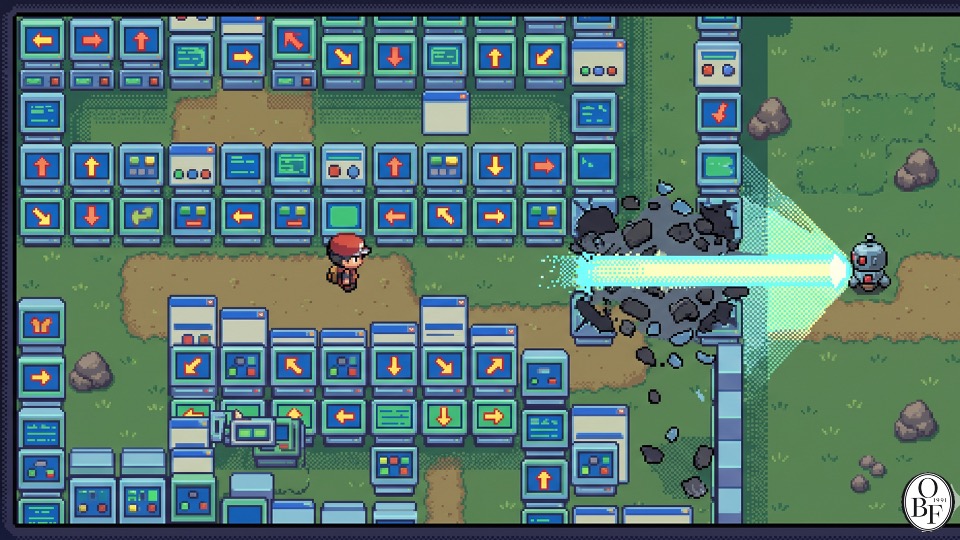
Cognitive overload, loss-aversion framing, and inertia-inducing prompts — the weapons of dark patterns — are aimed squarely at human psychology. They don’t work on AI agents. Even if a pop-up warns, “Cancel now and you’ll lose free shipping,” the agent simply follows the user’s instruction (“cancel my Prime”) and nothing else.
What matters more is the long-term direction. Once agents become the norm, the whole mode of interacting with a service shifts from UI to API. Instead of a human opening a browser and clicking buttons, an agent talks directly to the server with a curl5 command or an API call. In that world, a concept like “4 pages, 6 clicks” simply ceases to exist.
This is a fundamentally different kind of change from legacy automation like RPA. RPA works by memorizing the on-screen location of buttons and replaying clicks, so it broke the moment a website’s layout changed. As of 2025, UK companies were spending roughly £38,000 a year to maintain a single RPA bot, with failure rates hitting 42% after UI updates. AI agents, by contrast, either understand the “meaning” of a screen and adapt flexibly, or bypass the screen entirely and talk directly to the API. Demand naturally gravitates toward the more stable, efficient path — that is, toward programmable interfaces.
Oz’s Lens
In my view, the annoyance economy is a textbook example of a “business model that monetizes friction.” Signing up is one click; canceling is an Iliad. That asymmetry is what generated the 14%-to-200% revenue gains.
But this model rests on a single assumption: that the consumer navigates the UI themselves.
In the age of AI agents, that assumption collapses. An agent just fires off curl -X POST /api/cancel-subscription and it’s done. No 4 pages, no 6 clicks, no emotional persuasion needed. And for an agent, the rational path is obviously the API or CLI — it’s faster, more accurate, and more reliable than a UI. I think demand will naturally gravitate toward programmable interfaces.
Of course, companies won’t just sit still. They might block API access or create new forms of friction by detecting and blocking agents. But that’s essentially a technical means of stopping customers from leaving, and it will draw pressure from both regulators and the market. The fact that Amazon’s $2.5 billion settlement was still seen as insufficient is evidence of that.
The real enemy of the annoyance economy may not be the law, but technology. And that technology is already at the door.
Closing
I have a page called The Secrets of UI/UX that I put together back in 2023. It got quite popular at the time and spread far and wide — people ripped it off without credit, some published books based on it, and I even saw others turn it into paid courses. Still, I let it be. I figured it was information you could find anywhere with a quick search anyway. And I assumed the people doing this would be the ones most ashamed of themselves. But… well, maybe that wasn’t quite right. Looking at it now, I’m honestly not sure. Seeing how firmly the term “annoyance economy” has taken hold, I wonder if I played some small part in that myself.
First, the annoyance economy represents a real economic cost of ₩250 trillion a year. It’s not mere inconvenience — it’s friction deliberately engineered by companies.
Second, this friction only works on the stage of the UI, because it’s structured to exploit human cognitive biases and emotional fatigue.
Third, AI agents are evolving to communicate with services through APIs and CLIs rather than UIs, and this shift could dismantle the very premise the annoyance economy depends on.
Next time you’re stuck hunting for the cancel-subscription button, ask yourself: how much longer can this annoyance possibly last — in a world where an agent that could click it for you already exists?
References & Further Reading
Primary sources
- Chad Maisel & Neale Mahoney, “Taking on the Annoyance Economy”, Groundwork Collaborative, February 2026. : Today’s newsletter’s core data comes from here. The category-by-category cost breakdown is especially useful.
- Liran Einav, Benjamin Klopack, Neale Mahoney, “Selling Subscriptions”, NBER Working Paper, August 2023. : An empirical paper on the relationship between cancellation difficulty and revenue growth.
- “FTC’s Landmark $2.5 Billion Amazon Settlement Highlights Ongoing Focus on Dark Patterns”, National Law Review, September 2025. : Helpful for understanding the legal significance of Amazon’s settlement and the direction of future regulation.
Background
- “Dark patterns in subscription service cancellation processes”, Proceedings of the 36th EACE Conference, 2025. : An experimental study verifying dark patterns’ effect on user trust and usability.
- “AI Agents in Automation (April 2026)”, Automation Atlas, April 2026. : A guide summarizing the current state of the AI agent market and its key players.Related articles
- Annie Lowrey, “America’s Annoyance Economy Is Growing”, The Atlantic, February 2026. : A vivid article showcasing real-world examples of the annoyance economy. : A vivid article showcasing real-world examples of the annoyance economy.
- Kwangseob Ahn, 101 Psychological Effects You’ll Someday Use, June 1, 2023. : You may use this with attribution for non-commercial purposes; for commercial use or adaptation, please notify me in advance. To date, the only person who has honored this rule is Dong-geun Jo, who goes by “Jo Coding” (a Korean YouTube creator).

The author, Kwangseob Ahn, is a professor of business administration at Sejong University and lead consultant at OBF (Oswarld Boutique Consulting Firm). He teaches statistics and data analysis — business data management and business analytics — while leading GTM and AI strategy consulting in the field, designing the seam between technology and business. He has published academic research on a memory architecture for AI dialogue systems (HEMA) and runs Daily Arxiv, a daily curation of global AI papers. He holds a master’s from Korea University’s Graduate School of Technology Management and a KMBA. He is the author of Homo Brainless: The People Who Outsource Their Thinking.
Footnotes
-
NBER Working Paper: A research paper published by the National Bureau of Economic Research in the US. It hasn’t gone through peer review yet, but in economics, this channel functions as the de facto standard for research. ↩
-
Dark Pattern: A UI/UX design technique that deceives users or nudges them into unintended actions. Common examples include hiding the cancel button or making it harder to unsubscribe than to sign up. ↩
-
API (Application Programming Interface): A standardized channel through which software exchanges data. It allows requests to be sent directly to a server without going through a screen. ↩
-
CLI (Command Line Interface): A way of operating a computer through text commands. Instead of clicking a mouse, you type commands directly on a keyboard. ↩
-
curl: A command-line tool for sending HTTP requests to a server. It lets you communicate with a web server without a browser, which is why developers frequently use it to test APIs. ↩
Related issues
 Issue #91Society
Why the FAA Is Recruiting Gamers With $155K Salaries
In an era when skills replace degrees as the hiring bar, air traffic control just became the first real test case.
 Issue #88Society
What Happens When AI Agents Negotiate Your Purchases
A world is coming where those with less information won't even know they're losing out.
 Issue #81Society
Meta's AI Bet: Winning Over 250 Million Small Merchants
Meta thinks the real AI war isn't won with big corporations — it's won with your neighborhood shop owner
Your take shapes the next issue
What resonated most in this issue, or where has your experience been different?