Same Company, 100x Bonus Gap: Korea's New Problem
Citizen dividends, a sovereign fund, solidarity wages—three rival fixes emerged in just three weeks.
Opening
Dear reader, the results of Samsung Electronics’ union ratification vote came out on the 27th. 73.7% in favor — passed. Looking at the number alone, it seems like a clean resolution.
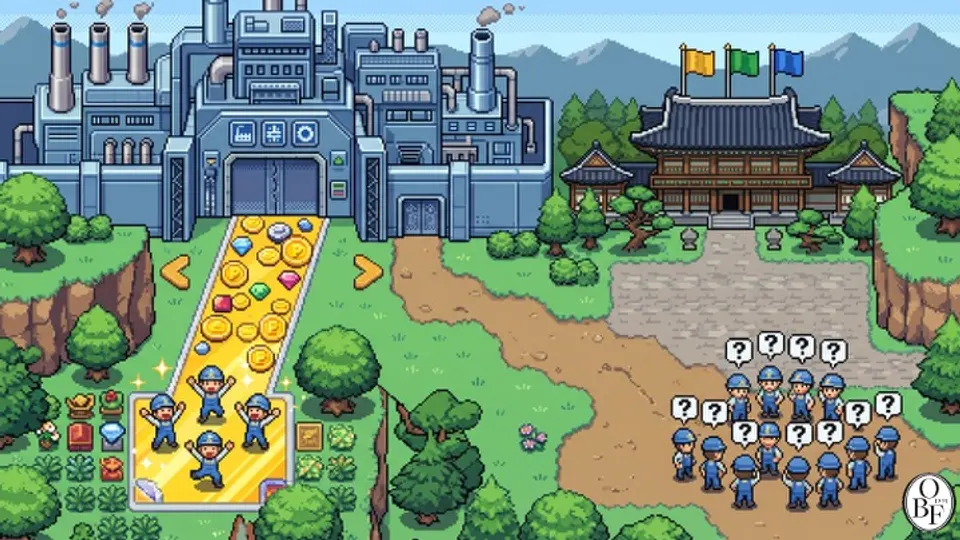
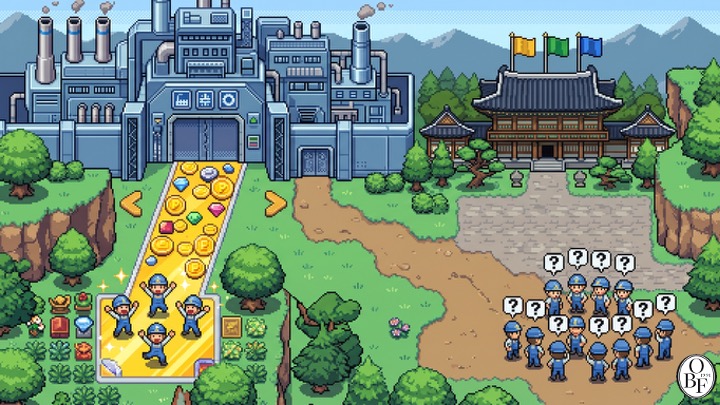
But look closer and you see a completely different picture. Among Semiconductor (DS) division union members, 80.6% voted yes — while the Smartphone and Home Appliances (DX) division managed only 21.1%. Same company, same vote, completely different response. The moment voting ended, more than 10,000 people joined Donghaeng Union, a labor union centered on the DX division, within a single day.
What I want to unpack in this newsletter isn’t the internal conflict at Samsung Electronics itself. Let me give you the conclusion up front: Korea has become the first country in the world forced to answer, in practice rather than in theory, the question of how a society should divide the wealth that AI creates.
I’ve covered this case in my classes and mentioned it publicly on several occasions, and I’ve always asked the same question. Was the problem the amount they receive? Or was it the duration? Or was it who receives it? In today’s newsletter I want to share the answer I’ve landed on. Spoiler: it’s none of the three.
Three Prescriptions in Three Weeks
Let’s start with scale. This year, Samsung Electronics’ semiconductor memory division employees can receive up to ₩600 million (~$435,000) in bonuses. Based on a ₩100 million annual salary, that’s roughly ₩550 million in special management performance bonuses plus ₩50 million in OPI1. Employees in the same company’s DX division get nothing but ₩6 million worth of company stock. That’s roughly a 100x gap.
To see why this number has become more than a single company’s labor dispute, just trace the timeline of May.
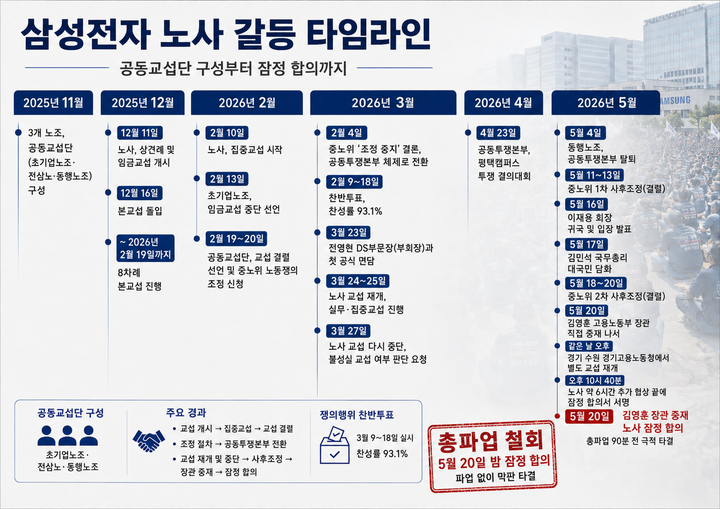
On May 11th, Kim Yong-beom, Chief Policy Officer at Cheong Wa Dae (the presidential office), posted a 2,500-character piece on Facebook. Its key line: “The fruits of the AI infrastructure era are not the result of any single company alone.” He proposed paying citizens a “citizen dividend” funded by excess semiconductor tax revenue. Markets reacted instantly. The KOSPI, which had been approaching the 8,000 mark, plunged, and the presidential office distanced itself the same day, calling it his “personal opinion.”
On May 20th, at Samsung Electronics’ Pyeongtaek plant, a dramatic agreement was reached just 90 minutes before a general strike was set to begin — the result of direct mediation by Kim Young-hoon, Minister of Employment and Labor.
After the agreement, though, directions diverged. The government shifted its focus toward building a Norwegian-style sovereign wealth fund2 . The idea: start with ₩30 trillion (~$21.7 billion) in seed money and invest excess semiconductor tax revenue for future generations. On May 30, 2026, Deputy Prime Minister Koo Yun-cheol appeared on the finance YouTube channel SamproTV and officially confirmed that “a significant portion of the excess tax revenue will go into the sovereign wealth fund.”
Meanwhile, on the 27th, Minister Kim Young-hoon raised a new topic: a “Korean-style solidarity wage.”3 The idea was to link large corporations’ excess profit-sharing to closing the wage gap between primary contractors and subcontractors, but the discussion forum scheduled for it was postponed within two days. He explained, “This isn’t about slaughtering the goose to split it up,” but the controversy was too large.
To sum up: within a single month, three fundamentally different prescriptions — citizen dividends, a sovereign wealth fund, and a solidarity wage — appeared simultaneously. That shows just how urgent this issue is, and also that nobody yet has the right answer.
Why 20th-Century Prescriptions Don’t Work
History has already recorded the trap of resource-driven prosperity. Dutch disease4 — in which the Netherlands’ currency surged after it discovered massive natural gas reserves in the North Sea in 1959, and manufacturing collapsed as a result — and the resource curse, in which oil deepened dictatorship and distorted economies, are both lessons in what happens when money suddenly floods in. The case many people cite, Venezuela, was actually less about resources or the economy and more about political and social corruption.
There are success stories too. Norway established the GPFG5 in 1990 to invest oil revenue for future generations. Over 30 years it posted an average annual return of 6.6%, and it has kept its principle of never touching the principal. Alaska runs a permanent fund model that pays residents a dividend every year. It’s precisely this approach that Deputy Prime Minister Koo Yun-cheol recently proposed.
By contrast, Taiwan collected ₩89 trillion (~$64.5 billion) in excess semiconductor tax revenue over the past four years from TSMC and other firms, and simply handed out ₩480,000 (~$347) in cash to every citizen. Voices are now warning of a “Taiwanese Dutch disease.”
But there’s one decisive way Korea’s situation differs from all these precedents. In past resource-rich nations, excess profits came from state-owned oil companies or direct government revenue. Because the government could control where the money came from, designing distribution was relatively simple. Samsung, though, is a 100% private company.
What’s happening in Korea now is a different structure. Money is concentrating in one particular division of a private company. Samsung Electronics’ semiconductor division is projected to post ₩310 trillion (~$224.6 billion) in operating profit this year, versus just ₩7.3 trillion (~$5.3 billion) for the Smartphone and Home Appliances (DX) division — a 42x gap within the same company. Some estimates put combined corporate tax from both divisions at ₩150 trillion (~$108.7 billion) this year alone. For reference, Korea’s entire corporate tax revenue in 2025 was ₩84.6 trillion (~$61.3 billion). In fact, Samsung Electronics executives have recently used the phrase “a sense of alienation” to describe how they feel responsible for what the DX division might be feeling.
Samsung Electronics’ Roh Tae-moon: “I feel responsible for the DX division’s sense of alienation” | Yonhap News(Seoul=Yonhap) By reporter Kang Tae-woo = Roh Tae-moon, CEO of Samsung Electronics and head (President) of the Device Experience (DX) division, on the 27th, following the passage of the “2026 Wage Negotiation Tentative Agreement” …In this situation, both the legitimacy and the method of government intervention remain uncertain. Sharing a state-owned company’s revenue and discussing social redistribution of a private company employee’s bonus are fundamentally different problems. When Minister Kim Young-hoon said “there’s no precedent,” that wasn’t modesty — it was fact.
Why the World Is Watching Pyeongtaek
Bloomberg didn’t write a long-form deep dive on this because a Samsung Electronics strike makes for interesting news. There are structural reasons Korea has become a global test case.
First, the world’s two largest memory-chip makers by market cap are both Korean. Samsung Electronics and SK Hynix have each surpassed a $1 trillion market cap, and their combined projected operating profit will exceed ₩600 trillion (~$434.8 billion) this year alone. In the first 20 days of May, Korea’s semiconductor exports rose 202% year over year. It’s hard to find another case of excess profit this concentrated in a single national industry, outside of Gulf oil states.
Second, Samsung’s agreement is triggering a chain reaction. Right after the deal, TSMC’s CEO in Taiwan promised employees an incentive raise of more than 30%. The compensation baseline in the global semiconductor labor market is rising. SK Hynix already runs a model that distributes 10% of operating profit as cash bonuses.
Third, this isn’t just a semiconductor problem. Standard Chartered’s CEO recently said the bank would replace “lower-value human capital” with AI. Bloomberg described this trend as a new class divide between “AI aristocrats” and ordinary workers. While other countries are still at the stage where Elon Musk talks about “universal high income” and academics write papers on AI redistribution, Korea has already entered the stage of having to design actual policy.
That’s the context behind Samsung Electronics announcing a ₩5 trillion (~$3.6 billion) five-year shared-growth fund right after the agreement, and DX division head Roh Tae-moon sending an internal message saying he “feels both regret and responsibility.” Even the company itself is beginning to recognize that this isn’t an internal HR issue but a social agenda.
Oz’s Lens
Honestly, I think all three prescriptions being floated right now have shortcomings.
There’s a problem I’ve run into repeatedly while building corporate technology strategy. The hardest thing to resolve is the structural tension that arises when “where value is created” and “where value is captured” diverge. Running the Pyeongtaek chip plant requires infrastructure from all of Korean society — power, water, roads, education, even security. Society as a whole contributed to creating that value, yet the value capture is concentrated entirely in the bonuses of one division’s employees.
This is less a distribution problem than a market design problem. A citizen dividend is one form of returning value; a sovereign wealth fund is one form of storing value; a solidarity wage is one form of redistributing value. No single one is the right answer — the real design challenge is figuring out what mix of the three to combine, and in what proportion.
And there’s another, more fatal problem. Right now, there’s less and less of a way to keep these people working at Samsung Electronics at all. Under the currently announced agreement, if someone receives roughly ₩600 million a year for about three years, after taxes they’d end up with well over ₩1 billion (~$725,000) in total compensation. If the current DRAM shortage or the KOSPI rally continues, this kind of asset accumulation could accelerate even further. I hope it was a joke, but during the strike negotiations someone said, “If the strike doesn’t go our way, I’ll just move to CXMT” — and the worst-case version of that is that people could say it even after collecting every last bit of compensation.
Minister Kim Young-hoon was right to say “there’s no precedent,” and I see that not as a crisis but as an opportunity. If Korea gets this right, the institutional design itself could become a bigger export than semiconductors — because Korea has become the first country that has to write the social contract for the AI age.
Closing
Korea has become the first country in the world required to solve, in practice, a question that remains purely theoretical everywhere else. Three prescriptions emerged in three weeks, but none has been settled yet. The question that erupted at the Pyeongtaek plant won’t stay contained within Samsung. If you want to dig deeper, read Kim Yong-beom’s original Facebook post alongside the Bloomberg article below.
Where do you think semiconductor excess profits should go? Actually — is “excess profit” even the right term? There are plenty of options: sovereign wealth fund, citizen dividend, solidarity wage. Leave your thoughts in the comments, and I’ll cover readers’ perspectives in the next newsletter.
References & Further Reading
Primary sources
- Bloomberg, “Huge AI Bonuses in South Korea Spark Fight Over Sharing Tech Wealth”, May 30, 2026. : The Bloomberg deep-dive that started today’s newsletter. It includes on-the-ground interviews in Pyeongtaek.
- Hankyung, “Salary of ₩100 Million, Bonus of ₩570 Million… Samsung’s Conflict Reaches Its Peak”, May 27, 2026. : The most detailed breakdown of the ratification vote results and the approval-rate gap between DS and DX.
- Financial News, “Kim Yong-beom: ‘AI’s Fruits Should Become a Citizen Dividend’… Presidential Office Calls It a ‘Personal Opinion’”, May 12, 2026. : Covers the background of the citizen dividend proposal and the market’s reaction.
- Edaily, “Koo Yun-cheol: ‘We’ll Put a Significant Portion of Excess Tax Revenue Into the Sovereign Wealth Fund’”, May 30, 2026. : Summarizes Deputy Prime Minister Koo Yun-cheol’s official position.
Background
- Munhwa Ilbo, “Semiconductor Excess Tax Revenue and the ‘Sovereign Wealth Fund’ — Korea Must Do It Right, Like Norway”, May 22, 2026. : An editorial comparing the success principles of Norway’s GPFG with Taiwan’s cash-handout approach.
- Herald Corp, “Kim Young-hoon: ‘Emergency Forum on Korean-Style Solidarity Wage on June 1st’”, May 27, 2026. : Explains the background of the solidarity wage concept alongside Sweden’s Rehn-Meidner model.

The author, Kwangseob Ahn, is a professor of business administration at Sejong University and lead consultant at OBF (Oswarld Boutique Consulting Firm). He teaches statistics and data analysis — business data management and business analytics — while leading GTM and AI strategy consulting in the field, designing the seam between technology and business. He has published academic research on a memory architecture for AI dialogue systems (HEMA) and runs Daily Arxiv, a daily curation of global AI papers. He holds a master’s from Korea University’s Graduate School of Technology Management and a KMBA. He is the author of Homo Brainless: The People Who Outsource Their Thinking.
Footnotes
-
OPI (Overachievement Performance Incentive): A bonus system under which Samsung Electronics pays employees when a division’s operating profit exceeds its target. Employees can receive up to 50% of their annual salary. ↩
-
Sovereign Wealth Fund: An investment fund that puts a country’s foreign exchange reserves or fiscal surplus into long-term investments to build assets for future generations. Norway, Singapore, and the UAE are among the countries that run well-known examples. ↩
-
Solidarity Wage Policy: A wage policy that originated with Sweden’s Rehn-Meidner model. It aims for equal pay for equal work regardless of a company’s size or profitability, structurally narrowing the wage gap between large corporations and small and medium-sized enterprises. ↩
-
Dutch Disease: A phenomenon in which the Netherlands’ currency surged after it discovered massive natural gas reserves in the North Sea in 1959, and manufacturing collapsed as a result. It refers to the paradox in which a resource boom weakens other industries. ↩
-
GPFG (Government Pension Fund Global): The world’s largest sovereign wealth fund, established by Norway in 1990 based on oil revenue. Its assets under management reach roughly ₩3,000 trillion (~$2.17 trillion), and it’s known for the principle of never spending the principal, only supplementing the national budget with returns. ↩
Related issues
 Issue #111Business
Founders Banned, $2 Billion Meta-Manus Deal Unwound
The chip war's next battlefield: AI agents.
 Issue #109Business
Why Anthropic Is Hiring a $320K Copywriter
AI can write, but only humans can figure out what to say.
 Issue #108Business
Why Starbucks Pulled AI Out of Its Stores
It promised 99% accuracy, but baristas trusted their own hands more.
Your take shapes the next issue
What resonated most in this issue, or where has your experience been different?