

Strangers Wore the Headcams, Not the Homeowners
Free cleaning had a price, and it wasn't paid by the person who said yes.

Opening
Reader, yesterday Twitch quietly added a new setting. It’s called “Generative AI Training,” it’s tucked at the very bottom of the Privacy & Security tab, and by default, it’s switched on. It means Amazon can train generative AI on your Twitch broadcasts, and if you don’t want that, you have to go find the toggle yourself and turn it off.
When Chief Product Officer Mike Minton was asked why this wasn’t opt-in1, his answer was blunt: if it were opt-in, nobody would agree to it.
Around the same time, in New York, people were lining up to let strangers with cameras into their homes. The price of admission was one free cleaning session.
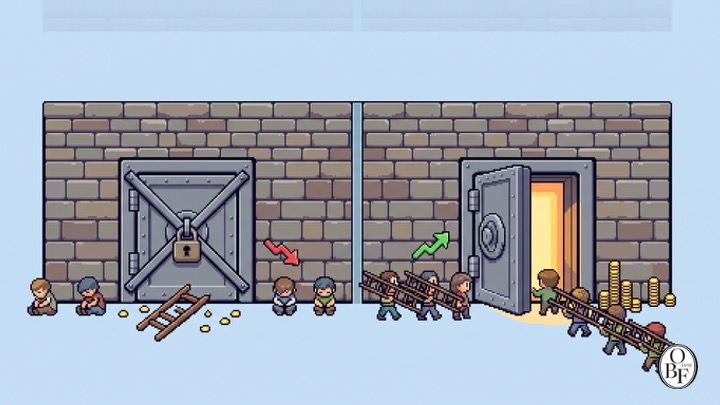
Let me tell you where this is going. The real story here isn’t the toggle switch itself. It’s a structure where the person who clicks “agree” and the person who pays the price are two different people.
The Switch Twitch Left On
Let me lay out the facts first.
What Twitch announced on August 12th wasn’t “we’re starting to train on your data now.” It was “we’ve added a setting that lets you refuse training.” One sentence, but the order is flipped. Training was already the default; what’s new is the opt-out.
 At a media event in 2024, Minton, when asked whether Amazon trains AI on Twitch, actually said yes. The toggle arrived nearly two years after the practice it’s supposed to govern.
Even turning it off doesn’t turn everything off. Features like auto-captioning and Auto Mode keep running regardless. Twitch’s explanation is that these features retain data without generating new content from it. In other words, what this toggle blocks is generative-model training — not AI use in general.
The scope is broad. It covers live broadcasts and their chat logs, VOD replays, clips and highlights, and even text and images posted to a channel. A streamer’s entire archive, built up over years, is tied to a single setting.
The backlash was immediate. Within hours of the announcement, a forum post demanding a switch to opt-in had drawn nearly 14,000 votes. A livestream Twitch held to explain itself drew close to 3,000 viewers, whose chat filled up with objections.
So far, this is a familiar picture. But two lines caught my attention.
First: the fate of your chat messages isn’t yours to decide. Chat you post on someone else’s stream follows that streamer’s setting. Even if you turn the toggle off on your own account, if the broadcaster whose stream you’re cheering on left theirs on, the messages you left there are fair game for training.
Second: the streamer isn’t the only one deciding. What’s on screen is a game publisher’s copyrighted work. One gaming-industry analyst raised the question: what happens if a creator broadcasts someone else’s game with the toggle left on? The switch sits on an individual account, but behind the door it opens sit other people’s assets too.
And when asked whether the data had already been used for training, Minton said she didn’t know. Meaning even Amazon itself doesn’t know what it has and hasn’t used. Which also means the company managing consent can’t actually trace where that consent ends up.
Free Cleaning in New York
There’s a company solving the same problem in the exact opposite way.
Shift cleans your house for free in New York. In exchange, the person who comes to clean wears a headset camera and films the work in first person. The footage—focused on hands and motion—becomes manipulation data2 to train home robots, and the company anonymizes it and licenses it to AI and robotics firms. The operator is Germany’s MicroAGI, and New York is just the starting point. They’ve announced plans to expand to San Francisco, London, Zurich, and Munich, and to branch out into plumbing and cooking.
 Let’s put this in numbers. A standard apartment cleaning in New York runs roughly $150–250 per visit—about ₩200,000–350,000 in Korean won. The fact that the company covers a single cleaning session means it’s pricing two or three hours of real household footage at exactly that amount. Text data has already been scraped to the bone, and footage of an actually messy, lived-in home simply can’t be manufactured by a simulator.
The privacy explanation is fairly thorough, too. Faces and names are automatically blurred, and personal information visible on screens, ID cards, papers, or phones gets blurred as well. The camera is designed to focus on the cleaner’s hands and tasks. Still, the FAQ also states that footage is shared with annotation3 workers during processing. In other words, even after automated anonymization, someone still sees inside that home.
The response matters here. Reportedly, bookings hit the thousands within hours of launch. That said, this figure comes from the company and trade press, not independently verified data. Even so, the direction is clear: despite the condition of letting a camera-wielding stranger into your home right up to the bedroom door, people signed up.
Worth measuring this against Minton’s proposition. He said nobody opts in—yet New Yorkers did. Because there was a price tag. The issue was never willingness to consent. It’s that there was no price tag to begin with.
The One Who Signs and the One Who Pays
Let me lay the two cases side by side. Where they overlap, the same shape appears.
On Twitch, the person flipping the toggle is the streamer. But the data that accumulates on that stream isn’t made by the streamer alone. There are viewers chatting. There are game publishers filling the screen. One person gives consent, but the assets being handed over belong to many.
On Shift, the person going through the consent-form-equivalent process is the homeowner. The homeowner is also the one getting free cleaning. But the person wearing the camera on their head isn’t the homeowner — it’s the person who came to clean. And the destination that footage is aimed at is home robots — which is to say, the very job that person is currently doing.
I want to avoid a misunderstanding here. I’m not saying this structure amounts to exploitation. The cleaners are paid for their work. The company also runs a separate program that pays contributors per session for footage, and it says participants earned over $5 million in Q1 2026. Since that figure comes from the company itself, I’d take it with some caution — but the mere fact that compensation exists is a point where this differs from Twitch.
What I want to flag is something else. The unit of consent is the individual, but the unit of data is the site.
In a home — the site in question — there are at least three parties: the person who consented, the person who was filmed, and the person who will be affected later. A broadcast, too, is a site with three parties: the person who turned it on, the people who chatted, and the company that supplied the copyrighted material. But the only tool we have is a single toggle attached to an individual account. Try to represent three parties with one switch, and pressing it only ever captures half the picture.
So why does the individual toggle keep showing up as the go-to design? Because it’s easy to build, and easy to use for shifting responsibility. The moment a company offers a setting, it can say it gave people a choice — and anyone who didn’t turn it off gets treated as having consented. What actually changes isn’t the flow of data, but the location of accountability. What’s left for the user isn’t control, but a feeling of control.
The contract structure widens this gap even further. Shift explicitly states that it is neither a cleaning company nor an employer, but a technology platform. The cleaners are independent contractors vetted by partner companies. There is labor being filmed, but on paper, there is no entity that employed that labor. Twitch is similar: consent was obtained, but Amazon says it doesn’t know what was used. In both cases, consent gets collected while accountability gets scattered.
Where Does Korea Stand in This
For Korean creators, this toggle might look like someone else’s problem. Twitch shut down its Korean operations on February 27, 2024. There’s no switch left to turn off, and none to leave on either.
But the platforms that filled that gap are already running into the same problem, just from a different angle.
Chzzk’s “Magic Voice” reads donation messages aloud in the voice of a popular streamer. The extra revenue this generates goes to the streamer who provided the voice. It’s a feature built with individual consent and settlement baked in from the start. SOOP’s AI manager “Ssalsa” goes further still: it learns a streamer’s broadcast flow and speech patterns, then carries the chat along while the streamer is away. What’s being learned here isn’t content — it’s a person’s way of speaking.
The regulatory landscape points in a different direction, too. Korea operates on a principle of prior consent for personal data processing, and the Personal Information Protection Commission issued separate 2024 guidelines on using publicly available personal data for AI training. This isn’t an environment where the American-style opt-out-by-default can simply be transplanted.
Still, the mismatch we saw earlier doesn’t resolve itself just because the regulatory framework differs. The training data a streamer consents to hand over includes chat messages viewers typed. The speech patterns an AI manager learns are inseparable from the conversations that happened during that broadcast. The condition that the person who gives consent isn’t the same person who generated the data — that holds true whether you’re in Seoul or New York.
Oswald’s Lens
As I mapped out GTM strategies, I looked at data-procurement plans more times than I can count. There’s one scene I kept running into. A plan that lists server costs, annotation costs, even labor costs — but sets the cost of acquiring the source data itself at zero. The reason is simple: the users are already inside our service, and all it takes is a clause in the terms of service.
The moment you set the procurement unit price at zero, everything that follows is predetermined. Since the consent rate becomes the acquisition volume, the UI gets designed to maximize that consent rate. This is why Minton’s remark doesn’t sound like a slip of the tongue. It’s not a mistake — it’s a conclusion reverse-engineered from a procurement target.
This is why I put these two cases side by side. Shift bought the same kind of data, but put the acquisition cost on its income statement. The judgment behind it: the cost of one cleaning job is cheaper than the value of one hour of data. Twitch, by contrast, holds the largest trove of creator video in the world and still hasn’t managed to put a price tag on its own content. So it chose to flip the default setting on instead.
I think this difference is what will split companies apart going forward. Companies that acquire data through terms of service pay for it in trust, as a cost. The bill arrives late, and it arrives all at once. Companies that pay a price up front spend the cost first, but they’re left with a basis to use in the next negotiation.
So the question we ask in practice needs to change too. Not “did we get consent,” but “does the unit of consent we obtained match the unit of the data itself.” If the data our service collects contains contributions from third parties who never consented, that’s a design flaw before it’s ever a legal risk.
Closing
If I compress today’s story into three lines, here’s what I get.
First, Twitch’s default-on setting isn’t an ethical failure so much as a pricing failure. Whoever can’t put a price on something turns the default on. Second, the New York case shows that people do opt in — when the payoff is spelled out. Third, in both cases, the person who consents and the person who pays the cost are misaligned. A personal toggle doesn’t fix that misalignment; it only hands back a feeling of control.
I’d suggest trying one thing this week. Pick a single point in a company you work at or a service you use where data gets collected, and write down everyone connected to it: the person who consented, the person who generated the data, and the person who’ll be affected down the line. If those three slots aren’t filled by the same name, that service is already inside today’s story.
Among the free services you use, is there one where you think, “I’m the one who consented, but I wasn’t actually the one who generated the data”? Let me know in the comments which service and which point in it. Once enough cases come in, I’ll sort them by type in a future issue.
💬 Leave your example in the comments answering the question above · 📨 Share this with someone for whom this structure isn’t just someone else’s problem
References & Further Reading
Primary sources
- Amanda Silberling, “Amazon will train on Twitch streamers’ content by default, unless they opt out”, TechCrunch, 2026. Link ··· This is the article that lays out the context and framing around Minton’s remarks in the most detail.
- “Twitch under fire for new gen AI training system that harvests streamer data for Amazon”, PC Gamer, 2026. Link ··· The section flagging how game publishers’ copyrighted material gets swept up too was the starting point for chapter 3 of this piece.
- “How to stop Twitch from training AI on your streams”, Engadget, 2026. Link ··· This breaks down exactly what opting out does and doesn’t turn off.
- shift, official “Free Home Cleaning in NYC” site and FAQ, 2026. Link ··· The FAQ spells out the filming method, anonymization process, and contractual relationship in plain terms. Worth reading before chapter 3.
- John Koetsier, “Physical AI Data Is So Valuable This Startup Cleans Your Home For Free”, Forbes, 2026. Link ··· The passage examining the relationship between cleaning labor and robot training connects directly to today’s intersection.
Background
- Personal Information Protection Commission, “Guidelines on Handling Publicly Available Personal Information for AI Development and Services,” 2024. Link ··· This lets you check the standards Korea applies to AI training data.
- “Twitch Has Left Korea — How Will Streaming in Korea Change Going Forward?”, KISO Journal, 2024. Link ··· This lays out how Korea’s streaming landscape was reshuffled after Twitch’s withdrawal.
Related past issues worth reading
- My Book Sold for $656 ··· If today’s piece dealt with the structure of consent, that issue dealt with pricing after consent. Worth reading as a follow-up.
- Cloudflare, Which Gave Bots a Name and a Wallet ··· This is the opposite attempt — trying to make the side that takes the data pay for it.
📝 Glossary

Footnotes
-
Opt-in / Opt-out: Opt-in is a scheme where data is used only if the user actively consents; opt-out means data is used by default, with the option to turn it off if desired. The same feature can see vastly different participation rates depending on which is set as the default. ↩
-
Manipulation data: Training data used to teach robots how to grasp, wipe, and move objects. First-person footage recording a human’s hands and gaze is the classic example, and the value goes up the messier and more lifelike the environment is. ↩
-
Annotation: The work of attaching labels — “this is a cup,” “this is a wiping motion” — to raw data so it becomes usable for training. This is often done by a person watching the footage directly, which means that even after anonymization, someone is still watching the video. ↩
Related issues
 Issue #210Business
Google's Search Fix: A Follow Button With No Followers
AI picked 600,000 sources for its search results, but no one knows how many people actually clicked.
 Issue #209Business
92% of SK Hynix Leverage ETF Buyers Were Retail Investors
The FSC opened the door in May and shut it in July.
 Issue #208Business
Harvey's Legal AI Runs on a Chinese Model
Two months, 150 GPUs: the model became disposable, the workflow became the asset
Your take shapes the next issue
What resonated most in this issue, or where has your experience been different?