Perplexity Profits on Every Sale — But Not Enough Yet
Perplexity says every revenue dollar has a positive gross margin, yet the company still loses money. Here is what its AI costs reveal.

Opening
Dear reader, Perplexity AI CEO Aravind Srinivas said something in a recent interview that stuck with me.
“We get positive gross margin on every dollar of revenue. Unlike other companies.”
At first blush, that sounds impressive. Most AI startups are bleeding cash, and here’s one claiming every dollar of revenue turns a profit? But the very next sentence was the strange part: “But as a company, we’re still not profitable overall.”
I recognized a familiar pattern in that combination of sentences. From a GTM strategy perspective, this isn’t a statement of confidence — it’s closer to an admission that the company hasn’t reached scale yet, dressed up as investor-relations messaging for the next funding round. Today, let’s talk about why that admission matters, and where the real battleground for AI search platforms actually lies.
”Profit on Every Dollar” — What It Actually Means
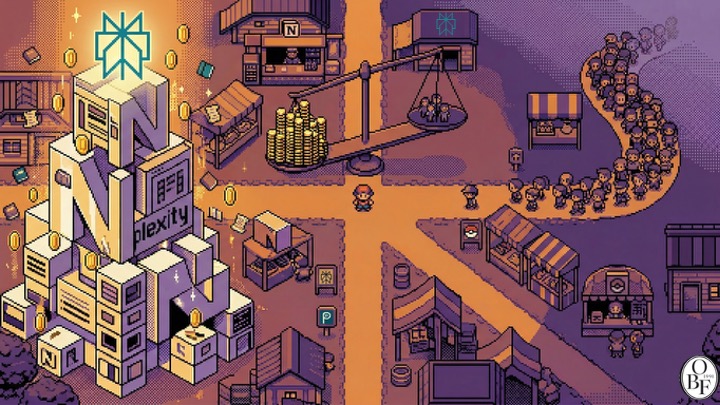
Let’s break down Srinivas’s claim with actual numbers. Perplexity’s 2024 revenue was about $34 million, against an annual cash burn of roughly $65 million. By mid-2025, ARR1 had grown rapidly to about $148 million, and the company is targeting $656 million by the end of 2026.
But here’s an interesting number. Perplexity reported a 60% gross margin, and an analysis has emerged questioning that figure. According to reporting by The Information, Perplexity spent about $57 million on AI model and infrastructure costs in 2024, and classified $33 million of that — the portion spent supporting free and trial users — as “R&D expense” rather than “cost of revenue.” Had that cost been included in cost of revenue, the reported 60% gross margin would have flipped negative.
Here’s an easy analogy. Say you run a café. The coffee you sell to paying customers is definitely profitable. But if you book the cost of the free samples you hand out every day as “marketing expense,” your café’s gross margin looks fantastic. The problem is when the cost of those free samples exceeds the revenue from paying customers.
When Srinivas says the company “gets profit on every dollar of revenue,” that’s true if you look only at paying customers. But that’s only half the business.
A Familiar Dilemma in Platform Businesses
I’ve seen this structure before. It’s Notion. “Stop jumping between apps — do it all in one place.” That was Notion’s early value proposition. Perplexity is essentially making the same pitch. “It’s efficient because it routes search, RAG2, and orchestration across multiple models. It reduces context switching3.”
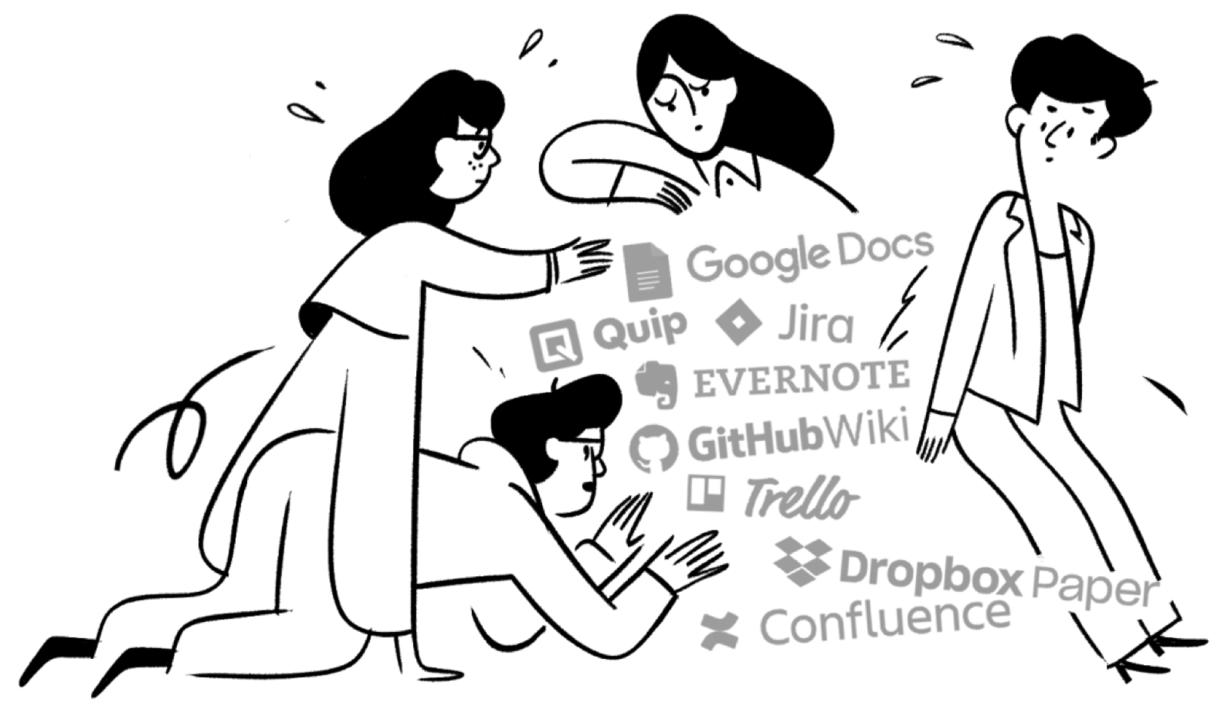
This “all-in-one platform” value proposition follows a distinct growth pattern.
Early stage: mass free-user acquisition, with the company absorbing the full cost. During this stage, the cost-of-revenue structure inevitably has “holes” in it. Notion itself was entirely free until 2018, and again went all-in on growth by reintroducing a free plan in 2020.
Transition stage: some free users start converting to paid. The key metric here is the paid conversion rate. Of Notion’s 100 million users, about 4 million are paying customers — roughly a 4% conversion rate. But that 4% generates $400 million in annual revenue.
Post-scale: once the paying-user pool grows large enough, operating profit explodes. Notion turned profitable almost immediately with a small team right after launching paid plans in 2018, then deliberately ran at a loss afterward to invest in growth.
So where does Perplexity currently stand? With an estimated 30–45 million MAU4 and a paid conversion rate estimated at 2–3%, Perplexity, from a GTM strategy standpoint, is still only at the early edge of the transition stage.
This — building and executing this kind of strategy — is literally what I do for a living. Notion was actually one of my clients, and you can find the firsthand accounts on YouTube and Speakerdeck any time you like! (For free!)
More Features Doesn’t Mean You Win
There’s an important lesson here. Anyone who’s planned or built a tech product knows this: the number of features doesn’t determine a product’s success.
Notion is a good example. At launch, Evernote had more features by any count. OneNote had overwhelming compatibility with the Microsoft ecosystem. Yet Notion won because of one single experience: “users can structure their workspace however they want.” It wasn’t features that decided the outcome — it was the experience of using the product.
Perplexity is now heading in the exact opposite direction. The Comet browser, a shopping hub, an email assistant, health tools, financial analysis, patent search — the feature list is expanding rapidly. Srinivas’s own claim that “routing across multiple models makes us efficient” fits the same pattern.
But this raises a question. How would a Perplexity user describe it to a friend? “It’s AI search, and I like that it shows sources” — that’s clear. But “it’s also a browser, and it does shopping, and it reads my email too…” — once you go there, the message blurs.
Perplexity’s share of the AI chatbot market is roughly 6–8%. In a market where ChatGPT holds 82%, this isn’t a structure where Perplexity can win by expanding features. It’s far more important to plant one unmistakable perception: “Perplexity is the best for search.”
Wait, isn’t this the agent era? Just market it as an agent! No. Strictly speaking, what Perplexity is doing with Compute, and the features it’s shipping, aren’t really agents. It’s a completely different concept from Meta’s Manus, or Claude’s Dispatch, or OpenClaw. If anything, Perplexity keeps widening its front lines. And honestly, if you had to pick an agent to actually use, which would you choose?
Oz’s Lens
Honestly, listening to Srinivas’s interview left me worried more than anything. Through a GTM strategy lens, “we get profit on every dollar we earn” reads as a narrative designed to reassure investors. What actually matters is “are you earning enough?” — and the answer to that question is “not yet.”
Perplexity’s real risk isn’t the margin. Three other things worry me more.
First, content copyright lawsuits. Major outlets including The New York Times, Dow Jones, and the BBC are lining up to sue, and revenue-sharing agreements with publishers are multiplying. This isn’t just a legal risk — it’s a structural cost, a permanent slice of revenue flowing out to third parties.
Second, the uncertainty of the advertising model. Perplexity introduced ads in 2024, then halted new advertiser contracts in October 2025. Media buyers are reluctant to invest aggressively, citing “low scale, unclear ROI, and inefficient CPMs.”
Third — and this is the most fundamental issue — the answer to “why does it have to be Perplexity” still isn’t clear. Google is strengthening its own AI search, ChatGPT has added real-time search, and a world where AI comes built into the browser by default is arriving. It’s still not clear what irreplaceable experience is uniquely Perplexity’s. For general-purpose use, people will reach for Google’s Gemini; for excellence, Claude; for ubiquity, ChatGPT. Even from an advertiser’s perspective — whether you think in terms of market share or niche audiences — Perplexity isn’t an attractive option.
In my experience, what determines whether a platform succeeds isn’t the number of features but the reason users keep coming back. For Notion, that reason was “I can organize everything my own way.” For Perplexity, it could be “accurate answers with sources attached.” But it’s worth asking whether that core value is being diluted as the company expands into browsers, shopping, and email all at once.
Closing
Personally, back when Perplexity said it wasn’t a search engine but an “answer engine,” that felt genuinely sharp — like it was going to become something. Now, honestly… I have no idea anymore. I’m even leaning negative. But I suppose I should still root for them?
Perplexity’s claim of “profit on every dollar” is true if you only look at paying-customer unit economics. But once you factor in the company’s overall cost structure and paid conversion rate, this isn’t evidence of health — it’s the textbook middle stage of a platform that hasn’t reached scale yet.
What decides the outcome in the AI platform race isn’t the number of features or the efficiency of model routing. It’s whether you can explain, in one sentence, why a user uses your product — and whether that reason is worth the user telling their friends about.
Next time you see an AI company’s financial results, I’d recommend checking one thing before you look at the gross margin number. “Is this margin calculated across all users, or only paying users?” — that single question alone can bring the context behind the numbers into focus.
References & Further Reading
- The Information, “What’s Helping Perplexity’s 60% Gross Profit Margin”, May 2025. : An in-depth report on the accounting classification controversy behind Perplexity’s 60% gross margin. One of the key sources for today’s issue.
- Sacra, “Perplexity Revenue, Valuation & Funding”, 2025. : The most systematic compilation of Perplexity’s financial data, business model, and competitive landscape.
- Contrary Research, “Perplexity Business Breakdown & Founding Story”, 2025. : A report analyzing the cost-classification controversy and publisher lawsuit issues from a business-structure perspective.
- Tomasz Tunguz, “Gross Profit per Token”, December 2025. : A comparative analysis of AI companies’ gross margins on a per-token basis. It’s striking that Perplexity has the highest revenue multiple (222x) among them.
- Contrary Research, “Notion Business Breakdown & Founding Story”, 2025. : A report analyzing Notion’s platform strategy and growth trajectory. Useful for comparing business models with Perplexity.
- TechCrunch, “AI Startups’ Margin Profile Could Ding Their Long-Term Worth”, January 2024. : An analysis of why AI startups’ gross margins are structurally lower than those of SaaS companies.

The author, Kwangseob Ahn, is a professor of business administration at Sejong University and lead consultant at OBF (Oswarld Boutique Consulting Firm). He teaches statistics and data analysis — business data management and business analytics — while leading GTM and AI strategy consulting in the field, designing the seam between technology and business. He has published academic research on a memory architecture for AI dialogue systems (HEMA) and runs Daily Arxiv, a daily curation of global AI papers. He holds a master’s from Korea University’s Graduate School of Technology Management and a KMBA. He is the author of Homo Brainless: The People Who Outsource Their Thinking.
Footnotes
-
ARR (Annual Recurring Revenue): annual recurring revenue. In subscription-based businesses, it’s the recurring revenue expected over a year. An easy way to picture it: Netflix’s monthly subscription fee × 12 months × number of subscribers. ↩
-
RAG (Retrieval-Augmented Generation): a method where AI retrieves external documents to reference when answering. Instead of answering only from what it already knows, the AI searches for relevant material in real time to back up its answer. ↩
-
Context Switching: moving back and forth between multiple apps or tools while working — checking a message on Slack, switching to Google Docs, then checking a ticket on Jira again. Research suggests knowledge workers spend about 32 days a year (on a workday basis) switching between apps. ↩
-
MAU (Monthly Active Users): the number of monthly active users — unique users who used the service at least once during a given month. Since people who merely installed an app without using it are excluded, it’s a metric that reflects actual service engagement. ↩
Related issues
 Issue #46Business
Your Sadness Is Someone Else's Ad Timing
When feelings become merchandise, protecting minors alone isn't enough to solve the problem.
 Issue #44Business
Why "Just 1,000 Fans" Is a Dangerous Myth
Growth isn't decided by fan count—it's decided by the structure of reach.
 Issue #40Business
Training Can't Fix Your Brain's Multitasking Bottleneck
New research overturns the long-held belief that practice lets us truly handle two tasks at once.
Your take shapes the next issue
What resonated most in this issue, or where has your experience been different?