Musk in Court: 'Everyone Does It'
Musk admitted in court that xAI distilled OpenAI's models — the same practice Big Tech accused DeepSeek of stealing.
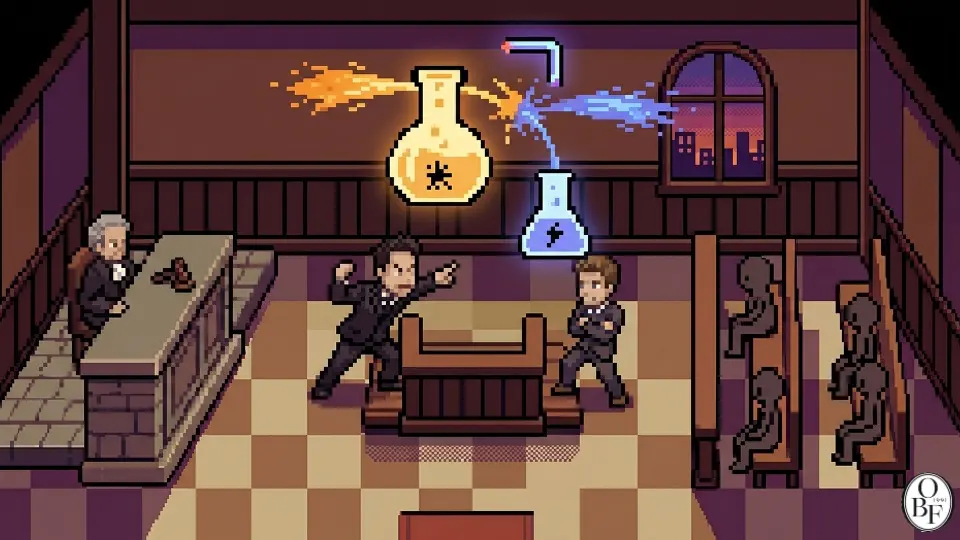
Opening
Dear reader, this is Oswarld. Today’s issue is a breaking-news special I’m slipping in between regular issues. I’d really appreciate it if you could share this widely and encourage others to subscribe. Thank you, as always, for reading. 🙇 (If you haven’t subscribed yet, please hit Subscribe!)
Yesterday (April 30), at a federal courtroom in Oakland, California, Elon Musk admitted to something: that xAI had used model distillation1 to build Grok, drawing on OpenAI’s models. In his own words, it was “partly” — and using another company’s AI to validate your own AI is “standard practice.” The weight of that single line goes far beyond a courtroom remark. For the past year, the US administration, OpenAI, and Anthropic have accused China’s DeepSeek of “industrial-scale IP theft,” even deploying diplomatic pressure over it — and now the CEO of America’s flagship AI company has voluntarily admitted, in his own country’s courtroom, to doing exactly that.
Let me give you the conclusion up front. This confession marks the first time an open secret — that everyone in the AI industry has been building on each other’s models — has been entered into the official record. And it exposes the ethical asymmetry at the heart of the OpenAI–DeepSeek dispute. Let’s walk through it alongside the 4 days of trial testimony.
4 Days in Court: What Happened
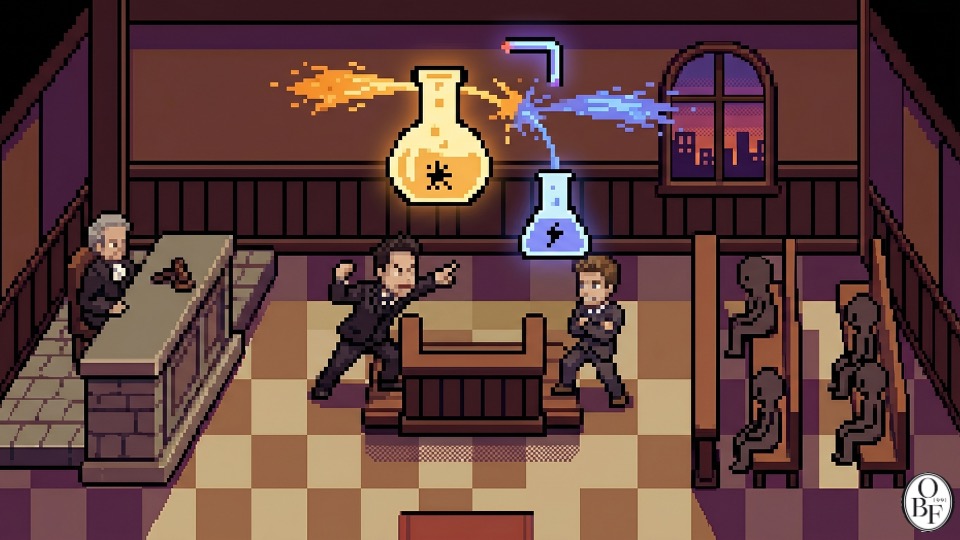
This trial is the merits hearing in the lawsuit Musk filed against OpenAI in 2024. The central question is “whether OpenAI violated its charitable trust obligations by starting as a nonprofit and then creating a for-profit entity.” Musk is seeking to convert OpenAI back into a nonprofit, remove Sam Altman and Greg Brockman from the board, and win substantial damages.
April 27 (Mon) Jury selection: 9 jurors were selected. Interestingly, many prospective jurors expressed antipathy toward Musk’s political activities. It’s a signal that perceptions of the person — not just the case itself — are already shaping one axis of this trial.
April 28 (Tue) First testimony: Musk testified that he made OpenAI a nonprofit in order to “check Google’s dominance in AI” at the time. He stressed that he wouldn’t have funded it had it been structured as a for-profit. This was the stage where he established his legitimacy as an OpenAI co-founder.
April 29 (Wed) The most heated day: Musk expressed his anger, saying that funding OpenAI “was a fool’s errand” and that “I put in $38 million and ended up building an $800 billion company” for someone else. He said his trust in OpenAI shifted through 3 stages:
“A period of enthusiastic support, a period of mild doubt, and a period when I felt looting was happening at the nonprofit.” He criticized the shift to for-profit status while still enjoying the “halo effect” of nonprofit status as wanting to “have your cake and eat it too.” It was also revealed that right after hearing about Microsoft’s $10 billion investment in OpenAI in 2022, he texted Altman that it was a “bait and switch.” Cross-examination that day by OpenAI’s attorney William Savitt was fierce. Both sides raised their voices, and Musk even accused Savitt of “lying.”
April 30 (Thu) Musk’s testimony concludes, and the confession: Savitt relentlessly pressed Musk on his self-contradictions. Musk’s other companies — Tesla, SpaceX, Neuralink, X — are all for-profit entities with no profit cap, yet Musk answered that they were all “socially beneficial.” xAI itself started as a Public Benefit Corporation in March 2023, then stripped out its social and environmental responsibility clauses in 2024 to convert into an ordinary for-profit c-corp, merged with X in 2025, and this year was absorbed into SpaceX. This trajectory directly collides with Musk’s core argument that “OpenAI’s shift from nonprofit to for-profit was unjust.” And right at the end of this pursuit of self-contradiction, Savitt asked whether “xAI had used OpenAI’s models to develop or test its own models.” Musk’s answer was “partly,” and “standard practice.” Right after that statement, he stepped down from the witness stand, and the next witness called was Jared Birchall, who runs Musk’s family office (Excession LLC).
The Precise Weight of Musk’s Confession
Now let’s unpack the weight of that April 30 confession.
What exactly is model distillation? It’s a model-compression technique proposed in 2015 by a research team led by Geoffrey Hinton2. It trains a smaller “student model” using the outputs of a larger “teacher model.” It’s a legitimate and widely used technique for shrinking a large model into a smaller, faster one within the same company. Even Anthropic has acknowledged on its own blog that “distillation is a widely used, legitimate training method.”
The problem arises when this technique is applied to a competitor’s model. OpenAI, Anthropic, Mistral, and xAI all include clauses in their terms of service prohibiting the use of their model outputs to train competing models. In other words, the technique itself is legal, but applying it to another company’s model constitutes a terms-of-service violation.
Last February, in a memo submitted to the US House Select Committee on China, OpenAI claimed that “DeepSeek employees accessed OpenAI’s models through third-party routers and anonymized paths to bypass its access restrictions.” Around the same time, Anthropic named 3 companies — DeepSeek, Moonshot, and MiniMax — announcing that “over 16 million Claude calls were made through roughly 24,000 fake accounts.” On April 23, the White House joined in with a memo under Michael Kratsios’s name, officially criticizing “foreign entities, primarily China,” for distilling US models at industrial scale. This was no longer a dispute between companies — it had become the official position of the US administration.
Seen against this backdrop, Musk’s confession becomes fascinating. He admitted that xAI — an American company — did exactly what the US administration and American Big Tech have decried as “industrial-scale IP theft,” deploying diplomatic pressure over it, against the very same target (OpenAI’s models). And he did so in a manner explicitly prohibited by OpenAI’s terms of service. Looking purely at the nature of the violation, there’s no difference between what DeepSeek did and what xAI did. The only difference is that one became the target of a White House memo, while the other faced no meaningful follow-up even after admitting it himself, in his own country’s courtroom.
Whose Distillation Is Theft, and Whose Is Just Practice?
If we dismiss this contradiction simply as “Musk being hypocritical,” we miss the point. The real problem lies in the structure of the industry itself.
The Frontier Model Forum3, jointly created by OpenAI, Anthropic, Google, and Microsoft, has been building “an information-sharing framework to counter distillation attempts originating from China.” Specifically, they’ve been jointly developing defensive technology to block users from making mass calls in suspicious patterns. At the same time, they’ve stayed relatively quiet about how competitors within the US use each other’s models. TechCrunch described Musk’s confession as “something the industry has widely assumed to be true — that American Big Tech firms have been racing to catch up using each other’s models.” In other words, something everyone knew but no one officially admitted was, for the first time, entered into the official record through Musk’s courtroom testimony. This, it turns out, is the secret behind how quickly Grok’s performance improved.
Here’s how the industry actually operates:
- Stated norm: terms of service explicitly ban model distillation
- Official message: “We protect our IP”
- Actual practice: American companies train and validate against each other’s models
- Target of outside blame: Chinese companies doing the same thing In the same testimony, when asked to rank the world’s AI companies, Musk answered “Anthropic is #1, OpenAI is #2, Google is #3, followed by Chinese open-source models.” He described xAI as “a much smaller company with a few hundred employees.” In effect, he admitted, in his own words, that distillation is the fastest way for a challenger to catch up to the leader — and that every challenger uses the same method. It’s not just DeepSeek — xAI is playing the same game; it simply escapes the White House memo’s condemnation because it happens to be an American company.
Oz’s Lens
There’s a pattern I’ve seen while working in corporate strategy. There’s a point where double bookkeeping becomes the industry standard. As long as the gap between stated norms and actual practice benefits everyone, no one breaks it. It gets broken when an external shock hits, or when someone inside decides to use it as a bargaining chip. Musk’s confession qualifies as both. The DeepSeek affair already delivered the external shock, and Musk made the contradictory choice of voluntarily disclosing his own terms-of-service violation as leverage against OpenAI. It’s a message that says “you do it too, and so do we,” designed to shake OpenAI’s moral high ground.
From a data-analysis standpoint, this gets even more interesting. Musk’s massive damages claim runs into the thousands of times the $38 million he actually put in. It’s unrealistic if judged on proportionality — but if you read it not as a claim meant to win, but as a claim meant to serve as negotiating leverage, it makes perfect sense. At the same time, admitting his own terms-of-service violation gives OpenAI grounds to countersue xAI for the same reason — but the moment that lawsuit begins, the industry’s whole double bookkeeping gets exposed even more nakedly in court. That’s exactly why OpenAI can’t move easily. In game-theoretic terms, this is close to a structure of mutually assured destruction (MAD).
There’s a lesson here for Korean AI companies and policymakers too. The terms of service that global Big Tech calls “legitimate IP protection” actually function as an entry barrier that slows down challengers’ pace of catch-up. If it operates as a gray zone among American companies but is applied strictly only to outside firms — Chinese, Korean, or otherwise — then this is less about technology ethics and more about trade policy. We need to be clear-eyed about which game we’re actually playing.
In fact, some domestic foundation models have already been attacked over “from-scratch” issues — accused of copying Chinese models, or copying American open-source models — while, during the very fight over those accusations, their competitors had already moved on to the next stage among themselves. (In the first place, the fight itself may have been a way to drain each other’s energy…)
Closing
Let me sum up today’s breaking-news special in three lines.
- After 4 days of courtroom testimony, Musk admitted that xAI distilled OpenAI’s models to train Grok — an act explicitly prohibited by OpenAI’s terms of service.
- American Big Tech and the US administration have accused Chinese companies (like DeepSeek) of IP theft for doing the exact same thing, even deploying diplomatic pressure — and this confession puts the industry’s double standard on the official record.
- The norm around model distillation started as a matter of technology ethics, but in practice, it functions more like an industrial policy through which the leading group keeps challengers in check. Next time OpenAI or Anthropic publicly condemns someone for distillation, it’s worth asking one more question: “So what did you do about the American companies that did the exact same thing?” That single question could be the litmus test that reveals the industry’s real structure.
If this lawsuit made one thing clear, it’s this: if you were to start an AI model company today, the very first thing you’d need to do is distill the best model out there. Just don’t get caught, I suppose.
References & Further Reading
Primary sources
- The Verge, “Elon Musk confirms xAI used OpenAI models to train Grok,” 2026.04.30. : The cleanest write-up of Musk’s courtroom remarks and the industry context around model distillation.
- TechCrunch, “Elon Musk testifies that xAI trained Grok on OpenAI models,” 2026.04.30. : Contains Musk’s own ranking of AI companies (Anthropic > OpenAI > Google > Chinese open-source) and his self-assessment of xAI.
- CNBC, “OpenAI trial recap: Musk concludes testimony,” 2026.04.30. : A good chronological rundown of day four.
- CNBC, “Musk cross-examination gets heated with Altman’s lawyer on day 3,” 2026.04.29. : Collects the key quotes from the most heated day — “bait and switch,” “fool,” and more.
- NPR, “Elon Musk accuses OpenAI’s leaders of ‘looting the nonprofit’,” 2026.04.29. : Accurately quotes Musk’s key phrases, like “halo effect” and “have your cake and eat it too.”
- NY Post, “Judge in OpenAI trial keeps Elon in check,” 2026.04.30. : Covers the “you can’t steal from a charity” remark and the judge stepping in, in detail.
Background
- University of Michigan News, “Unpacking DeepSeek: Distillation, ethics and national security,” 2025.01.31. : Lays out the legality of model distillation and the terms-of-service questions from an academic’s perspective. Recommended as a starting point if this is your first time encountering the topic.
- Law.asia, “Dispute over AI model distillation tech in OpenAI-DeepSeek case,” 2025.09.26. : A clean comparison of the terms of service across OpenAI, Anthropic, Mistral, and xAI.
- Rest of World, “OpenAI accuses DeepSeek of malpractice ahead of AI launch,” 2026.02.17. : Covers the key content of the memo OpenAI submitted to the US House Select Committee on China.
- Hinton et al., “Distilling the Knowledge in a Neural Network,” NIPS Deep Learning Workshop, 2015. : The original paper on the distillation technique. Worth reading directly if you’re technically curious.

The author, Kwangseob Ahn, is a professor of business administration at Sejong University and lead consultant at OBF (Oswarld Boutique Consulting Firm). He teaches statistics and data analysis — business data management and business analytics — while leading GTM and AI strategy consulting in the field, designing the seam between technology and business. He has published academic research on a memory architecture for AI dialogue systems (HEMA) and runs Daily Arxiv, a daily curation of global AI papers. He holds a master’s from Korea University’s Graduate School of Technology Management and a KMBA. He is the author of Homo Brainless: The People Who Outsource Their Thinking.
Footnotes
-
Model Distillation: A technique that trains a smaller AI model (the “student”) using the answers produced by a larger AI model (the “teacher”). It’s similar to a student studying for an exam using the teacher’s lecture notes. It’s legal when a company uses it to lighten its own model, but applying it to a competitor’s model is, in most cases, a terms-of-service violation. ↩
-
Geoffrey Hinton: The computer scientist who laid the foundations of deep learning. Often called the “Godfather of AI,” he won the Nobel Prize in Physics in 2024. In 2015, he and his colleagues were the first to propose the model distillation technique. ↩
-
Frontier Model Forum: An AI safety and policy body founded in 2023 by OpenAI, Anthropic, Google, and Microsoft. On the surface, its goal is “establishing standards for the safe development of frontier AI models,” but in practice it functions more like an industry cartel that coordinates member companies’ shared interests — countering external threats, policy lobbying, and so on. Think of it as similar in structure to an automotive OEM consortium or a telecom standards body. ↩
Related issues
 Issue #89Business
Is Your 2-Year-Old Startup Plan Still Valid?
AI hasn't just changed the technology — it's rewritten the entire startup formula
 Issue #87Business
Middle Managers Aren't Vanishing. Something Else Is
Titles are changing, but the essence of management isn't going anywhere
 Issue #86Business
Bloomberg Terminal Is Ugly and Clunky—Everyone Still Uses It
Iran's parliament speaker tweeted a Bloomberg command—by accident?
Your take shapes the next issue
What resonated most in this issue, or where has your experience been different?